Biological filtration for aquariums is one of the familiar and useful types of filtration that anyone passionate about aquascaping, especially ornamental fish, knows. However, not everyone fully understands the wonderful benefits that biological filtration brings. Through this article, Aqua Plants Hub will introduce in detail the benefits as well as how to create a biological filter for your home aquarium that is extremely simple and effective.
Benefits of biological filtration for aquariums
Biological organisms are all types of microorganisms that are beneficial for fish and other aquatic species. A miraculous thing is that the food for these microorganisms is actually fish waste. Therefore, as long as your aquarium has enough microorganisms, it will decompose fish waste and excess food without needing other filtration systems.
You can read more: What is biological filtration in aquariums? What is its importance?
Biological filtration is a habitat for beneficial microorganisms that help decompose organic substances dissolved in water: dirt, fish waste, leftover food, keeping the water in the tank always clean. At the same time, the beneficial bacteria living in the biological filter also help keep the water environment healthy, creating conditions for organisms to grow and develop better. The benefits that biological filtration brings are:
- Biological filtration is particularly suitable for small tanks used to raise small fish such as: Guppies, shrimp, etc., because the equipment does not use many motors, thus not creating strong currents that are not good for the living organisms in the tank.
- Simple structure, easy to set up.
- Quick cleaning and easy replacement during use.
- Affordable price.
- Effective in keeping the water environment clean and beautiful, helping fish grow favorably and healthily.
Basic types of biological filtration
Air-lift filter
Biological filtration has the effect of sucking up dirt in the water, making the tank clean and serving as a habitat for beneficial microorganisms that help decompose waste and organic substances in the tank, ensuring good water quality for fish reproduction and development.
Operating principle:
- The air-lift biological filter operates based on the principle of air lift: From the external aerator, air is introduced to create pressure to suck up dirt. Oxygen will then be pushed to the water surface, pulling water and debris through the filter head or a component of the filtration system: filter media or industrial pumice, etc. Dirt and debris will be trapped in the filter, allowing only air to escape and clean water to flow back out.
- The filter head or filter media here will be the habitat for beneficial bacteria that help decompose excess waste and dirt.
- It should be noted that the sponge filter must be used together with an air pump and materials suitable for keeping aquatic organisms in the tank.
Overflow biological filter
The overflow biological filter has very good biological filtration effects with three filter compartments: coarse filtration, biological filtration, and chemical filtration.
Operating principle:
- Coarse filtration: This filter compartment contains coarse filter materials such as: filter cotton, filter bags, etc., to retain coarse waste, effectively filtering solid debris in the water such as leftover food, trash.
- Biological filtration: After passing through the coarse filter, the water will flow into the next compartment, which is the biological filter, where beneficial microorganisms are present to decompose waste in the tank that the coarse filter could not fully filter, such as slime secreted by organisms in the tank, fish waste in the water, dissolved dirt, etc. Common beneficial bacteria include: coral, pumice, filter media, ceramic filter media, etc.
- Chemical filtration: Finally, the water will flow into the last filter compartment containing substances that help detoxify and eliminate foul odors. Typically, this compartment uses filter materials such as activated carbon or BioBall filter media to absorb and neutralize toxins, after which clean water will flow back into the tank.
Simple ways to create microorganisms for the tank
Create a habitat for beneficial microorganisms
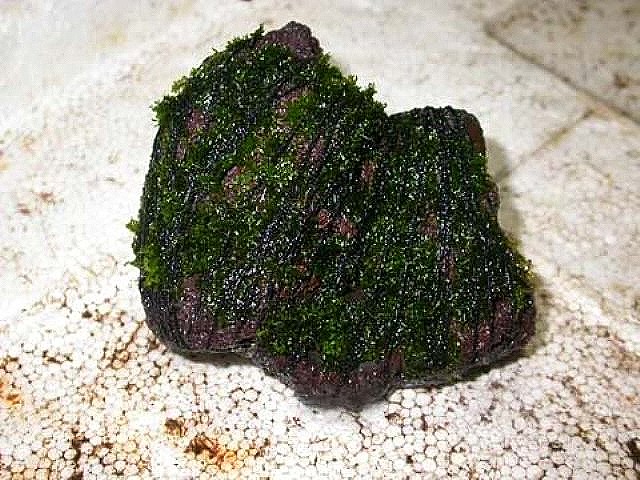
The habitat of beneficial microorganisms in the tank is usually filter materials such as: pumice stone, matrix stone, filter media, etc., which are ideal places for microorganisms to thrive and develop.
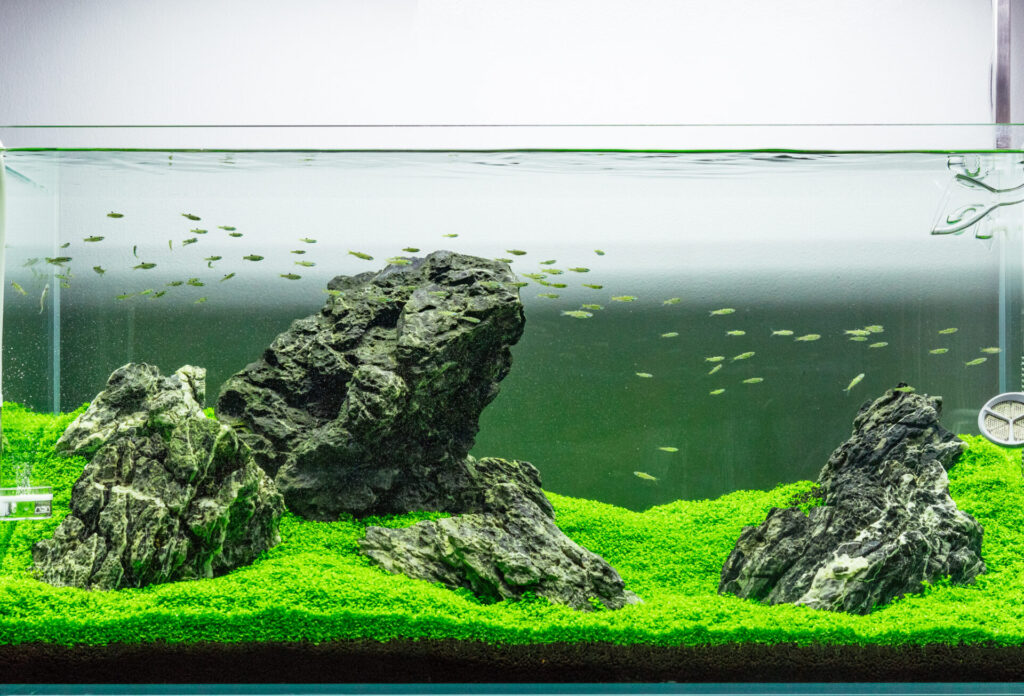
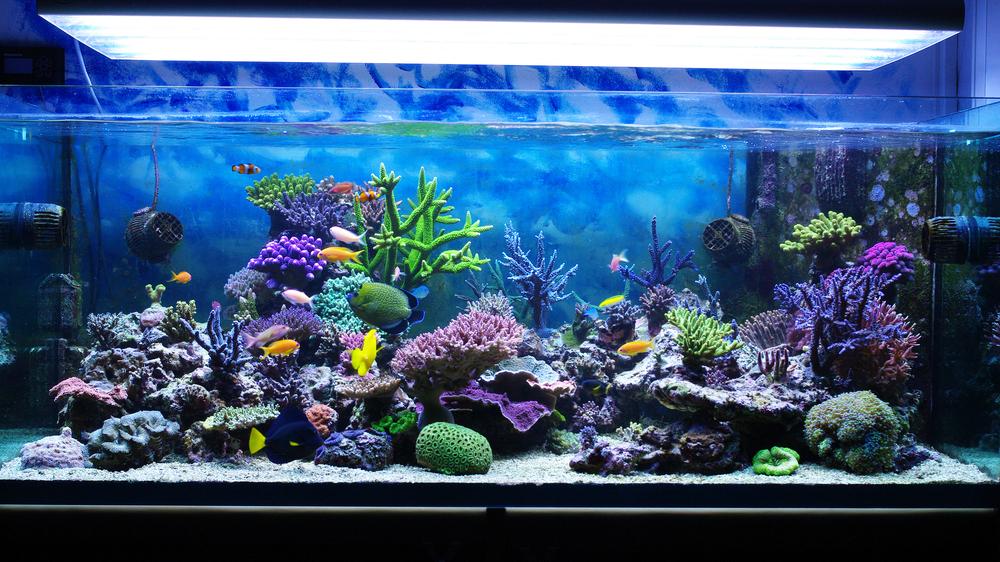
In addition to filter materials, aquatic plants, coral, and decorative stones can also serve as habitats for microorganisms.
Add microorganisms
Currently, there are many stores selling various types of microbial preparations, beneficial biological preparations for aquariums. There are mainly two forms: powder and liquid. Just add the types of microbial agents to the tank, and then the microbial system will develop and thrive naturally.

DIY simple and effective biological filter
Preparation:
Bamboo charcoal, matrix stone, filter cotton, small plastic container, 16mm tubing, 1 air pump.
Step 1:
Create several small holes evenly spaced on the plastic container.
Step 2:
The first layer in the container will place matrix stone or bamboo charcoal first.
The second layer will place filter cotton.
Step 3:

Create a hole on the lid of the plastic container that fits the 16mm tubing and another hole for the air line.
When the air pump is turned on, oxygen will enter the plastic container and exit through the 16mm tubing. As the oxygen moves, it creates a water flow from the tank through the small holes into the plastic container. Then, excess food will enter the container where many beneficial microorganisms are present. Water will pass through the filter cotton at the mouth of the 16mm tubing, and thus the clean filtered water will flow back into the tank.
Thus, Aqua Plants Hub has shared with you the benefits and ways to simply create microorganisms for your tank. If you want to learn about products for your aquarium, you can refer to the cheapest places here.
Đào Thị Thảo Dung