
Some common questions and answers:
✎ The tank is not clear? – Add more microorganisms to clear it up
✎ The tank has an odor? Adding more microorganisms will reduce the smell
✎ The tank is yellow? Adding more microorganisms will fix it
✎ The plants are not growing? Adding microorganisms will help them grow
– Most of the answers to issues arising in aquariums today seem to relate to microorganisms, but do we really understand what microorganisms are and how they work? Today, we would like to explain to you about microorganisms, a very essential factor in aquariums:

❖ One of the most easily recognizable types of microorganisms in aquariums today is nitrifying bacteria: Animals in the tank or excess nutrients from food or in the substrate are absorbed by animals or aquatic organisms in the water environment, producing gaseous NH3 with an odor and ionized NH4 that flows in the water, leading to water pollution and simultaneously increasing the growth of harmful algae in the tank! NH3 is released and decomposed into NO2 nitrite; while NO2 is odorless, plants cannot absorb it, inadvertently causing the tank to remain polluted! This leads to murky water and the appearance of harmful algae. At this point, if you add nitrifying bacteria to the tank, the NO2 will be decomposed into NO3 by the microorganisms, which can then be absorbed by the plants, providing natural nitrogen for their growth and development. Thus, thanks to these microorganisms, the tank limits harmful algae, becomes clearer, and the plants grow better.
In addition to nitrifying bacteria, manufacturers of microbial products for aquariums have developed other strains of microorganisms to care for your tank:
➲ Cellulolytic bacteria: break down organic matter into carbon for easier absorption by plants.
➲ Ionizing bacteria for K, P, Mn,… For plants to grow and develop stably, trace elements are needed to stimulate the growth process to occur faster and more stably; thus, these bacteria enhance the absorption capacity for plants.
There are many strains of microorganisms today that we cannot list all for you, aside from the most commonly seen types.
The question here is how to develop a stable microbial system to help plants and animals grow steadily?
Method 1: Add microbial products when setting up the tank.
Method 2: Use water from already established aquariums.
Method 3: Wait! Microorganisms in the natural environment are very diverse; if you do not have the means to access and purchase products, you should wait for about 1-3 months for the tank to stabilize, and the microorganisms will help make your tank perfect.
Where do microorganisms exist in the tank?

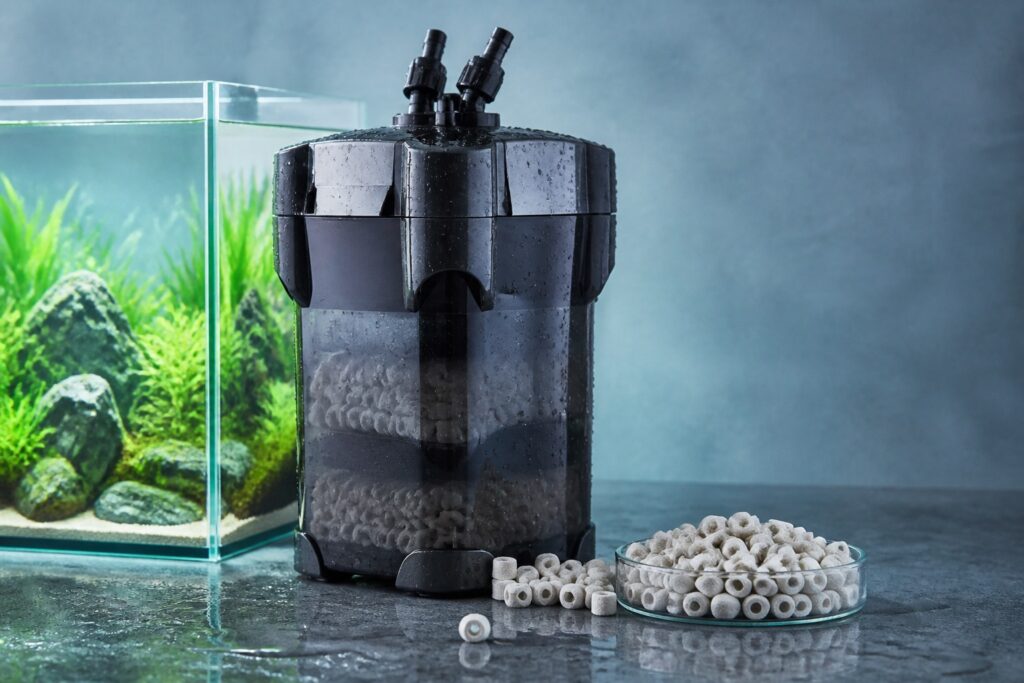
Microorganisms exist in almost all environments in the aquarium! They are found in the substrate, in spaces like the cores of lava rock, in the water environment, and in your filtration system.
How to care for them?
Microorganisms live in a closed environment, so they need oxygen, but don’t worry; if your tank has plants or sufficient CO2, the photosynthesis process will produce microorganisms for the tank. Especially if you have a good filtration system, microorganisms can also develop stably in your filter and substrate.
Above are our findings on the issue of microorganisms in the tank!
WISH YOU SUCCESS!
Tag: Aqua Plants Hub
Aqua Plants Hub Editorial