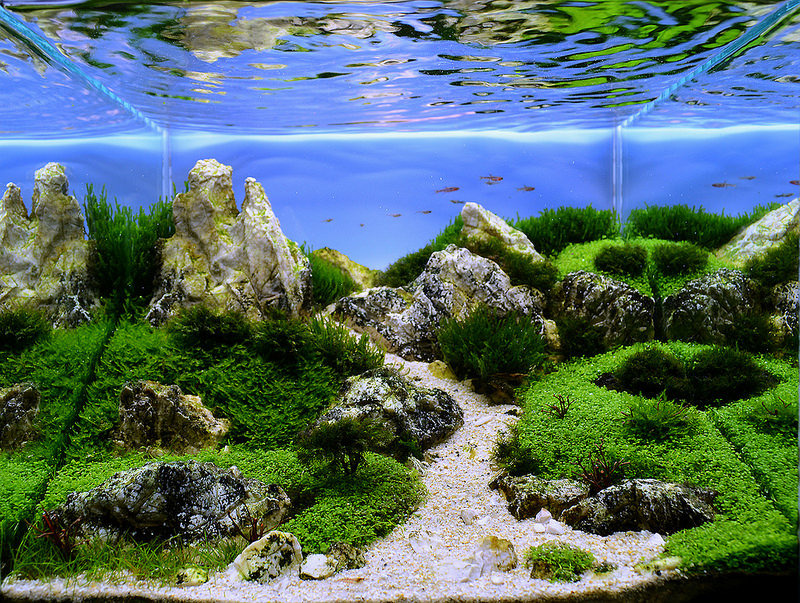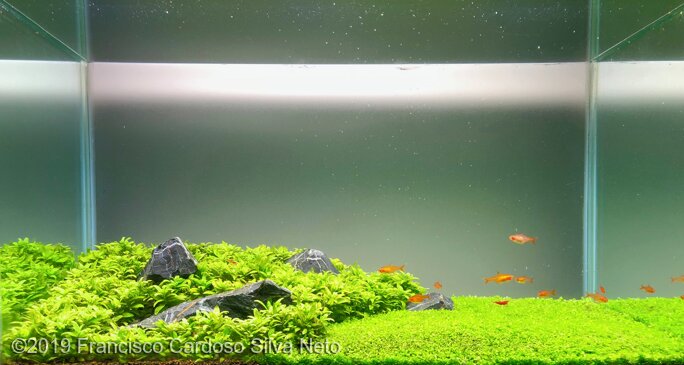
Iwagumi was developed about 30 years ago by the famous aquascaper Takashi Amano; this layout not only embodies minimalism but also reflects Japanese culture, art, and their love for beauty and simplicity.
Principles and Techniques of Iwagumi Layout Design
Iwagumi is a style that uses an odd number of stones such as 3, 5, or 7 to avoid creating a sense of symmetry and unnaturalness when decorating an aquarium.
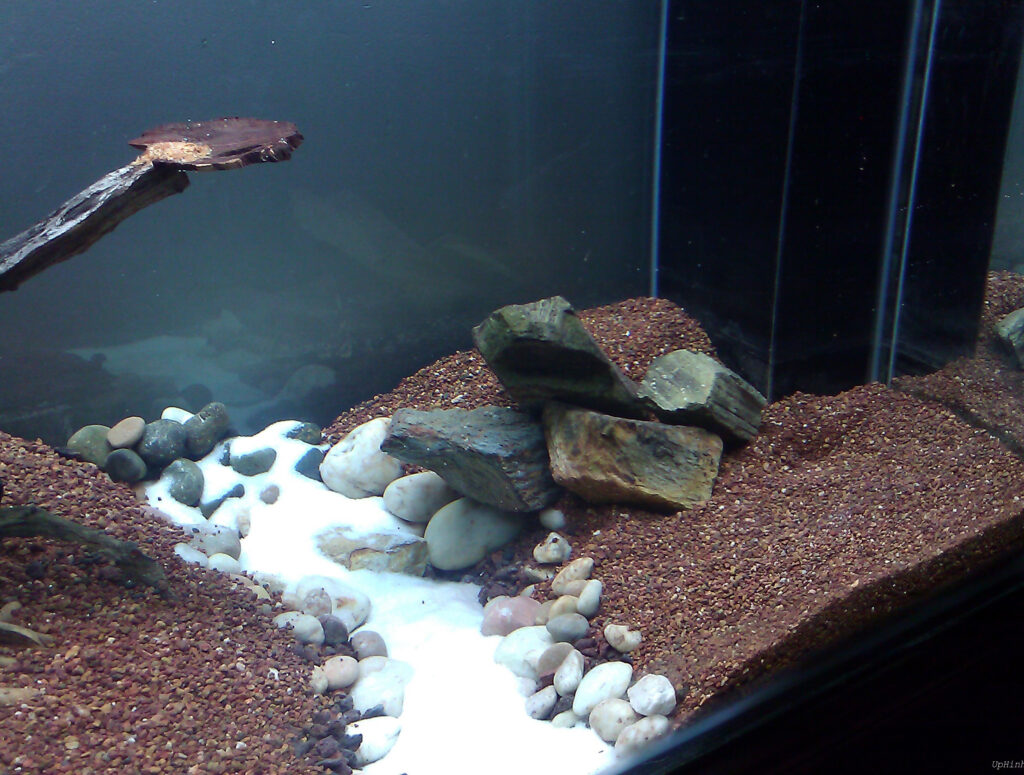
The common types of stones used for this style are Seiryu-seki, Maten, and Shou, but in reality, there are no limits. The goal is to build a group of stones that are similar in color and texture but different in detail, size, shape, and outline.
Additionally, balance in layout is also one of the important aspects of the Iwagumi style. Typically, decorators will place stones or plants at the intersections of horizontal and vertical lines to emphasize the focal point of the layout.
Types of Stones and Their Characteristics in Iwagumi Design

Main Stone – Oyaishi: This is the largest stone in the overall layout according to the Iwagumi style. Being the biggest and most beautiful stone among all, Oyaishi is always placed at the focal point of the aquarium, following the one-third rule, and it occupies 2/3 of the height, which is the perfect ratio for the human eye. Oyaishi is also slightly tilted in the direction of the flow to create a natural look for the tank.
Second Stone – Fukuishi: As the second largest stone in the layout, Fukuishi resembles Oyaishi in color and texture and is usually placed on the right or left. The main purpose of this stone is to balance the main stone and create a phase shift in the layout.
Third Stone – Soeishi: The third stone, usually placed next to Oyaishi, along with Fukuishi, highlights the strength of the main stone.
Fourth Stone – Suteishi: These are the fourth largest stones in the Iwagumi aquarium; they do not have significant meaning and are often covered by vegetation. However, the role of Suteishi is to enhance the beauty of the entire stone formation process by supporting all other stones to create a sense of cohesion. In the Sanzon Iwagumi aquascape, Suteishi is often overlooked.
Types of Plants Suitable for Iwagumi Decoration
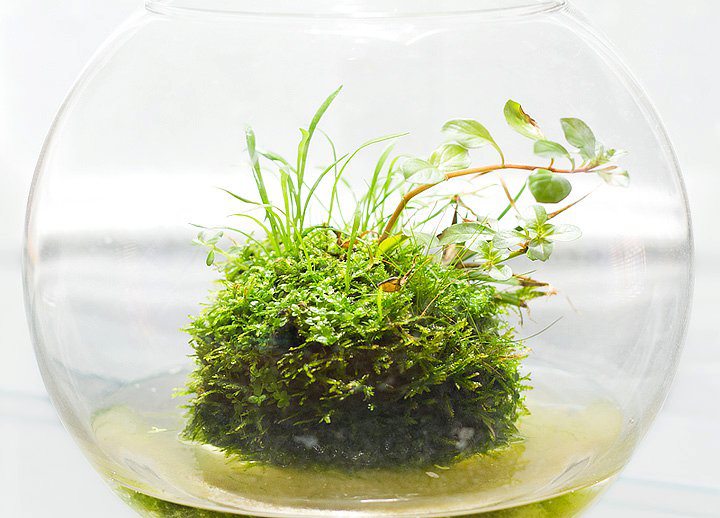
Typically, suitable plants for the Iwagumi style are small, low-growing types that do not obscure the stones but still support the layout of the tank.
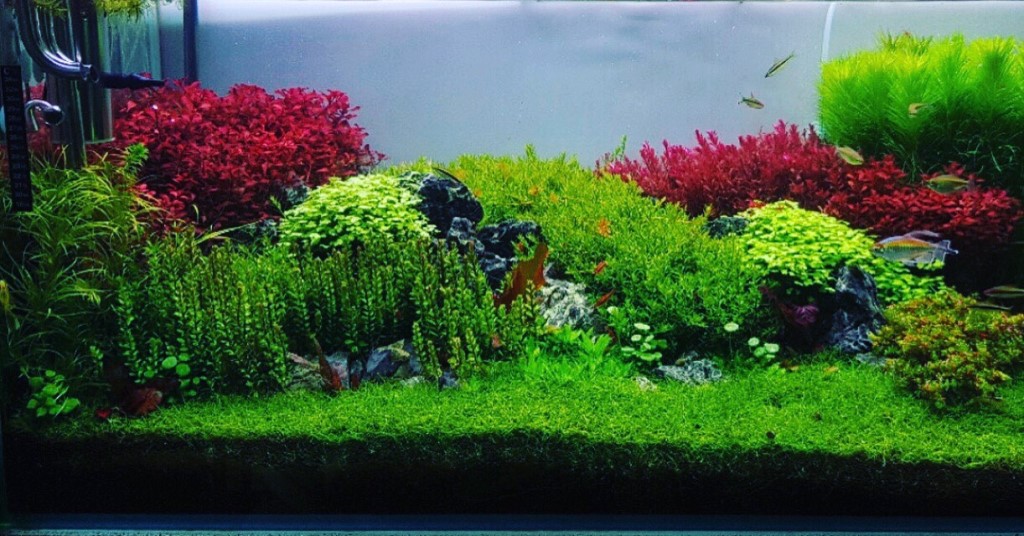
Foreground plants such as Hemianthus callitrichoides, Micranthemum ‘Monte Carlo’, and Cuba pearl grass are impressive when combined with Iwagumi design. Additionally, you can use Rotala, paper grass, and pennywort, which are also suitable for this layout. Foreground and background plants should consist of a single species depending on the decorator’s perspective and style.
Recommended Fish for Iwagumi Layout
The Iwagumi design is characterized by harmony and unity with simplicity and balance, so it is important to maintain a minimalist feel when adding fish to your tank.
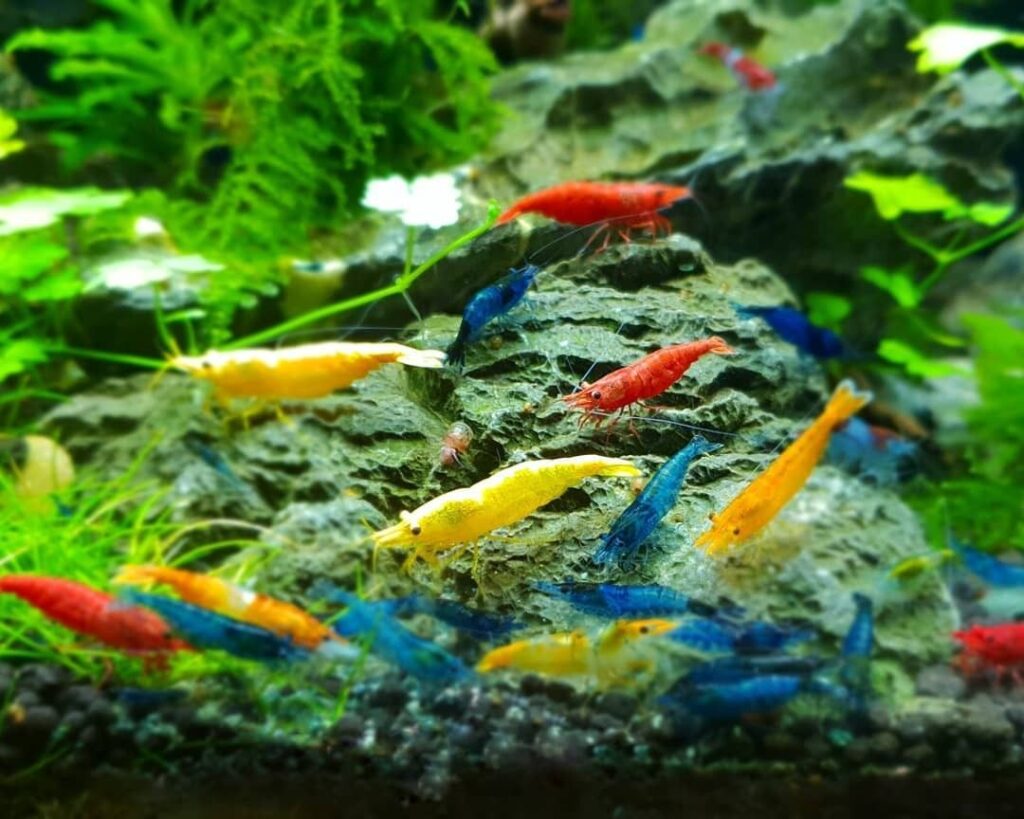
The purpose of the fish is to enhance the sense of tranquility and grace of the aquascape through their fluid movements. Avoid using many different types of fish as their behavior tends to disrupt harmony by acting individually, often separating from the school. Commonly used fish include tetra, red cherry shrimp, and rasboras, as they are small and school together.
Notes When Decorating a Tank in Iwagumi Style
Among all aquascaping styles, the Iwagumi layout appears easier to execute due to its simplicity, but the truth is that this layout is harder to maintain and care for than other types.
Limitations in plant selection make the cultivation process even more challenging for aquarists. The plants used in Iwagumi aquariums are heavy-rooted, making substrate selection more delicate and water filtration choices more meticulous.
Iwagumi not only requires extensive experience in plant selection and layout but also the design itself can easily lead to harmful algae formation in the tank.
Aqua Plants Hub hopes that through this article, you will gain more knowledge to design a unique aquascape in the Iwagumi style for yourself!
Đào Thị Thảo Dung