Learn path
First Planted Tank Learning Path (Weeks 0–6)
Learn guide
A first planted tank fails when shopping, cycling, and stocking happen on the same Saturday. This path sequences the work: choose a budget BOM, cycle fishless, plant easy epiphytes, then add livestock only after tests stay at zero.
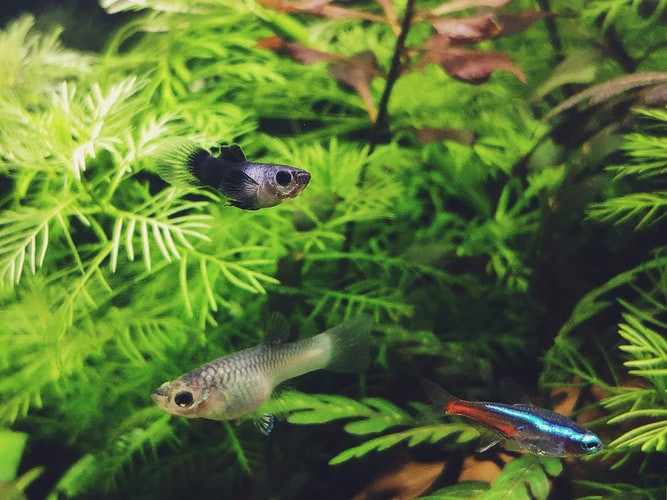
- Weeks 0–6
- Fishless first
- Easy plants
- Then livestock
Quick facts
| Week 0 | Pick tank size + BOM (nano 50 or first community) |
|---|---|
| Week 1 | Set hardware, dechlorinate, start fishless cycle |
| Week 2–4 | Test 3×/week; plant Anubias/fern/moss; no fish |
| Week 5 | 0/0 readings → large WC → optional shrimp |
| Week 6+ | Small school only if volume and filter allow |
| Skip | Same-day livestock + high-tech CO₂ + carpet plants |
Overview
Week 0 — shop with a list, not a cart binge. Use Budget 50 nano or first community. Read low-tech vs high-tech and stay low-tech for tank one.
Weeks 1–4 — cycle and scape. Follow fishless vs fish-in. Glue Anubias, Java fern, and Java moss. Size light with the LED calculator and a 6-hour timer. Print the 10 beginner mistakes on the cabinet door.
Weeks 5–6 — livestock. Shrimp-first is the gentlest test of the filter. Then a small neon or mature-tank otto school. Check shrimp tank mates before mixing. Learn the triangle later — light / CO₂ / fert — once the tank is boringly stable.
Weekly checklist
-
Step 1
Week 0: freeze the BOM
Tank, filter, heater, timer, dechlorinator, test kit, 3 plant types, glue. No extra fish “while you’re at the shop.”
-
Step 2
Week 1: water + cycle start
Fill, dose dechlorinator, start filter/heater, add ammonia source or bottled bacteria. Log the first test.
-
Step 3
Weeks 2–4: plant and wait
Attach epiphytes. Test ammonia/nitrite/nitrate. Do not add fish because the tank “looks ready.”
-
Step 4
Week 5: prove 0/0, then shrimp or nothing
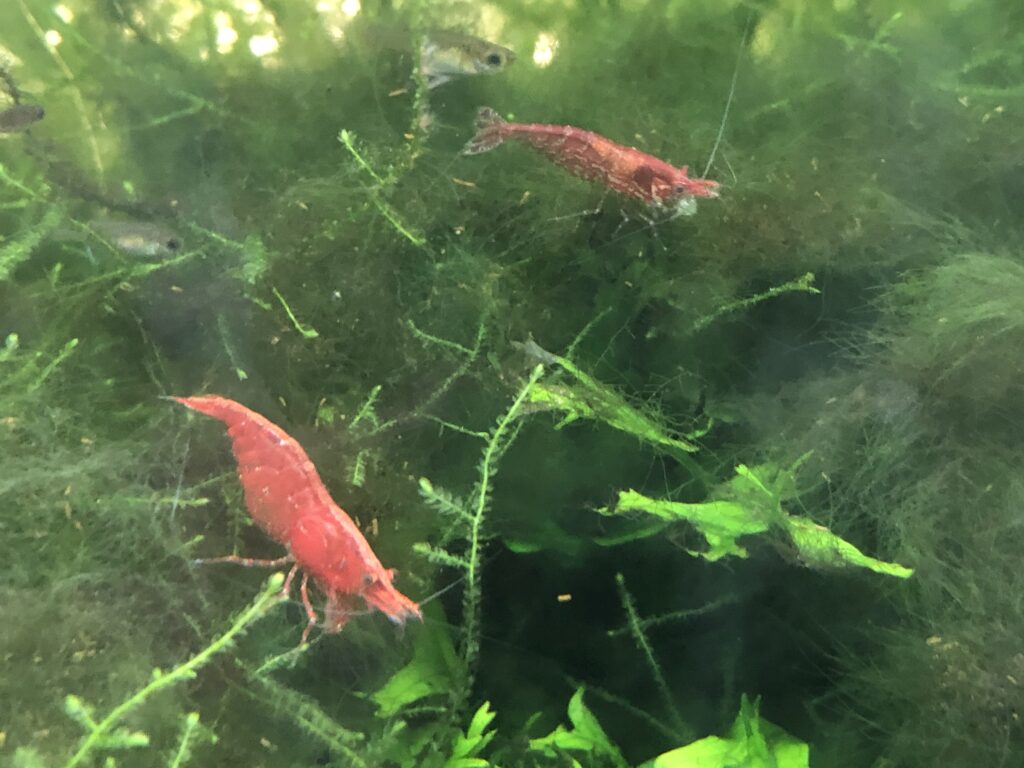
After a test ammonia dose processes in 24 h, big water change, then optional cherry shrimp.
-
Step 5
Week 6+: one small school max
Use stocking math. Watch a full week before adding a second species. Otos still want more maturity.
Common problems
Urge to “just add one fish” in week 2
Why: Empty tank anxiety.
Fix: Add plants and hardscape instead. Fishless path is the point.
Test kit unused in the drawer
Why: Cycling without numbers is guessing.
Fix: Test is part of week 1 setup, not an optional accessory.
Bought a carpet plant on day one
Why: High-tech demand in a low-tech path.
Fix: Keep Monte Carlo for tank two or add CO₂ later — triangle + low vs high articles.
Ammonia after first shrimp
Why: Cycle not actually done or overfeeding.
Fix: Stop feeding 48 h; water change; delay fish. Ammonia guide.
Reading order after week 6
- Best beginner plants
- Cherry shrimp care or neon tetra care
- Light–CO₂–fertilizer triangle
- CO₂ hub only if you deliberately go high-tech next
Gear for this species

Seachem Stability – For Freshwater and Marine Aquariums 250ml
Cycle new tank — beneficial bacteria.
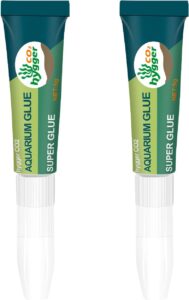
Aquarium Glue, Clear Coral Glue for Plants, Rocks, Moss, Coral, Stone, Wood – Quick Drying, Fish Safe, Freshwater & Saltwater Aquascaping – 5g (2PCS)
Uses: - Used to attach moss/epiphytes to rocks, driftwood... - Can be applied when the plant or substrate is wet - Gel form, does not dry out like 502 glue over time
Budget 50 nano setup — Default BOM for weeks 0–6 if you have not picked a tank yet
FAQ
How long before I can add fish to a new planted tank?
After fishless cycling shows 0 ammonia and 0 nitrite for several days — often weeks 5–6, not weekend one.
Should my first tank be high-tech?
No. Finish a stable low-tech nano first. High-tech is tank two for most people.
What plants should I start with?
Anubias nana, Java fern, and Java moss. They forgive cycling mistakes and need no CO₂.
Can I add shrimp during the cycle?
No. Shrimp are more sensitive to ammonia than most fish. Wait for 0/0.
Do I need a test kit if I use bottled bacteria?
Yes. Bottled bacteria is a helper, not a substitute for readings.
What is the next article after this path?
Beginner mistakes, then the species guide for whatever livestock you actually added.
Aqua Plants Hub Editorial