Species guide
Java Moss Care Guide (Taxiphyllum barbieri)
Aquatic plant
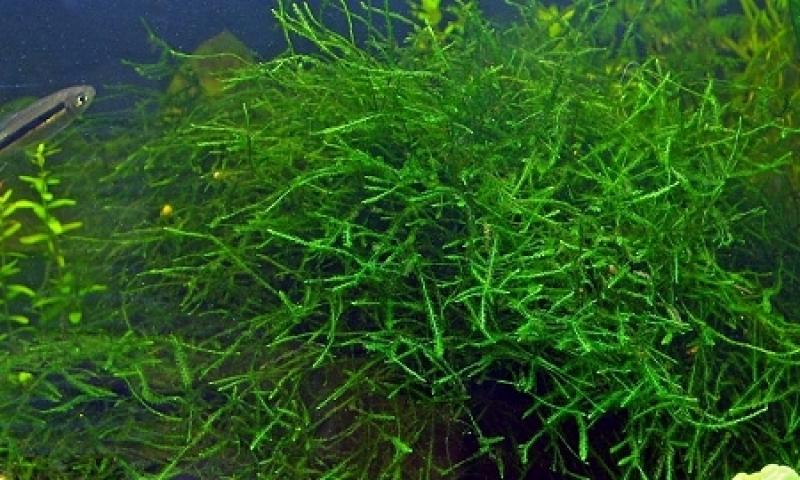
Java moss is the classic filler moss for shrimp tanks and hardscape accents. It needs no CO₂, tolerates low light, and attaches to wood, stone, or mesh with thread or glue.
- Very easy
- Low light
- No CO₂
- Shrimp favorite
Quick facts
| Light | Low–medium |
|---|---|
| CO₂ | Not required |
| Temp | 18–28 °C (64–82 °F) |
| pH | 5.5–8.0 (very tolerant) |
| Growth | Moderate in good conditions; slow in cold/low light |
| Difficulty | Beginner |
| Placement | Attached to wood, rock, mesh, or free-floating clumps |
Overview
Java moss (Taxiphyllum barbieri, often sold as Vesicularia dubyana) forms branching fronds that shrimp and fry use as cover. It absorbs nutrients from the water column and surfaces—no roots required.
It is standard in Budget 50 nano shrimp paths and Budget 150 low-tech scapes as a biofilm engine. Glue or tie portions to hardscape; over months it carpets mesh pads for moss walls.
Brown patches often mean debris buildup, low flow, or ammonia—not always “dead moss.” Trim and rinse if algae invades; read BBA fix order when beard algae embeds in fronds. Floating clumps can block surface skimming—manage during water changes.
Care steps
-
Step 1
Attach with glue or thread
Spread a thin layer on rock or wood; hold 30 seconds with gel glue, or wrap with cotton thread. Stainless mesh pads create moss balls or walls.
-
Step 2
Low–medium light & gentle flow
6–7 hours LED is enough. Gentle current prevents detritus settling; use the LED calculator if upgrading from a dim kit light.
-
Step 3
Trim to control shape
Pinch or scissor-trim thick mats so light reaches inner fronds. Save trimmings to attach elsewhere.
-
Step 4
Optional liquid micros
Not mandatory in shrimp tanks. Light dosing helps dense moss walls in planted community tanks.
Common problems
Brown / grey patches
Why: Detritus burial, stagnant zones, or ammonia spike.
Fix: Trim affected clump; increase gentle flow; vacuum during water changes.
Hair algae or BBA in moss
Why: Light too long vs moss mass; dead interior fronds.
Fix: Trim heavily; shorten photoperiod; spot-treat visible BBA tufts outside moss if possible.
Moss not spreading
Why: Too cold, too dark, or glued in a single thick blob blocking light.
Fix: Spread thinner layers when attaching; slightly increase light hours; be patient—moss spreads slowly in low-tech.
Good tank mates & companions
- Shrimp — ideal; moss is grazing habitat and fry cover.
- Snails — help clean film algae; ramshorn may thin soft moss.
- Small fish — betta, nano tetras, rasboras.
- Avoid: goldfish and large algae eaters that strip moss bare.
Gear for this species
Java Moss
Java moss is the most commonly used moss for decorating aquariums. Due to its hardy nature, strong growth, and low requirements for different conditions, Java moss is very easy to care for. It is often used to decorate rockeries or aquariums. Besides, Java moss is widely used as a substrate for breeding fish. Fish eggs will attach to Java moss, making it a perfect breeding method for fish. In Killi fish breeding facilities, a clump of Java moss is placed in the Killi fish tank, and after a week, it will be covered with Killi eggs. Many people refer to Java moss as fish breeding moss.
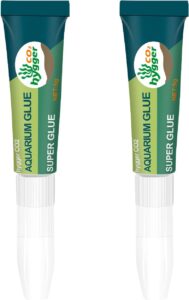
Aquarium Glue, Clear Coral Glue for Plants, Rocks, Moss, Coral, Stone, Wood – Quick Drying, Fish Safe, Freshwater & Saltwater Aquascaping – 5g (2PCS)
Uses: - Used to attach moss/epiphytes to rocks, driftwood... - Can be applied when the plant or substrate is wet - Gel form, does not dry out like 502 glue over time
Budget 50 nano setup — Shrimp-friendly nano BOM with moss and glue
FAQ
Does Java moss need CO₂?
No—it is one of the easiest low-tech plants.
Can Java moss float?
Yes—floating clumps grow but can clog filters; tying is cleaner.
Why is my Java moss turning brown?
Often detritus or poor flow, not instant death. Trim, rinse, and improve gentle circulation.
How do I make a Java moss wall?
Tie moss to stainless mesh; place vertically on hardscape. Trim monthly so inner layers get light.
Is Java moss safe for betta tanks?
Yes—provides cover and perching without sharp edges.
Aqua Plants Hub Editorial