Troubleshoot
Black Beard Algae: Causes Ranked + Fix Order
Black beard / black brush algae (often Audouinella) clings to slow edges, hardscape, and leaf margins. Kill patches only after you fix the conditions that grow it.
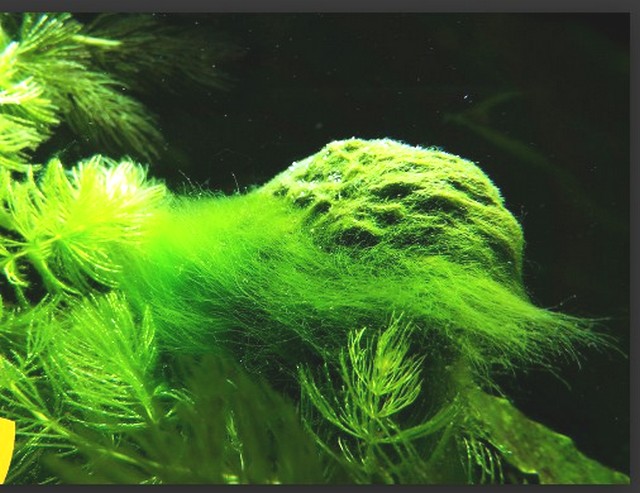
- BBA
- Black brush
- CO₂ stability
- Organics
What you’re seeing
Confirm it is BBA before you treat: dark tufts that look like a short beard or brush, often on wood, decor, and slower leaf edges—not green hair clouds in the water column.
| Pattern | Likely driver |
|---|---|
| BBA on hardscape + downstream leaf edges; pearling uneven | Unstable / low local CO₂ and flow dead zones |
| BBA after heavy feeding / dirty filter / plant melt | Organics + leftover nutrients |
| BBA with very long photoperiod / intense light, weak plant growth | Light ahead of plant uptake |
| Tufts only on one ornament, plants otherwise clean | Local rough surface + mild imbalance—spot treat |
Healthy, fast-growing plants under stable CO₂ outcompete BBA better than any single chemical wipe.
Likely causes (ranked)
Unstable or insufficient CO₂ / flow
BBA loves edges where CO₂ and flow drop. Big pH swings from on/off CO₂ or an undersized diffuser create daily stress plants hate and BBA tolerates.
Quick test: pH swing large; BBA on outlets’ dead side; plants not pearling evenly.
Dissolved organics & detritus
Melt, overfeeding, and neglected mechanical filtration feed brush algae.
Quick test: Mulm, leftover food, dirty sponges; BBA after a melt event.
Light longer than plant mass can use
Long photoperiods with sparse planting leave energy for algae.
Quick test: 8–10+ hours light; slow plant growth; BBA on hardscape first.
Rough surfaces holding spores
Wood and porous décor give BBA a foothold even after conditions improve—manual removal still needed. Black beard algae prefers unstable CO₂, organic waste, and surfaces with low flow. Spot treatments help visibility; long-term wins come from stability.
Quick test: Tufts anchored on wood grain / stone texture.
Fix order
-
Step 1
Stabilize CO₂ and flow first
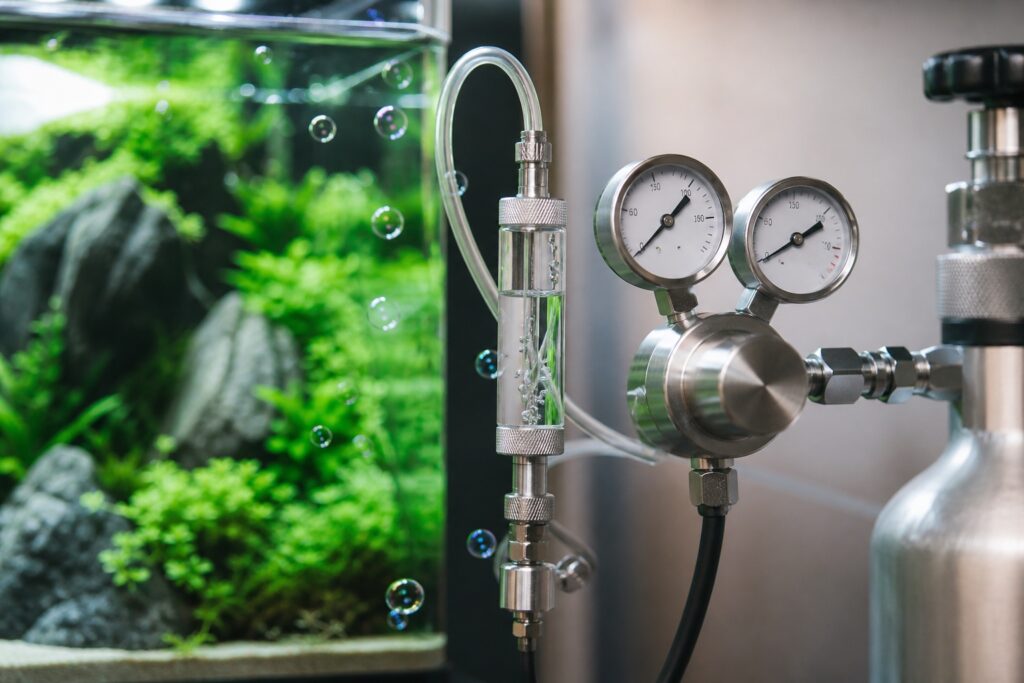
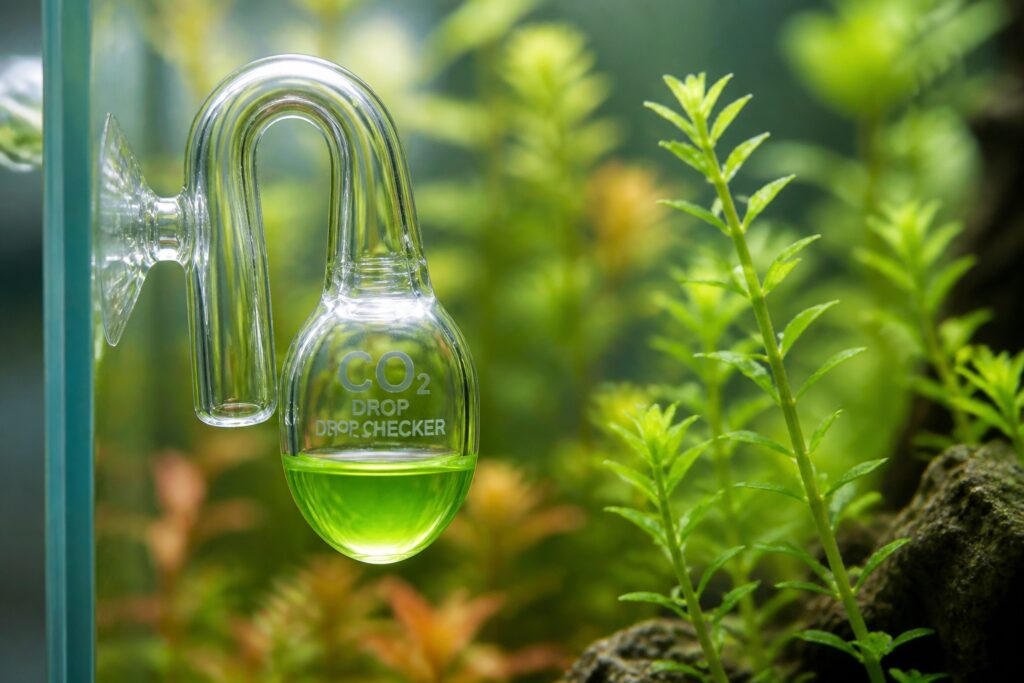
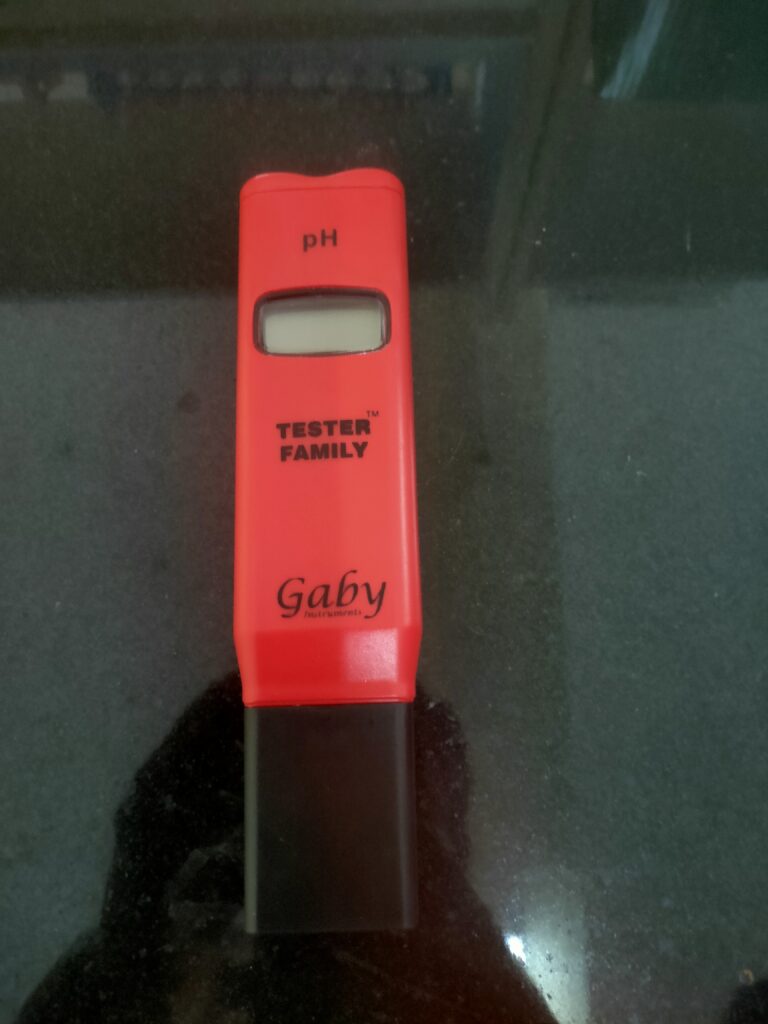
Aim for steady injection during the photoperiod (many aim ~1 pH drop from degassed, measured consistently). Redirect flow so leaves gently sway; eliminate dead corners.
-
Step 2
Cut organics
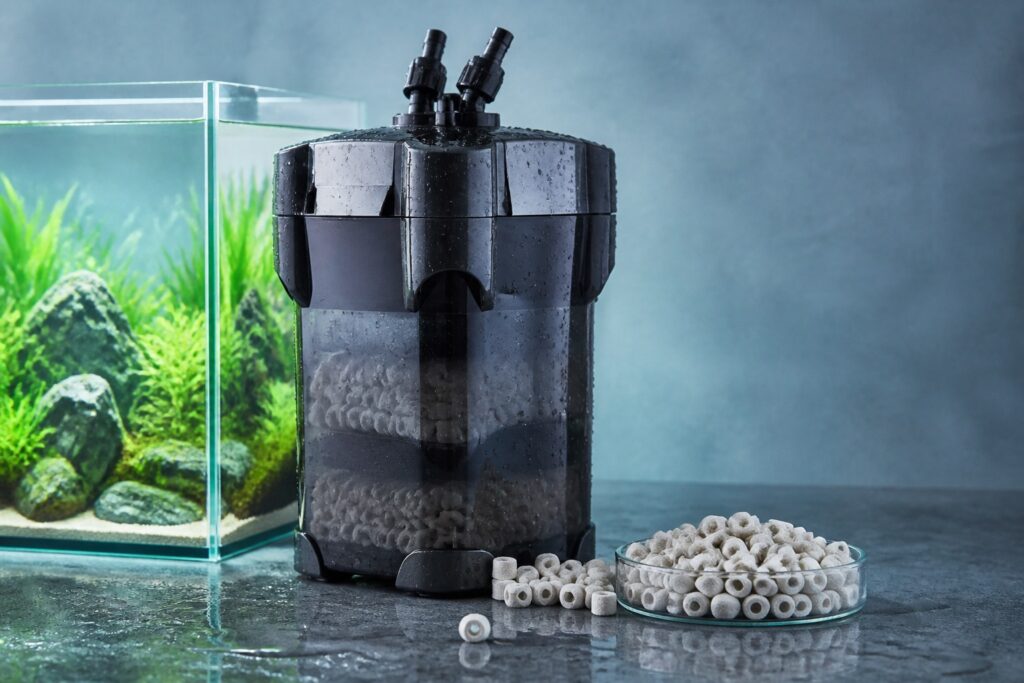
Siphon mulm, rinse mechanical media in tank water, trim melting leaves, feed lightly for a week.
-
Step 3
Tune light
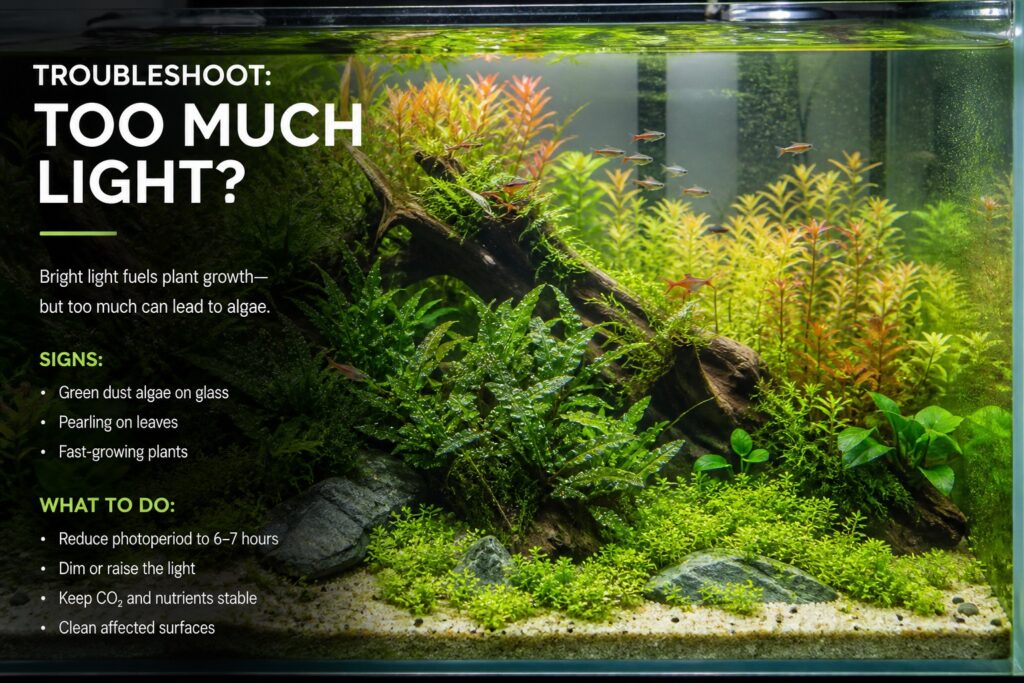
Drop to ~6–7 hours or raise the fixture while plants catch up. Don’t add more intensity hoping plants “outrun” BBA overnight.
-
Step 4
Spot-treat remaining tufts
Pull/brush hardscape. For stubborn patches, careful liquid carbon spot treatment per product label—or remove the décor and scrub outside the tank. Avoid tank-wide bleach dumps with livestock.
Spot options: Carefully applied hydrogen peroxide or Excel-style carbon on isolated tufts can bleach BBA on hardscape—protect livestock and follow product labels.
Aftercare: Improve flow across the hardscape, keep CO₂ injection consistent if used, and remove decaying plant matter that feeds organics.
When to escalate
- Green dust on glass → Green dust algae.
- Green spot on glass/leaves → Green spot algae.
- CO₂ system setup → CO₂ hub.
- Calculators → All calculators.
Helpful products
Related guides
- Green dust algae — ID
- Green spot algae — ID
- CO₂ hub — Stability
- All calculators — Tools
FAQ
Will SAE / otocinclus eat BBA?
Often no—BBA is tough. Some shrimp/snails ignore it. Fix conditions; don’t rely on livestock as the primary cure.
Should I bleach the whole tank?
No with livestock present. Spot-clean décor outside if needed after you stabilize CO₂ and organics.
Does more fertilizer stop BBA?
Only if plants were starved and you also fix CO₂/light. Dumping macros into an unstable tank can worsen algae.
How long until BBA recedes?
New growth stays clean in 1–3 weeks if CO₂/flow/organics are fixed; old tufts may need manual removal.
Is black beard the same as hair algae?
No—hair algae is usually green filaments in the water column/plants; BBA is dark brushy tufts anchored to surfaces.
Does lowering light alone kill BBA?
It can slow growth but rarely clears established tufts alone. Combine with removal and CO₂/organic control.
Can I scrub BBA off plants?
Soft leaves tear easily—trim heavily infected leaves and treat hardscape more aggressively.
Aqua Plants Hub Editorial