Troubleshoot
Green Dust Algae on Glass — Wipe or Wait?
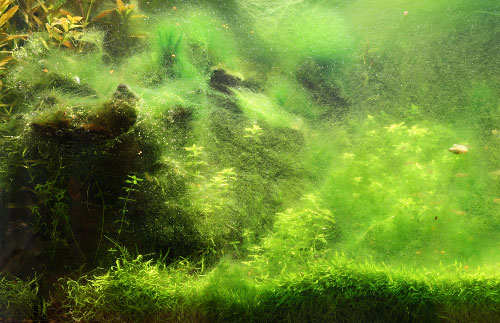
Green dust algae is a soft powdery green film on glass. It often appears in new or newly changed tanks and can clear as the system stabilizes—unlike hard green spot dots.
- Green dust
- Glass film
- Wipe vs wait
- New tank
What you’re seeing
Fingerprint test: green dust often smears like powder; green spot scrapes as hard dots.
| Pattern | Likely story |
|---|---|
| Even green haze on glass 1–3 weeks after setup/relight | Common transitional bloom |
| Film returns hours after wiping every day | Light/nutrients still feeding it—tune before obsessive wiping |
| Film + free-floating green water | Different problem (green water)—consider blackout/UV path |
| Hard discrete dots, not powder | Treat as green spot, not dust |
Likely causes (ranked)
Transitional bloom after change
New tanks, new lights, or big scape changes let dust algae colonize glass before plants dominate.
Quick test: Appears in week 1–3 after a change; plants still settling.
Light longer than uptake
Extra hours feed film on glass even when water looks clear.
Quick test: Long photoperiod; film on the brightest pane.
Nutrient imbalance / organics
Leftover organics and uneven macros support repeated films.
Quick test: Dirty filter; overfeeding; melt events.
Mis-ID of green spot
Treating hard dots like dust wastes time—different fix. Soft green dust on glass is often transitional. Obsessive daily wiping without shortening light usually recreates the same film overnight.
Quick test: Dots scrape hard, not powdery.
Fix order
-
Step 1
Decide wipe vs wait
If the tank is new and plants are growing, you can wipe the viewing pane weekly and wait 1–2 weeks while you stabilize light/CO₂. Daily panic wiping alone rarely ends the cycle.
-
Step 2
Shorten or raise light
Drop toward ~6–7 hours or raise the fixture until film slows between cleanings.
-
Step 3
Support plant uptake
Stable CO₂ (if used), clean mechanical filtration, light feeding. Healthy plant growth is the long-term competitor.
-
Step 4
Reassess ID
If hard dots remain after the film is gone, switch to the green spot guide. If water itself is green, use green-water tactics—not glass wiping alone.
Wipe strategy: Clean the viewing pane on a schedule (for example weekly) while you adjust photoperiod and plant uptake. If film rebuilds in hours every day, the drivers are still wrong.
ID check: Hard scrapable dots are green spot—switch guides. Pea-soup water is green water—different tactics again.
Maintenance rhythm: Wipe the front pane on a weekly cadence while you shorten the photoperiod. Track whether the film returns slower each week—that is the real progress metric, not a single crystal-clear morning after aggressive scrubbing.
When to escalate
- Hard glass dots → Green spot algae.
- Brown film in a new tank → Brown diatoms.
- Cloudy water → Cloudy water.
- Calculators → All calculators.
Helpful products
Related guides
- Green spot algae — Differential
- Brown diatoms — New tank
- Cloudy water — Related
- All calculators — Tools
FAQ
Should I blackout for green dust?
Sometimes for stubborn cases, but try light reduction and plant support first. Blackouts stress plants too.
Is green dust dangerous to fish?
Usually cosmetic. Test ammonia if the tank is new—don’t ignore chemistry.
Why does it come back overnight?
Spores/film rebuild under excess light and leftover nutrients—tune the drivers.
Do snails clean it?
Some help on soft films; they won’t replace balancing light and uptake.
Green dust vs green water?
Dust coats glass. Green water colors the water column itself.
Does raising KH stop green dust?
Not as a primary lever. Focus on light hours, plant growth, and not confusing dust with green spot.
Can I leave green dust forever?
Cosmetically optional on side panes, but long excess light that feeds dust often feeds other algae too—tune the system.
Aqua Plants Hub Editorial