Troubleshoot
Brown Diatoms in a New Tank — Timeline + Fix
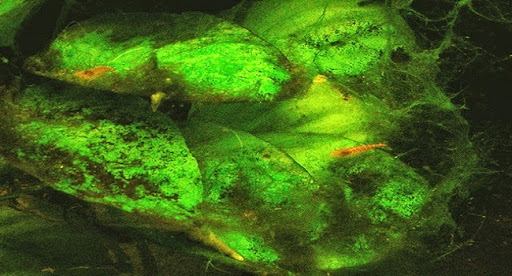
Brown “dust” on glass, sand, and décor in a new tank is often diatoms. They usually peak early, then fade as the tank matures—if you don’t over-light and overreact.
- Brown diatoms
- New tank
- Silica
- Patience
What you’re seeing
Diatoms look brown/golden and dusty; they wipe easier than BBA tufts or hard green spots.
| Week (typical) | What happens |
|---|---|
| 1–3 | Brown film appears on glass/sand after fill |
| 3–6 | Often peaks then slows if light is moderate |
| Later | Should decline as biofilm/plants establish |
| Anytime | If black brushy tufts → not diatoms (see BBA) |
Likely causes (ranked)
New-tank biofilm stage
Fresh surfaces and unsettled biology favor diatoms early.
Quick test: Tank age weeks, not months; dusty brown wipe.
Silicates in source water / substrate dust
Some tap water and sand introduce silica diatoms use.
Quick test: New sand; known silicates in tap.
Excess light for a young plant mass
Long hours feed brown film before plants shade and uptake.
Quick test: Long photoperiod from day one.
Mis-ID of other algae
Treating BBA or GSA like diatoms wastes effort. Silicates and fresh surfaces favor diatoms early. The good news: most dusty brown films fade as the tank matures if light stays moderate.
Quick test: Dark tufts or hard green dots instead of dusty brown.
Fix order
-
Step 1
Wipe and vacuum lightly
Clean glass and siphon loose brown dust. Manual removal buys visibility while biology catches up.
-
Step 2
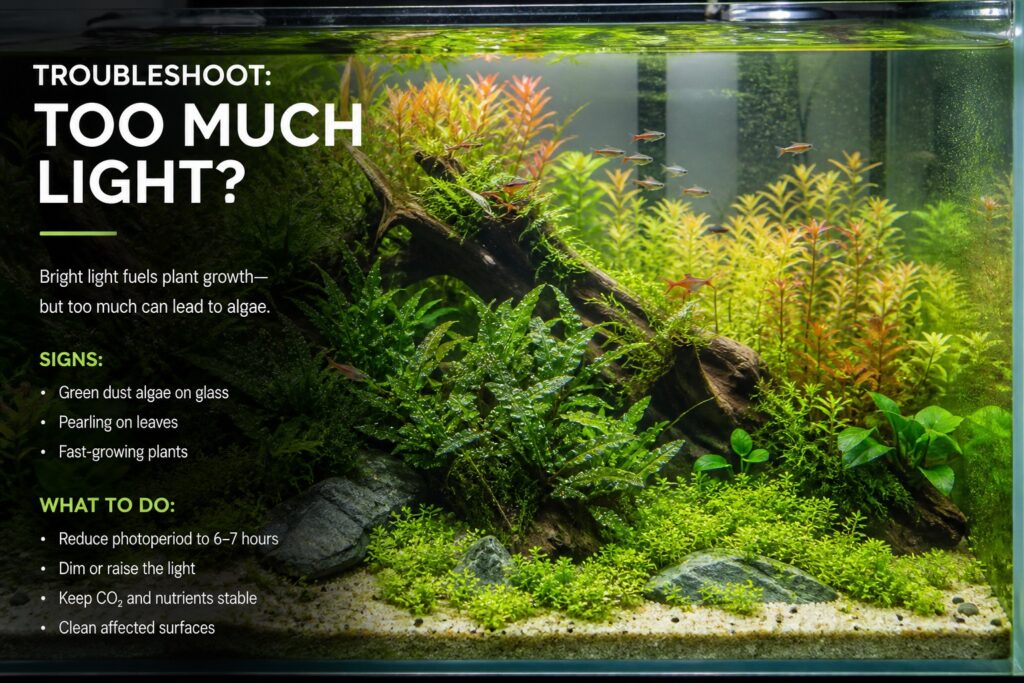
Keep light moderate
~6 hours to start for new planted tanks is safer than 10. Raise intensity later when plants grow.
-
Step 3
Don’t overfeed; finish the cycle
Food becomes ammonia and fuels mess. Follow ammonia/nitrite to 0—see new tank syndrome if livestock are in.
-
Step 4
Optional helpers
Otocinclus/nerites can help on soft films once ammonia/nitrite are 0. They are not a license for 12-hour lights.
Patience window: Expect several weeks in many new tanks. Wipe glass for viewing pleasure, but judge success by whether the film returns slower—not by one perfect wipe.
Livestock helpers: Add algae-eating snails or otocinclus only after ammonia and nitrite are 0. Helpers on a cycling tank create more ammonia, not less diatoms.
Source water note: Some municipal supplies carry more silicate after seasonal changes. If diatoms explode after a big water change with the same light schedule, consider RO/DI blending later—but finish the cycle and keep photoperiod sane first.
When to escalate
- Still cycling with fish → New tank syndrome.
- Green powder film → Green dust.
- Hard green dots → Green spot.
- Calculators → All calculators.
Helpful products
Related guides
- New tank syndrome — Cycle
- Green dust — Differential
- Green spot — Differential
- All calculators — Tools
FAQ
Do diatoms mean my tank failed?
No—very common early. They often fade with time and moderate light.
Should I replace all the sand?
Usually no. Rinse future sand better; vacuum gently now.
Will more fertilizer stop brown algae?
Not as a first move in a new tank—finish the cycle and control light first.
How long until diatoms leave?
Often several weeks. If brown becomes black brushy tufts, re-ID as BBA.
Are diatoms harmful?
Mostly cosmetic. Watch ammonia/nitrite for fish safety.
Will hydrogen peroxide wipe stop diatoms forever?
Spot treatments can clear glass briefly. Without light control and time, brown dust often returns.
Brown on plants vs brown on glass—same fix?
Often the same diatom story in new tanks. Still rule out melt or nutrient issues if plant tissue is dying, not just coated.
Aqua Plants Hub Editorial