Troubleshoot
Green Spot Algae on Glass & Leaves — Fix Guide
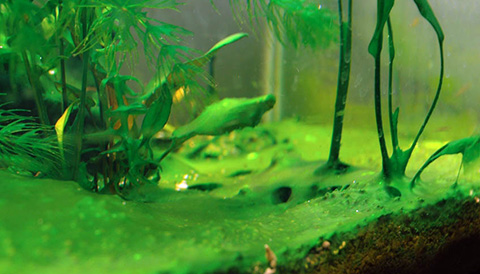
Green spot algae (GSA) forms hard green dots on glass and slow-growing leaves (Anubias, ferns). Scrape what you see—but lasting control needs phosphate, CO₂, and light balance.
- Green spot
- Glass dots
- PO₄
- Slow leaves
What you’re seeing
GSA is not green dust: spots are discrete, firmly attached, and scrape as dots—not a soft film that wipes like powder.
| Where | Typical reading |
|---|---|
| Front glass dots returning days after scrape | Light + lean PO₄ / unstable CO₂ common |
| Spots on Anubias / slow leaves only | Slow tissue + excess light relative to uptake |
| Spots with very low measured phosphate | Classic lean-PO₄ GSA pattern in high light |
| Spots with plants pearling poorly | Fix CO₂ before chasing bottles |
Likely causes (ranked)
Phosphate too low for the light level
In high light, very lean PO₄ often correlates with GSA on glass while plants stall.
Quick test: PO₄ near 0 on tests; intense light; glass dots return.
Unstable CO₂
Plants under-uptake macros when CO₂ swings, leaving energy for spots.
Quick test: Large pH swing; poor pearling.
Photoperiod / intensity too high for plant mass
Glass gets hours of light plants don’t fully use.
Quick test: Long hours; sparse planting.
Slow-leaf surfaces
Anubias and similar hold spots longer than fast stems. Green spot algae forms hard dots on glass and slow-growing leaves. It often signals light intensity/hours outrunning CO₂ and nutrient balance—especially low phosphate stories in some tanks.
Quick test: Spots on slow leaves while stems stay cleaner.
Fix order
-
Step 1
Scrape glass on maintenance day
Use a pad safe for acrylic/glass. Removing spots reduces the visible load while you fix chemistry.
-
Step 2
Stabilize CO₂
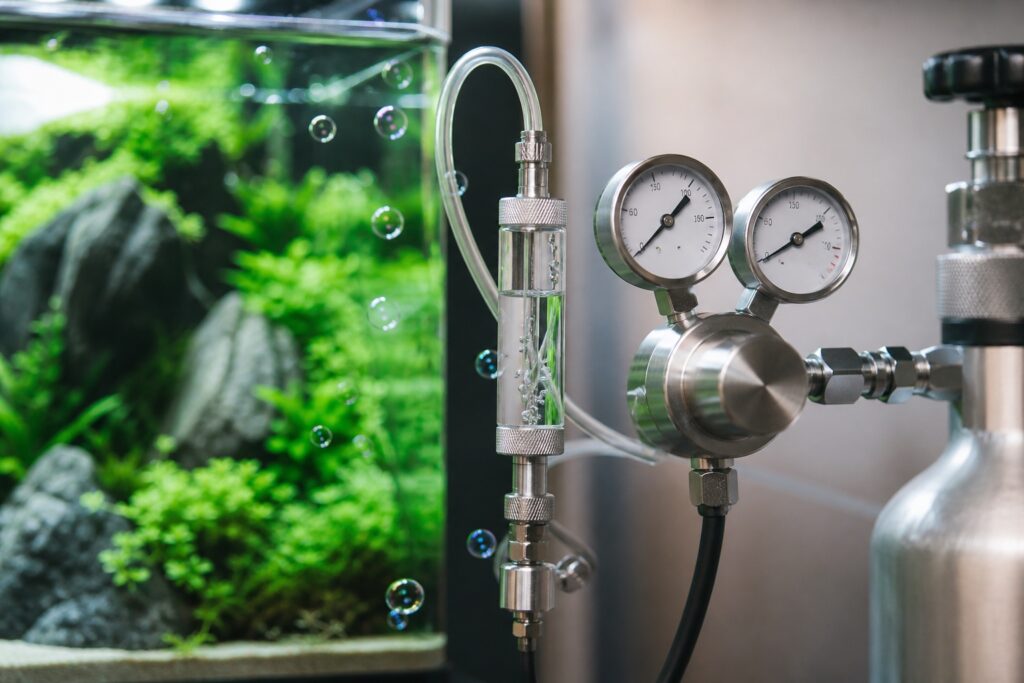
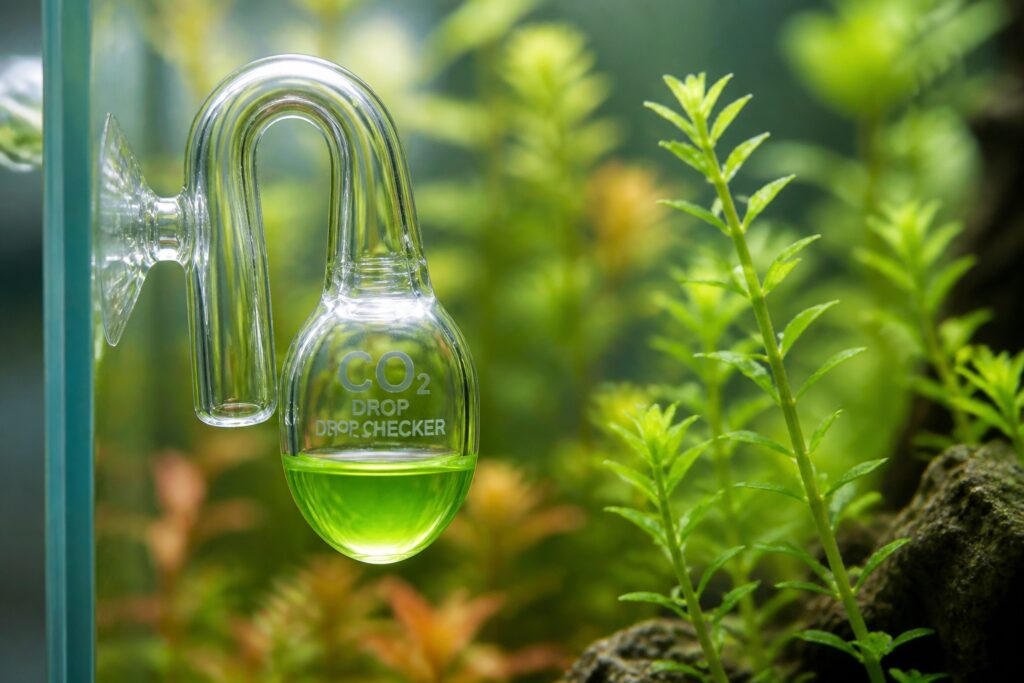
Steady injection during lights; verify with a drop checker / consistent pH method you trust.
-
Step 3
Bring phosphate out of zero (if lean)
If tests show ~0 PO₄ under strong light, dose phosphate modestly per product label toward a detectable lean target—don’t dump high EI overnight.
-
Step 4
Trim worst spotted slow leaves; tune light
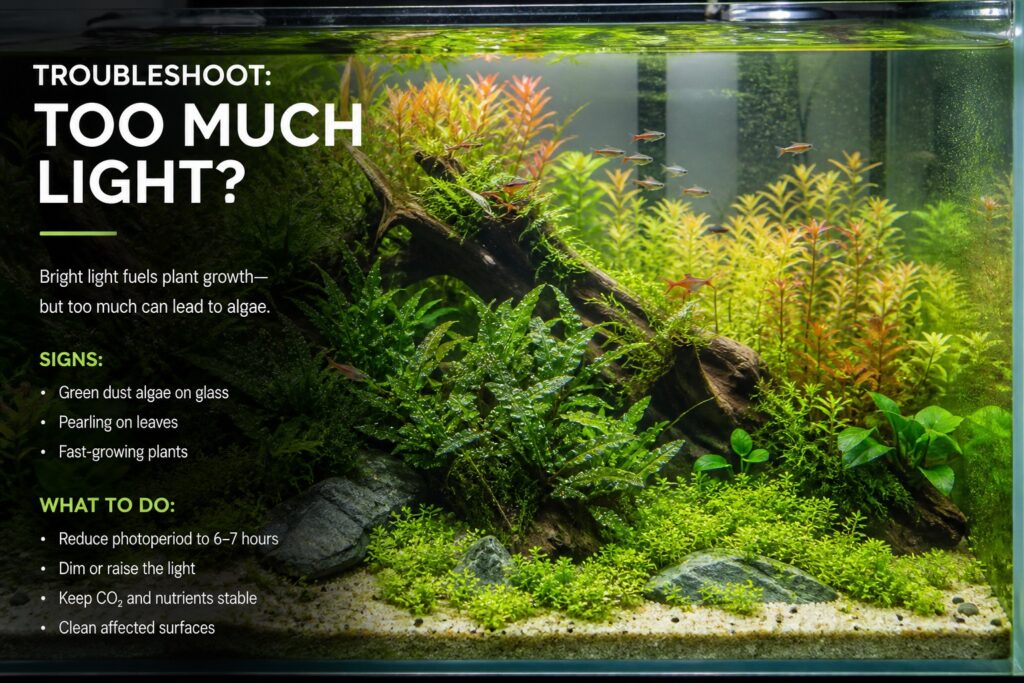
Cut heavily spotted Anubias leaves. Reduce photoperiod to ~6–7h until new glass stays cleaner longer.
Mechanical first: Razor the glass. Soft leaves with heavy GSA may need pruning of the worst leaves after you fix drivers.
Balance check: If you dose macros, review phosphate; if you run high light, verify CO₂ stability with a drop checker before blasting algaecides.
When to escalate
- Soft powder film on glass → Green dust algae (different).
- Dark brushy tufts → Black beard algae.
- CO₂ hub → CO₂ guide.
- Calculators → All calculators.
Helpful products
Related guides
- Green dust algae — Differential
- Black beard algae — Differential
- CO₂ hub — Stability
- All calculators — Tools
FAQ
Is GSA caused by too much phosphate?
Often the opposite in high-tech tanks—very low PO₄ with strong light. Test; don’t assume.
Will otocinclus eat green spot?
They help on soft films more than hard glass dots. Scraping + chemistry still required.
How fast does dosing PO₄ help?
New glass stays cleaner over 1–2 weeks if CO₂/light are also sane; old dots need scraping.
Can I ignore spots on Anubias?
You can trim leaves, but glass returning fast means the balance is still off.
GSA vs green dust?
GSA = hard dots. Green dust = soft powder film that often wipes more easily and may clear with patience/blackout tactics.
Will nerites erase green spot?
They help soft films more than hard calcified dots. Expect to scrape glass yourself.
Is GSA a sign to quit CO₂?
Not automatically. Unstable or insufficient CO₂ under strong light often worsens spot algae—stabilize rather than yank systems blindly.
Aqua Plants Hub Editorial