Species guide
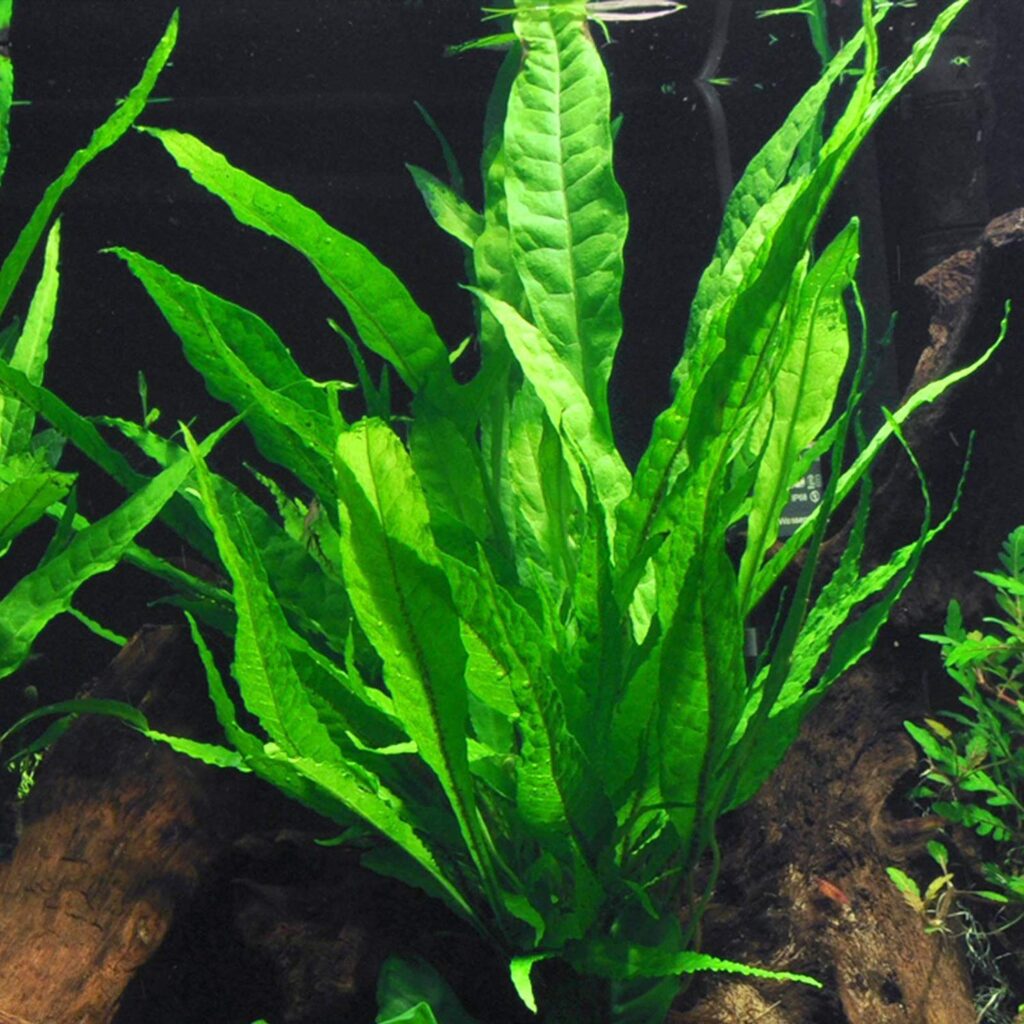
Java Fern Care Guide (Microsorum pteropus)
Aquatic plant
Java fern is the bulletproof epiphyte for beginners. Its rhizome must stay above substrate—attach to driftwood or rock and it thrives in low light without CO₂.
- Very easy
- Low light
- No CO₂
- Rhizome plant
Quick facts
| Light | Low–medium; tolerates shade under floaters |
|---|---|
| CO₂ | Not required |
| Temp | 20–28 °C (68–82 °F) |
| pH | 6.0–7.5 |
| Growth | Slow; plantlets on leaf tips |
| Difficulty | Beginner |
| Placement | Rhizome on wood/rock — never buried |
Overview
Java fern (Microsorum pteropus) is a Southeast Asian epiphyte sold in standard, narrow-leaf, and Windelov varieties. Like Anubias, it absorbs nutrients through the rhizome and leaves—not buried roots. It anchors naturally to driftwood in blackwater streams.
It is a workhorse in Budget 50 nano and Budget 150 low-tech builds because it survives inconsistent dosing and gentle lighting. Black bumps on leaves are often reproductive sporangia, not disease.
When leaves go transparent, check for buried rhizome first—our melting after planting guide covers transplant shock vs rot. High light without balance invites BBA on older fronds.
Care steps
-
Step 1
Attach the rhizome to hardscape
Tie with thread or use aquarium glue on wood or stone. Do not push the rhizome into gravel or soil—it rots quickly when buried.
-
Step 2
Keep light modest
6–8 hours on a low–medium LED is plenty. Use the LED power calculator if upgrading from a kit light.
-
Step 3
Optional liquid carbon or micros
Excel-style liquid carbon can slow BBA on slow growers; dose lightly 2–3×/week in low-tech tanks. Skip if shrimp are sensitive.
-
Step 4
Propagate from plantlets or rhizome splits
Detach baby ferns when roots are 1–2 cm, or cut rhizome sections with 3+ leaves. Re-glue to new hardscape.
Common problems
Transparent / melting leaves
Why: Buried rhizome, ammonia spike in new tank, or extreme temperature swing.
Fix: Expose rhizome; trim mushy leaves; confirm cycle is complete before adding livestock.
Black spots on leaf underside
Why: Usually normal sporangia (reproductive structures), not algae.
Fix: Leave them unless leaves also soften. If soft, check flow and ammonia.
BBA on leaf edges
Why: Too much light or photoperiod vs slow growth; dead spots collect algae.
Fix: Shorten light hours; remove affected fronds; follow BBA fix-order guide.
Good tank mates & companions
- Shrimp & snails — excellent; biofilm on fronds is forage.
- Betta, gourami, nano tetras — safe in calm zones.
- Companion plants: Anubias, moss, Buce — shared epiphyte logic.
- Avoid: goldfish and large plecos that rasp leaves.
Gear for this species
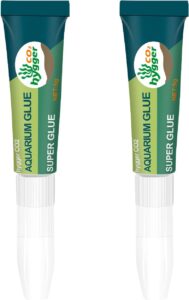
Aquarium Glue, Clear Coral Glue for Plants, Rocks, Moss, Coral, Stone, Wood – Quick Drying, Fish Safe, Freshwater & Saltwater Aquascaping – 5g (2PCS)
Uses: - Used to attach moss/epiphytes to rocks, driftwood... - Can be applied when the plant or substrate is wet - Gel form, does not dry out like 502 glue over time

Budget 150 low-tech setup — Java fern pairs with sponge filter and gentle LED in this BOM
FAQ
Can Java fern grow floating?
Yes—rhizome can float until roots grip hardscape. Long-term, tie it for a cleaner scape.
Why are there black bumps on my Java fern?
Often sporangia (baby plant sites). If leaves stay firm and green, it is normal.
Does Java fern need fertilizer?
Not strictly in low-tech tanks. Light liquid micros help in heavily planted setups.
Can I plant Java fern in substrate?
Only roots—not the rhizome. Burying the rhizome causes rot within days.
How fast does Java fern grow?
Slowly. Expect new leaves every few weeks in low-tech conditions—patience is normal.
Aqua Plants Hub Editorial