Troubleshoot
Why Aquarium Plants Melt After Planting — Fix Order
Most “melt” in the first 1–3 weeks is tissue conversion from emersed farm growth—not instant failure. Match the pattern, then follow a calm fix order.
- Plant melt
- Emersed→submersed
- New plants
- Don’t yank yet
What you’re seeing
Melt looks dramatic in photos, but diagnosis depends on which tissue fails and whether the crown/rhizome is still firm.
| Pattern | Likely cause |
|---|---|
| Old emersed leaves go translucent/mushy; crown firm; new submerged leaves already poking | Normal adaptation — farm leaves were grown above water |
| Melt worst under intense LED in days 1–5; tips bleached then collapse | Light / CO₂ shock — too much light or unstable injection on day one |
| Crown/rhizome soft, brown, smelly; no new spears after 10–14 days | Root/rhizome damage — crushed at planting or buried wrong |
| Whole-tank melt plus fish stress; tests show ammonia/nitrite | Water chemistry — treat toxins first, not “more fertilizer” |
Emersed vs submerged. Tissue-culture and emersed pots often melt the first generation of leaves underwater. That is expected if the growing point stays healthy. Yanking every melting plant resets the clock.
What to keep. Firm white/cream roots and a solid crown beat pretty leaves. Trim mush with scissors; leave the base unless it is rotten.
Likely causes (ranked)
Emersed tissue dying off (adaptation)
Farm and tissue-culture leaves are built for air, thicker cuticle, and different gas exchange. Underwater they often yellow, go translucent, then shed while the plant pushes true submerged leaves. This is the most common “melt” in week 1–3 and is not the same as a nutrient crash.
Quick test: Crown firm; melt starts on older emersed leaves; new pointed submerged leaves appear at the base.
Light / CO₂ shock
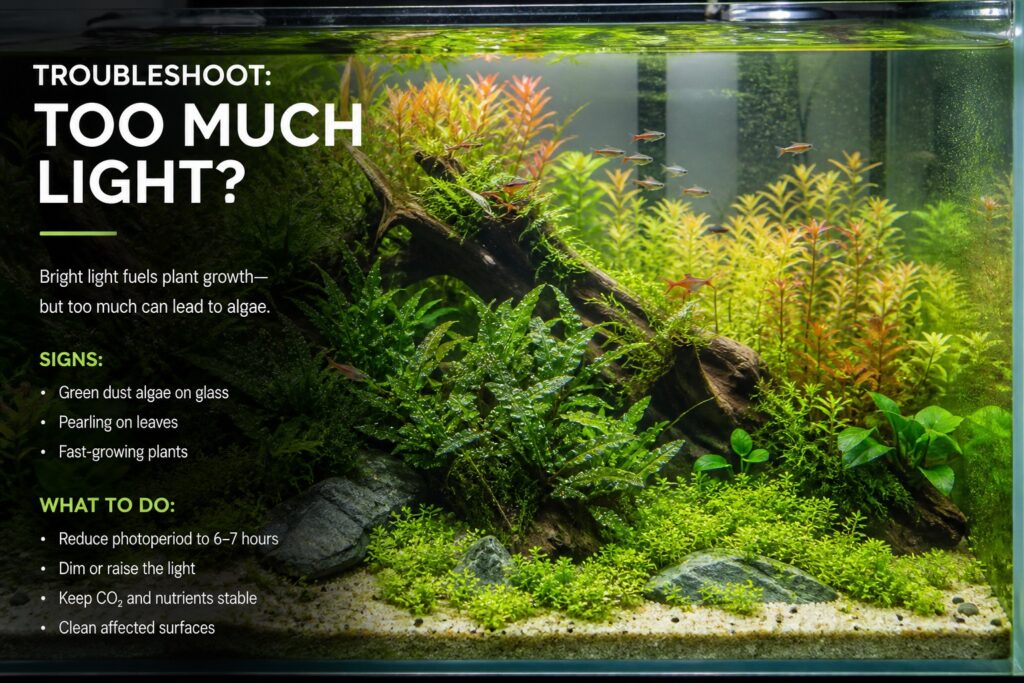
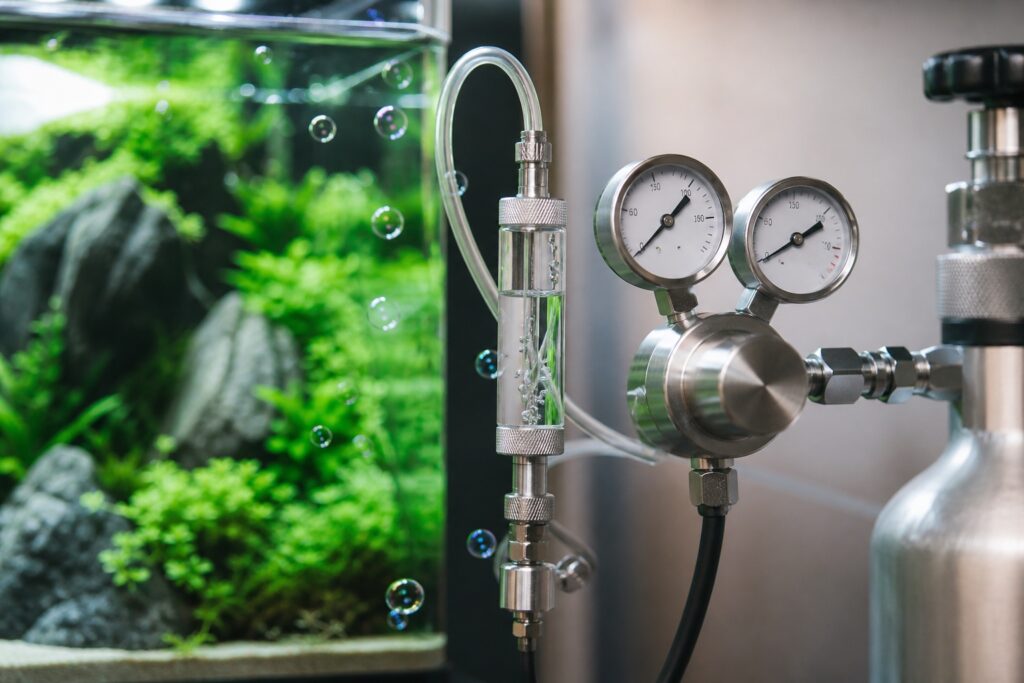
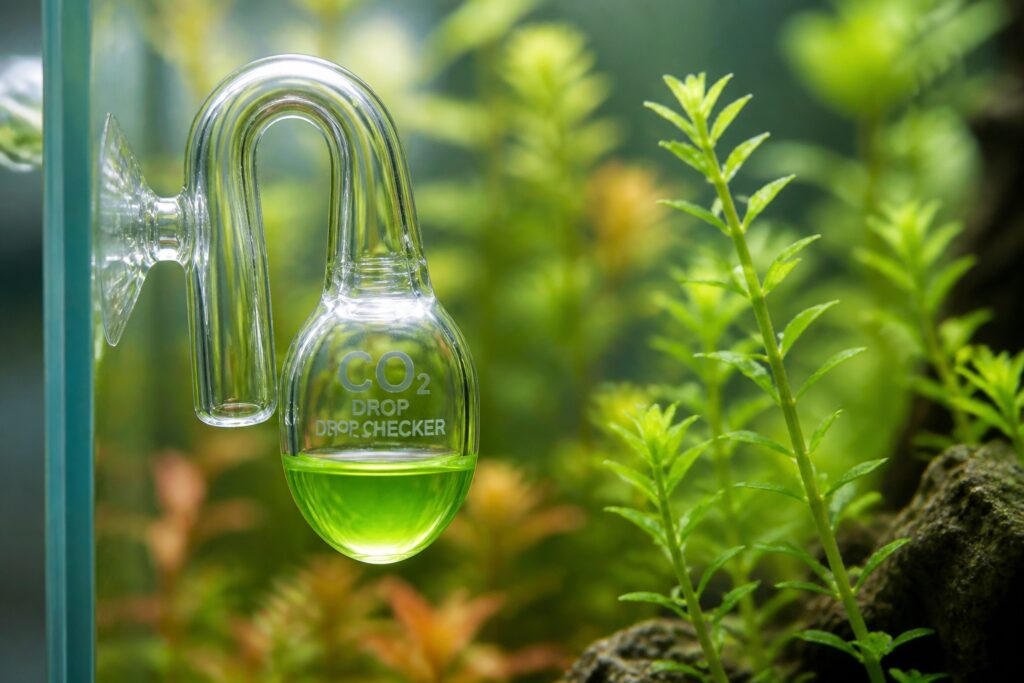
Blasting a new scape with high PAR and aggressive CO₂ on day one burns soft tissue. Unstable CO₂ (big pH swings) makes melt worse even when nutrients look fine on paper.
Quick test: Damage worst under the brightest spots in the first days; pH swing large when CO₂ is on.
Root or rhizome damage at planting
Crushed rhizomes (Anubias/Java fern buried too deep, Crypts smashed) cannot feed new leaves. Soft brown crowns rarely rebound.
Quick test: Base soft/black; no new growth by day 14; smell of rot.
Ammonia / poor water after setup
New aquasoil leach, overfeeding, or an unfinished cycle stresses plants and livestock together. Fertilizer will not fix toxicity.
Quick test: Ammonia or nitrite above 0; fish gasping; melt across many species at once.
Fix order
-
Step 1
Trim mush; keep firm crowns
Cut translucent leaves at the base. Do not uproot every melting stem. Keep rhizomes half-exposed for Anubias/fern; Crypt crowns should sit correctly in substrate—not buried like a potato.
-
Step 2
Dim light 3–7 days; stabilize CO₂
Run a moderate photoperiod (about 6–7 hours) or raise the fixture. If you use CO₂, keep injection steady—avoid big on/off swings while plants adapt.
-
Step 3
Lean ferts until new growth shows
Half-dose all-in-one or lean EI is enough. Extra macros will not stop adaptation melt and can feed algae on dying tissue.
-
Step 4
Reassess day 10–14
New submerged leaves = success. Soft, smelly crowns = remove that plant only. Chemistry issues → ammonia / new-tank guides below.
When to escalate
- Only Crypts collapsing after a move → Cryptocoryne melt guide.
- Yellowing without wholesale melt → Yellowing leaves deficiency tree.
- Round pinholes on old leaves → Pinholes / potassium guide.
- Ammonia > 0 with livestock → Ammonia spike treatment or New tank syndrome.
Calculators → All calculators.
Helpful products
Related guides
- Cryptocoryne melt — Related
- Yellowing leaves — Related
- CO₂ system hub — Stability
- All calculators — Tools
FAQ
Should I pull melting plants immediately?
Only if the crown/rhizome is soft and rotten. Firm crowns usually rebound with new submerged leaves in 1–3 weeks.
Is melt always a nutrient deficiency?
No. The first weeks are often emersed→submersed adaptation. Deficiency patterns usually continue after new growth starts.
Do I need CO₂ to stop melt?
Not for adaptation melt. Unstable or excessive CO₂ can worsen shock. Stable lean conditions beat aggressive ramps.
Why do tissue-culture plants melt harder?
TC leaves are very soft and often emersed-grown. Expect more conversion melt; keep the crown and trim mush.
Can I dose extra fertilizer to “save” melting leaves?
Extra macros rarely re-green dying emersed tissue and may feed algae. Focus on light/CO₂ stability and new growth.
Aqua Plants Hub Editorial