Troubleshoot
Pinholes in Aquarium Plant Leaves: K vs Other Causes
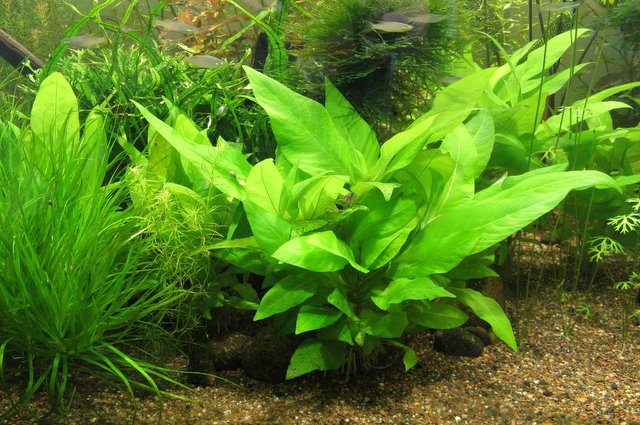
Tiny holes that expand into necrotic patches are classically potassium (K) deficiency—but snails, shrimp, CO₂ dead spots, and light burn look similar in a phone photo. Match the pattern before you dose or dose copper.
- Pinholes
- Potassium (K)
- Snails vs K
- NPK balance
What you’re seeing
Start with a diagnosis table—not a random fertilizer bottle. Pinholes are a pattern problem: which leaves, what edge shape, what color rim, and where in the tank.
| Pattern | Likely cause |
|---|---|
| Round / oval holes on older leaves only; yellow rim; holes enlarge into necrotic patches | Potassium (K) deficiency — K is mobile, so the plant pulls K from old tissue first |
| Ragged, irregular edges; tissue missing overnight; slime trails or snails visible after lights-out | Snail / shrimp grazing on soft or already-stressed tissue |
| Holes / melt only in one corner or behind hardscape; other zones look fine | CO₂ / flow dead spot — local stress, not whole-tank K crash |
| Holes / translucent patches on uppermost leaves nearest the LED; lower leaves OK | Light burn / thin tissue tear under intense photoperiod |
Leaf age matters. Mobile-nutrient issues (K, N, Mg) show on older leaves first. Immobile issues (Fe, Ca) usually hit new growth. Pure snail damage ignores that rule—it follows soft tissue and night activity.
Rim color. Yellow halo around round holes → classic K necrosis. Brown/black wet rim with mush → more often rot or severe stress, not “just missing K.” Ragged chew marks rarely have a neat yellow circle.
Take one clear photo of an old leaf and one of a new tip under white light. If only old leaves are holed and snails are scarce at night, treat as K until proven otherwise.
Likely causes (ranked)
Potassium deficiency (mobile nutrient)
Potassium (K) moves inside the plant. When water-column K is low, the plant reallocates K from older leaves to new growth—those older leaves develop small round necrotic pinholes that enlarge, often with yellowing edges. High-tech tanks dosing lots of N and P without dedicated K (or with lean all-in-ones) show this fast. Aquasoils rich in Ca/Mg (including many Amazonia-style soils) can also make K relatively scarce in the water column even when you think you are “fertilizing enough,” because cation exchange and competing ions change what plants actually see.
Quick test: Many older leaves across the tank share round holes; new tips still form; night check finds few or no grazers; pattern is tank-wide, not one corner.
Snail / shrimp grazing (not all snails eat healthy leaves)
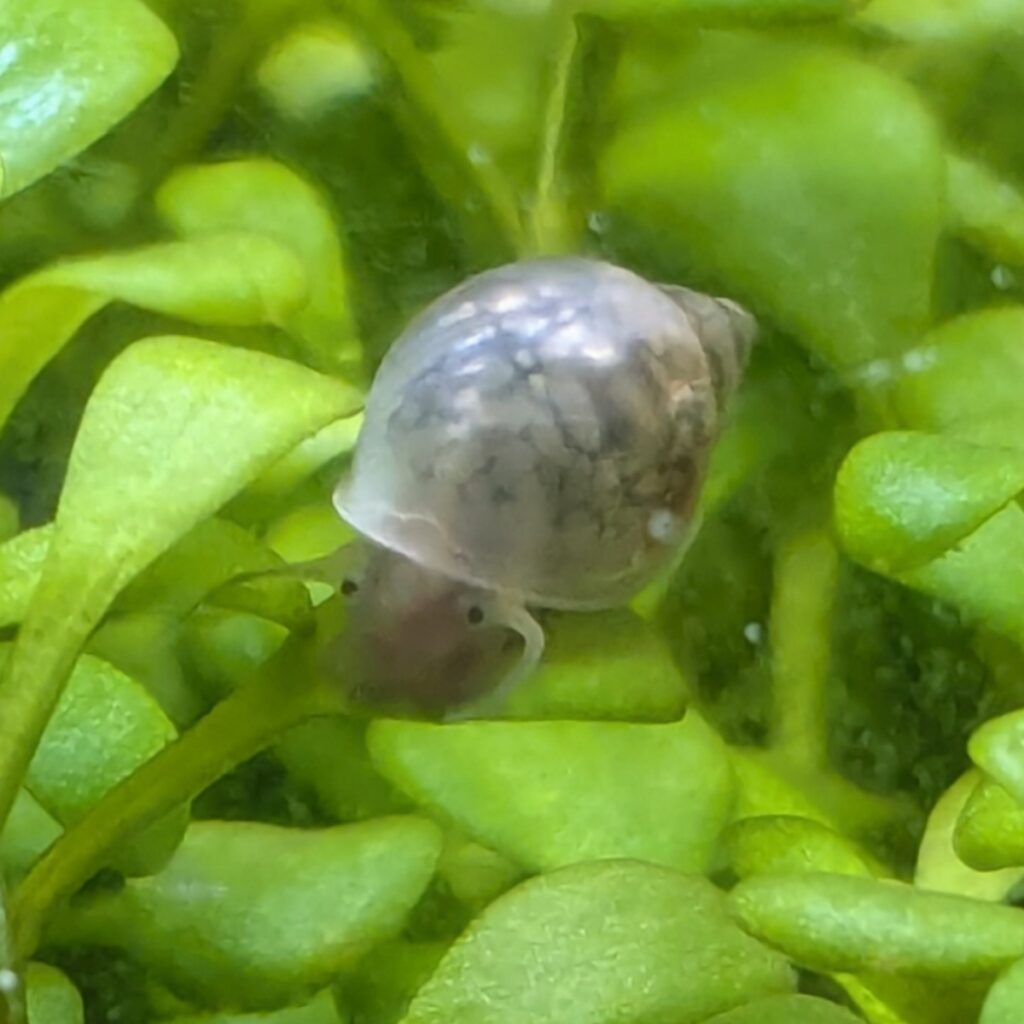
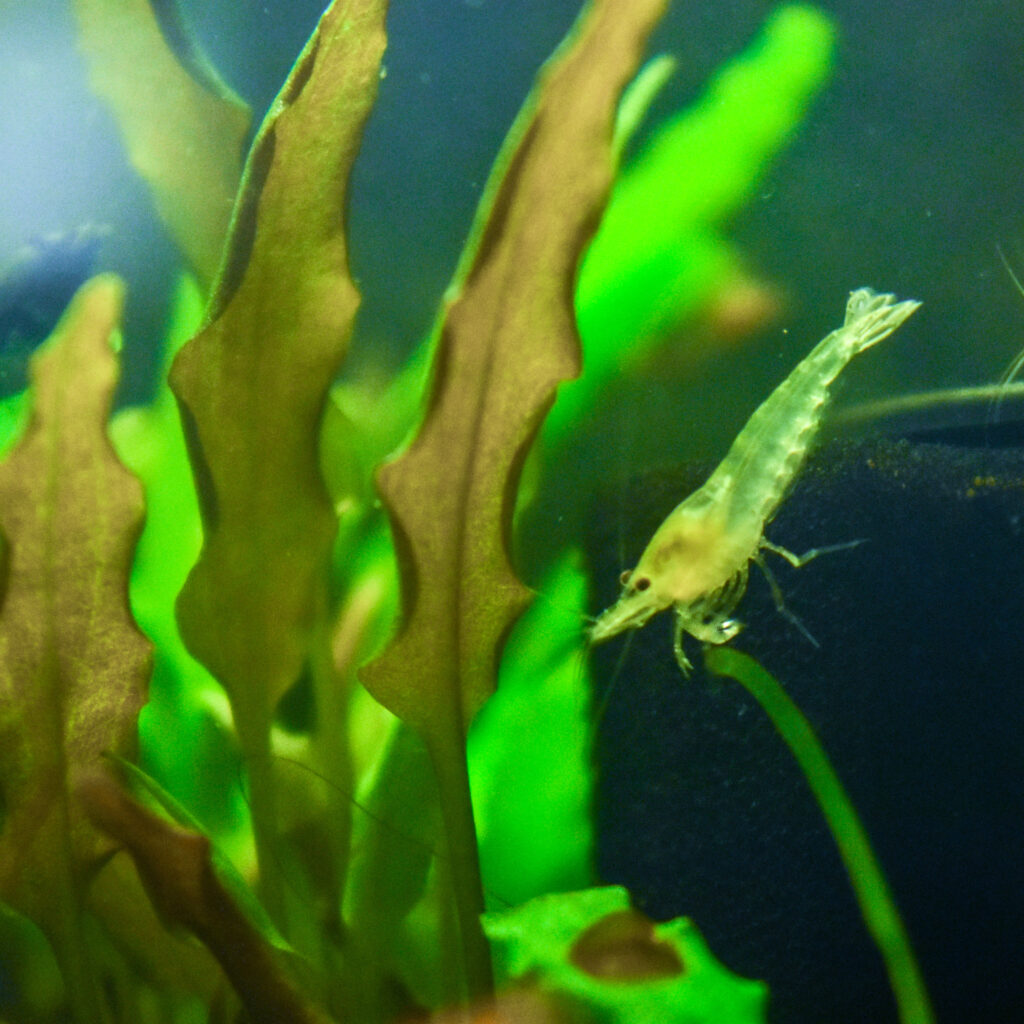
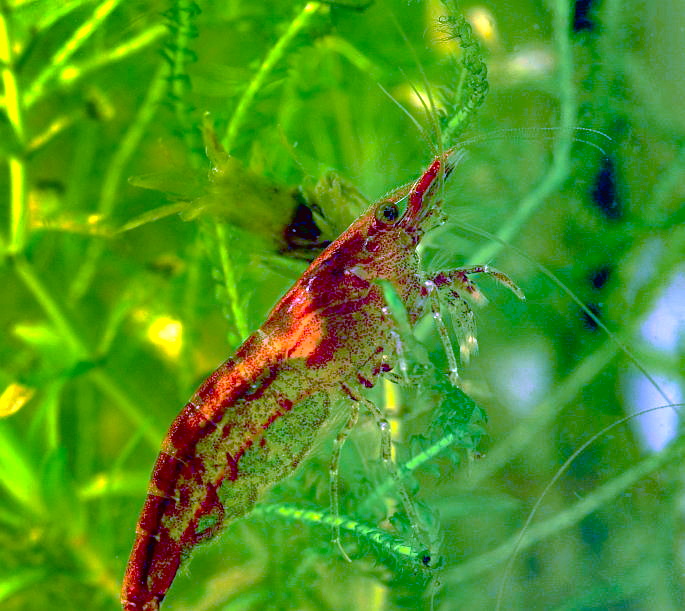
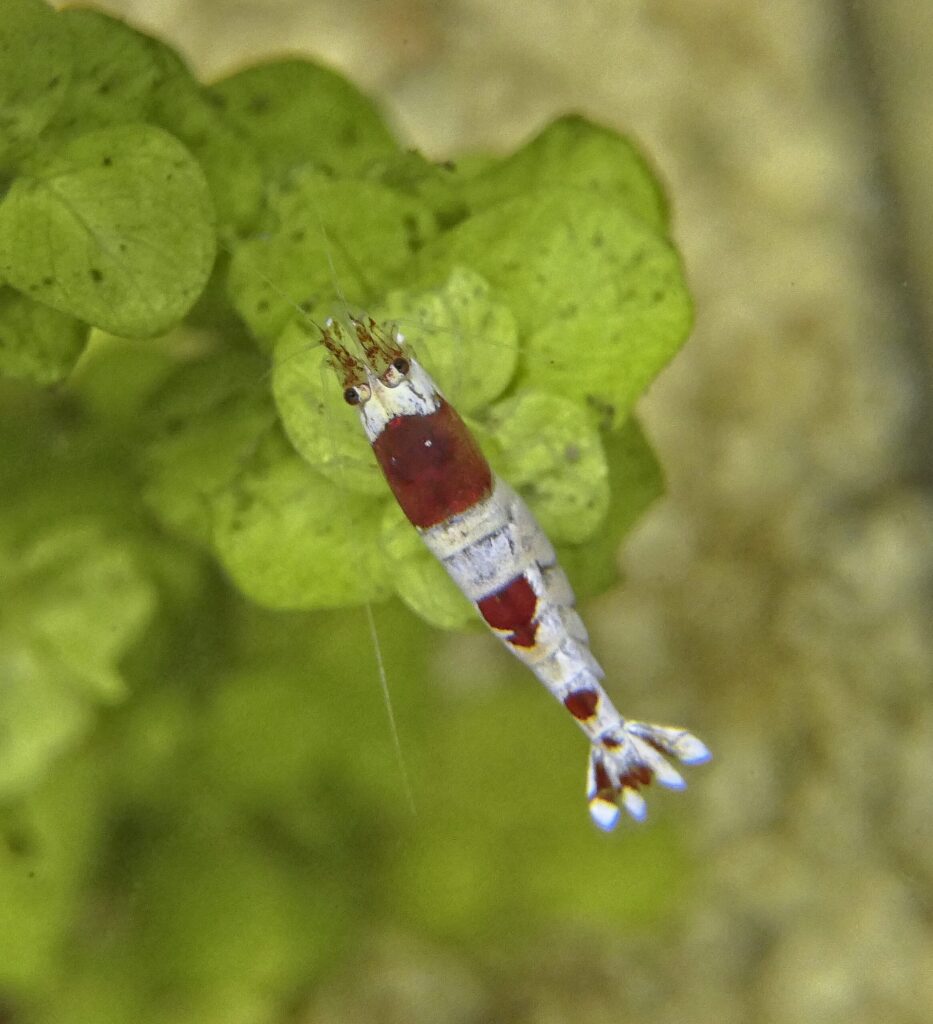
Malaysian trumpet snails mostly burrow and process mulm—they rarely carve neat holes in healthy leaves. Ramshorn and bladder snails more often rasp soft, melting, or algae-covered tissue and leave ragged edges. Amano and other shrimp can nibble soft tissue too. Grazing looks irregular, not like punched circles with yellow halos.
Quick test: Flashlight check 30–60 minutes after lights out; count snails on glass and leaves; edges look chewed/ragged rather than round with yellow rims.
CO₂ / flow dead spots
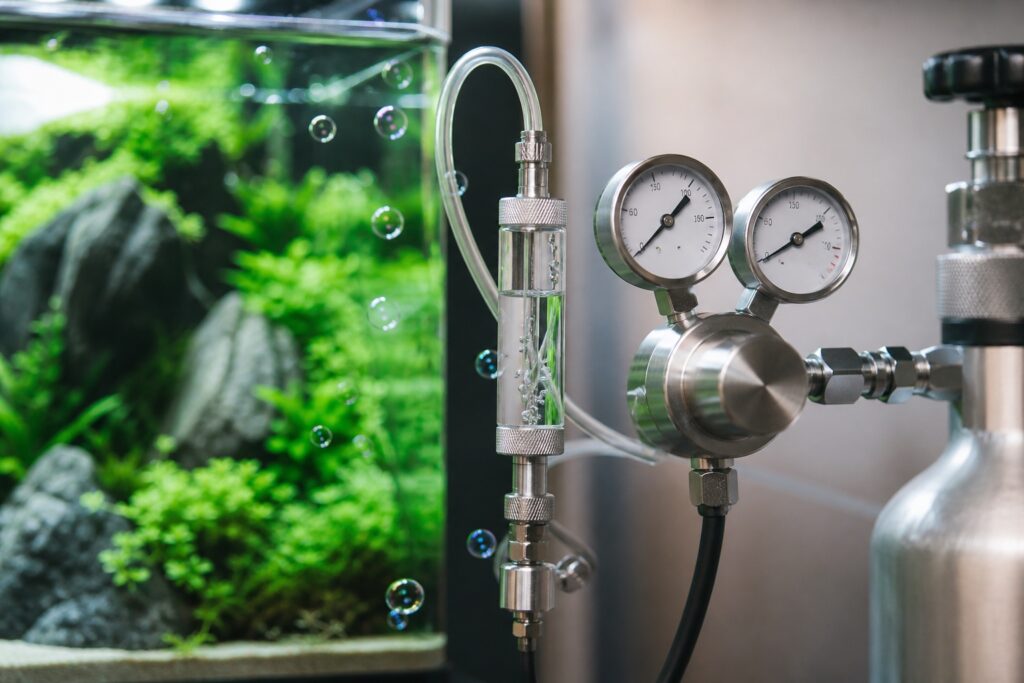
Low flow behind wood/rocks means unstable local CO₂ and nutrient delivery. Leaves there yellow, thin, then tear or hole even when the rest of the scape is fine. Fixing only K will not rescue a permanent dead corner—you need to move hardscape, add a wavemaker, or redirect the filter outlet.
Quick test: Damage clusters in one low-flow pocket; plants in the main current look cleaner; CO₂ mist or pearling is uneven across the tank.
Old tissue + intense light burn
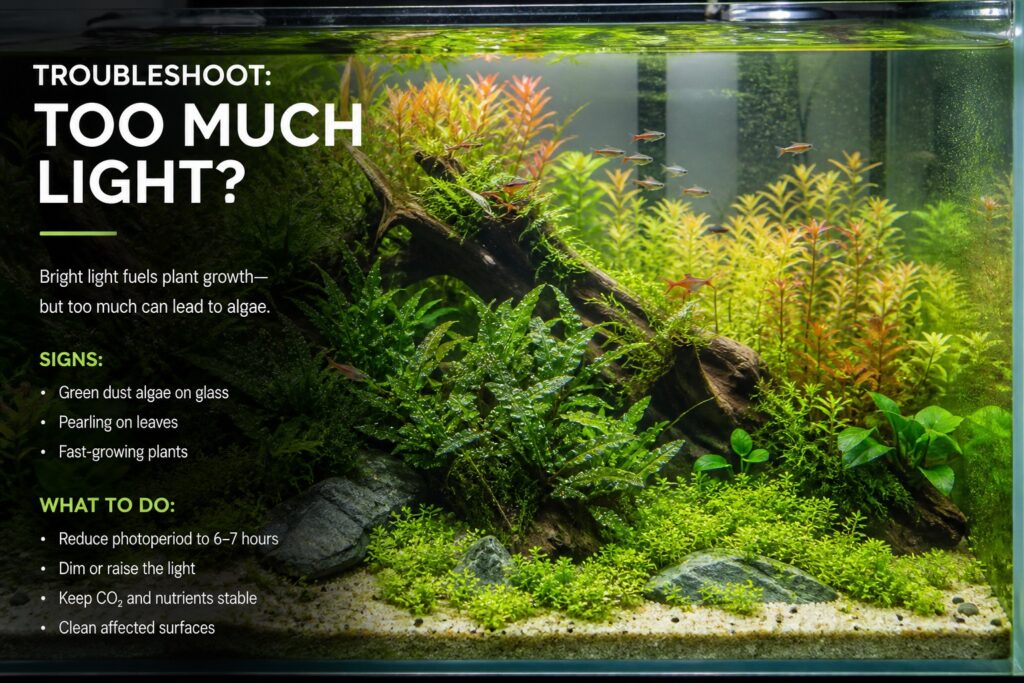
Thin stem leaves under a hard photoperiod can bleach, then tear into hole-like damage on the top canopy while lower leaves stay intact. This is optics and intensity, not a mobile-nutrient story.
Quick test: Only upper leaves near the fixture; reduce intensity or raise the light 3–7 days and new damage slows while old holes remain.
Fix order
-
Step 1
Rule out pests before you dose
After lights-out, use a flashlight along glass, hardscape, and soft leaves. Note species: trumpet snails in substrate are usually not your leaf-hole villains; dense ramshorn/bladder on soft leaves are. Manual removal, a snail trap, or a few assassin snails beat copper if you keep shrimp—copper treatments can wipe shrimp colonies.
If edges are ragged and snails are obvious, reduce grazing first. If the pattern is round holes on old leaves with almost no night activity, skip to potassium.
-
Step 2
Dose potassium consistently (not one mega spike)
Use a dedicated K product for 1–2 weeks and watch new leaves—not old holes (they never close).
- Seachem Flourish Potassium: label baseline is about 5 ml per 40 L (10 gal), typically 2–3× per week in planted tanks (follow your bottle; adjust for heavily planted high-tech).
- Target ballpark: many planted aquarists aim roughly 10–20 ppm K in the water column; lean EI users often land near the middle of that range. Prefer steady micro-doses over a single dump.
- DIY KCl / potassium sulfate: workable if you calculate ppm carefully—start conservative and retest plant response over 7–14 days.
Amazonia-style aquasoil: keep dosing water-column K even if the soil is “nutrient rich.” Ca/Mg competition and plant demand still empty K from the column.
-
Step 3
Rebalance NPK (don’t run N/P high with K at zero)
If you dose nitrate and phosphate aggressively but skip K, pinholes often worsen. After K is on a schedule for a week:
- Keep N and P at your usual lean or EI targets—don’t pile on more N hoping leaves “green up.”
- If you only use an all-in-one, check the label K content; many are N-heavy. Add a separate K bottle rather than tripling the all-in-one (that spikes N/P and algae risk).
- Stable CO₂ and photoperiod matter: swinging CO₂ makes deficiency patterns harder to read.
-
Step 4
Trim hopeless leaves; judge success on new growth
Necrotic holes do not heal. Trim the worst older leaves so the plant can push clean tissue. KPI = new leaves without round necrotic pinholes after 1–3 weeks of steady K (and pests controlled). If only one corner still fails, fix flow/CO₂ there instead of endlessly raising K.
When to escalate
- Yellowing without round pinholes → use the deficiency tree: Yellowing aquarium plant leaves.
- Whole-tank tissue collapse after planting → Why aquarium plants melt after planting.
- Crypts melting to the rhizome after a move → Cryptocoryne melt guide.
- Ammonia > 0 with livestock while leaves fail → Ammonia spike treatment first.
Calculators → All calculators.
Helpful products
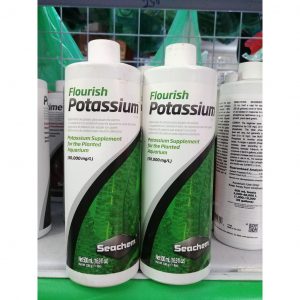
Seachem Flourish Potassium (or equivalent K)
Dedicated water-column K for classic old-leaf pinholes.
Snail trap / assassin snails
If night check confirms ramshorn/bladder grazing (shrimp-safer than copper).
Related guides
- Yellowing leaves (deficiency tree) — Related plant TR
- Plant melt after planting — Related plant TR
- CO₂ system hub — CO₂ stability
- All calculators — Tools
FAQ
Do pinholes mean I need more iron?
Usually no. Iron deficiency shows as pale/yellow new growth (often interveinal), not round necrotic holes on older leaves. Fix K first when the old-leaf pinhole pattern matches.
Can Amano shrimp make pinholes?
They can rasp soft or decaying tissue and leave irregular edges. True K pinholes are rounder, on older leaves, often with yellow rims, and continue even when shrimp are scarce.
How fast does potassium dosing help—and why not overnight?
Expect cleaner new leaves in about 1–3 weeks. K is mobile: the plant prioritizes new tissue, so old holed leaves rarely recover. Steady dosing beats one huge spike that also risks algae.
Why do Amazonia / aquasoil tanks still get K pinholes?
The soil can be rich overall while water-column K stays low relative to demand—especially with heavy stem growth and competing Ca/Mg. Dose K in the water column on a schedule; don’t assume the bag of soil covers macros forever.
Trumpet snails vs ramshorn—who eats leaves?
Malaysian trumpets mostly stay in substrate and process detritus. Ramshorn and bladder snails more often damage soft leaves. Confirm with a night flashlight check before any copper product (unsafe with shrimp).
Aqua Plants Hub Editorial