Species guide
Otocinclus Care Guide (Algae Crew, School & Biofilm)
Fish
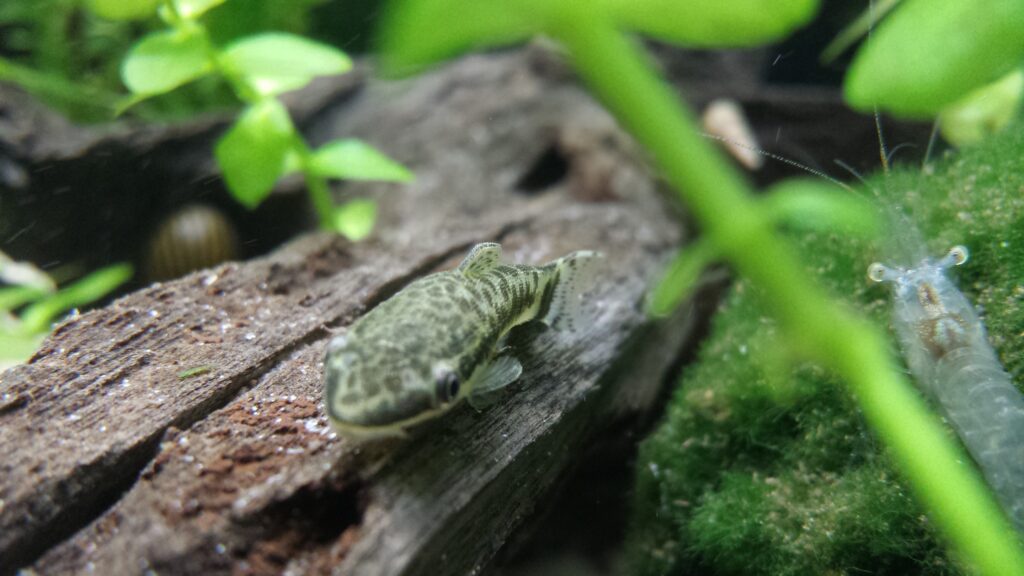
Otocinclus (often sold as “otos”) are tiny South American suckermouths that graze soft green film. They starve in brand-new tanks. Give them a mature, planted aquarium, a school of at least six, and supplemental wafers.
- Algae crew
- Schooling
- Needs mature tank
- Shrimp-safe
Quick facts
| Temp | 22–26 °C (72–79 °F) |
|---|---|
| pH | 6.5–7.5 (stable; avoid swings) |
| GH/KH | Soft–moderate (GH 4–12 dGH) |
| Diet | Biofilm + soft green film; supplement algae wafers |
| School size | Minimum 6; 8–12 looks natural |
| Tank size | 40 L (10 gal) long minimum for a small school |
| Difficulty | Intermediate — mature tank required |
Overview
Otocinclus species (commonly O. vittatus or Macrotocinclus affinis) are peaceful nano catfish. In the wild they graze aufwuchs on wood and leaves in slow rivers. In home tanks that diet is biofilm — the living film on driftwood, plant leaves, and glass after months of cycling.
A tank that just finished cycling still has almost no biofilm. Otos added on day one often starve within 1–3 weeks even if ammonia is zero. Run the filter 8–12 weeks, keep plants, and let wood age before buying fish. Pair with Java moss and Anubias nana for grazing surfaces.
Always buy a school. Single otos hide and stop eating. Use the stocking calculator before mixing with tetras. If ammonia appears after adding fish, treat it as new tank syndrome, not “otos being delicate.”
Care steps
-
Step 1
Wait for a mature, planted tank
Zero ammonia/nitrite is not enough. You want visible soft green film on wood and older plant leaves. Bottled bacteria helps the cycle but does not replace months of biofilm. See fishless vs fish-in cycling if you are still setting up.
-
Step 2
Buy a school and drip-acclimate
Purchase at least six from the same batch. Otos ship poorly — pick active fish with intact bellies, not hollow. Drip-acclimate 45–60 minutes. Quarantine if you keep expensive shrimp.
-
Step 3
Feed wafers after lights-on grazing
Let them graze biofilm all day. After lights-on, drop one algae wafer per 4–6 otos and remove leftovers within two hours. Overfeeding clouds water — see cloudy water troubleshoot if it persists.
-
Step 4
Keep flow gentle and oxygen high
A sponge filter or low-flow outlet is ideal. Otos gasp at the surface when oxygen drops after a big water change or heater spike. Match temperature within 1 °C.
-
Step 5
Watch weight and ich after shipping
Sunken bellies after week two mean not enough biofilm — add more wood/moss or return to a mature tank. White salt-grain spots are ich; raise temp gradually and treat without copper if shrimp share the tank.
Common problems
Otos dying 3–14 days after purchase
Why: Starvation in a new tank, shipping stress, or ammonia rebound.
Fix: Test ammonia/nitrite immediately. If zero, the tank likely lacks biofilm — add aged wood/moss or move fish to a mature display. Review ammonia spike steps if readings are positive.
Hollow bellies, fish ignoring wafers
Why: They prefer biofilm; wafers are backup. A sterile scape has nothing to graze.
Fix: Add spider wood and moss; dim light slightly to encourage film; feed wafers at dusk when they are bolder.
Single oto hiding all day
Why: School too small; otos are shoaling fish.
Fix: Add more otos to reach 6–10. Provide driftwood caves. Avoid aggressive tank mates.
Not eating black beard algae
Why: Otos prefer soft green film, not tough BBA.
Fix: Do not rely on otos for BBA. Follow the BBA fix-order guide and shorten photoperiod.
Good tank mates & companions
- Cherry & Amano shrimp — excellent; otos ignore adults. See cherry shrimp care and Amano care.
- Neon tetras, ember tetras, pygmy corys — peaceful nano community. Neon tetra guide.
- Nerite snails — share grazing niche; still need biofilm for everyone.
- Avoid: goldfish, large cichlids, aggressive barbs, and copper meds in a shrimp tank. Full fish list: what fish can live with shrimp.
Gear for this species


Seachem Stability – For Freshwater and Marine Aquariums 250ml
Cycle new tank — beneficial bacteria.

EHEIM Jager Aquarium Thermostat Heater 100W ( Pack of 1)
Jager truyền thống — chính xác nhiệt độ.
Budget first community setup — Filter, heater, and stocking math for a peaceful nano community with otos
FAQ
How many Otocinclus should I keep together?
Minimum six. Eight to twelve looks natural and keeps them grazing instead of hiding.
Can Otocinclus live in a new aquarium?
Not safely. Wait until the tank is fully cycled and has visible biofilm on wood and plants — often 8–12 weeks.
Do Otocinclus eat all aquarium algae?
They eat soft green film and some diatoms. They rarely clear black beard algae or green spot algae.
Can Otocinclus live with cherry shrimp?
Yes. They are among the safest algae fish for shrimp tanks if copper treatments are never used.
Why do pet-store otos die so often?
Mass shipping, empty bellies, and buyers adding them to sterile new tanks. Buy plump fish and a mature display.
Do Otocinclus need a heater?
Yes in most homes — hold 22–26 °C. Cold snaps after water changes trigger ich and stop feeding.
Aqua Plants Hub Editorial