Species guide
Neon Tetra: Care Guide (Schooling, Water & Tank Mates)
Fish
Neon tetras (Paracheirodon innesi) are classic nano-schooling fish. They need stable soft water, a group of at least six, and calm tank mates — not fin-nippers or large predators.

- Schooling
- Peaceful
- Soft water
- Beginner–intermediate
Quick facts
| Temp | 22–26 °C (72–79 °F) |
|---|---|
| pH | 6.0–7.0 (stable; slightly acidic ideal) |
| GH/KH | Soft–moderate (GH 3–10 dGH, KH 1–4 dKH) |
| Diet | Omnivore — micro flakes, small pellets, frozen daphnia |
| Tank size | Minimum 40 L (10 gal) for a school of 6–8 |
| Temperament | Peaceful shoaling fish |
| Difficulty | Beginner–intermediate (sensitive to swings) |
Overview
Neon tetras are small Amazonian characins famous for their blue-red stripe. In the wild they live in blackwater streams with soft, acidic water and dappled light. In home tanks they thrive when water stays stable — sudden parameter swings cause stress faster than most beginners expect.
Plan for a school of at least six; ten or more looks natural and reduces hiding. Use our fish stocking calculator before adding other species. A cycled tank is non-negotiable — see new tank syndrome if ammonia or nitrite appears after setup.
Neons pair well with shrimp in mature, planted tanks. Heavy feeders and aggressive fish are the main risk — not the tetras themselves. For a full beginner list, see the Budget first community setup or a compact Budget 50 nano BOM.
Care steps
-
Step 1
Cycle the tank before buying fish
Run the filter 4–6 weeks or use bottled bacteria on a seeded filter. Confirm zero ammonia and nitrite before adding neons. Cloudy water during startup is common — read our cloudy water guide if it persists past week two.
-
Step 2
Buy a proper school size
Purchase at least six neons from the same batch when possible. Quarantine new fish 1–2 weeks if you keep shrimp or expensive species. Acclimate slowly with drip method over 30–45 minutes.
-
Step 3
Maintain stable soft water
Weekly 20–25% water changes with matched temperature. Avoid large pH swings from crushed coral or untreated tap if your source is hard. A gentle sponge filter or low-flow outlet prevents exhausted fish.
-
Step 4
Feed small portions twice daily
Offer micro flakes or crushed pellets they can finish in under two minutes. Skip one day per week. Overfeeding raises ammonia and invites fin rot in crowded tanks.
-
Step 5
Watch for stress and ich
Clamped fins, pale color, or gasping at the surface signal stress — check ammonia, temperature, and tank mates. White salt-grain spots often mean ich; raise temp gradually to 28–29 °C and treat early before it spreads through the school.
Common problems
Neons dying after purchase (new tank shock)
Why: Uncycled tank, ammonia spike, or rough acclimation from store water.
Fix: Test ammonia and nitrite immediately. Stop feeding; small daily water changes if cycled but overloaded. See new tank syndrome troubleshoot.
Ich (white spots) on multiple fish
Why: Stress from temperature drop, shipping, or sick tank mates weakens immunity.
Fix: Quarantine affected fish if possible; gradual heat + appropriate ich treatment per label. Fix root stress (flow, aggression, ammonia).
School hiding in corners, pale stripes
Why: Group too small, bright bare tank, or aggressive tank mates (betta, barbs).
Fix: Add more neons to reach 8–10; plant midground for cover; remove or rehome fin-nippers.
Cloudy water after feeding
Why: Overfeeding or bacterial bloom in immature filter.
Fix: Reduce portions; vacuum gravel lightly; ensure filter is sized for bioload. Persistent cloudiness — see cloudy water troubleshoot.
Good tank mates & companions
- Cherry shrimp & amano shrimp — safe in mature planted tanks; neons may eat newly hatched shrimplets but ignore adults.
- Other peaceful nano fish: ember tetra, harlequin rasbora, pygmy corydoras, otocinclus.
- Companion plants: Java moss and Anubias nana provide cover without needing CO₂.
- Avoid: angelfish, large gouramis, tiger barbs, bettas in small tanks (fin-nipping risk), and any fish large enough to swallow neons.
Gear for this species
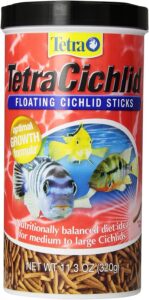
Tetra TetraMin Tropical Flakes 2.2 Ounces, Nutritionally Balanced Fish Food
Cám nổi classic cho cá cộng đồng nước ngọt — cá nhỏ đến trung bình.

Budget first community setup — Includes filter, heater, and stocking ideas for a peaceful neon community
FAQ
How many neon tetras should I keep together?
Minimum six; eight to twelve looks more natural and reduces stress. Smaller groups often hide and lose color.
Can neon tetras live with cherry shrimp?
Yes in established planted tanks. Adult cherry shrimp are usually ignored; fry may be eaten. Provide moss cover for shrimplets.
What tank size do neon tetras need?
A 40 L (10 gallon) long tank works for six to eight neons plus a few shrimp or snails. Larger is easier to keep stable.
Why are my neon tetras losing color?
Stress from poor water quality, small school size, bright bare tanks, or illness. Test ammonia and nitrite first, then add cover and tank mates.
Do neon tetras need a heater?
Yes in most homes — keep 22–26 °C. Sudden cold drops trigger ich and stress-related deaths.
How long do neon tetras live?
Three to five years with stable water and good diet. Wild-caught lookalikes (green neon) may differ — buy from reputable sources.
Aqua Plants Hub Editorial