Species guide
Cherry Shrimp: Care Guide (Breeding, Molting & Water)
Invertebrate
Cherry shrimp (Neocaridina davidi) are hardy dwarf shrimp that graze biofilm and breed readily in stable planted tanks. Avoid copper, keep minerals balanced, and provide moss for molting hides.

- Beginner shrimp
- Breeds easily
- Copper-sensitive
- Biofilm grazer
Quick facts
| Temp | 20–26 °C (68–79 °F) |
|---|---|
| pH | 6.5–7.5 (stable) |
| GH/KH | GH 6–10 dGH, KH 2–6 dKH (minerals for molt) |
| Diet | Biofilm, algae, blanched veggies, shrimp pellets |
| Tank size | Minimum 20 L (5 gal) dedicated; 40 L+ for colonies |
| Temperament | Peaceful; may eat own fry |
| Difficulty | Beginner (after tank is cycled) |
Overview
Cherry shrimp are selectively bred Neocaridina from Taiwan. They convert algae and biofilm into color — deep red grades need clean water and consistent minerals, not heavy feeding. A fully cycled tank is essential; even small ammonia spikes kill shrimp faster than fish.
Molting is normal every few weeks — you will find empty shells on moss or driftwood. Failed molts (white ring of death) often trace to unstable GH or sudden parameter swings. Never use copper-based medications or algicides in shrimp tanks.
Start ten shrimp in a planted nano; colonies explode when females berry (eggs under tail). For a complete shrimp BOM see Budget 50 shrimp setup. If the tank is new, read new tank syndrome and ammonia spike before adding livestock.
Care steps
-
Step 1
Cycle and test before adding shrimp
Confirm zero ammonia and nitrite for at least one week. Shrimp have no tolerance for uncycled filters. Use a sponge pre-filter on intake to protect babies.
-
Step 2
Balance minerals for molting
Target GH 6–10 with inert substrate or remineralized RO if your tap is ultra-soft. KH 2–6 buffers pH swings. Supplement lightly if shells look thin or molts fail.
-
Step 3
Build biofilm and hides
Add Java moss, cholla wood, or alder cones for grazing and molt shelters. Mature tanks feed shrimp better than daily pellet dumps.
-
Step 4
Feed sparingly
One pinch of shrimp food every 1–2 days in established tanks. Remove uneaten food after an hour. Overfeeding causes ammonia and planaria blooms.
-
Step 5
Breeding basics
Females turn deeper red when berried; eggs hatch in 3–4 weeks into miniature shrimplets. No larval stage — provide moss cover so fish cannot pick them off.
Common problems
Sudden mass deaths after water change
Why: Temperature or TDS shock; chloramine; or copper from tap or meds.
Fix: Match temp and remineralize consistently; use dechlorinator rated for shrimp. Never medicate the main tank with copper.
White ring of death during molt
Why: GH too low/high or rapid parameter change prevents clean shed.
Fix: Test GH/KH; remineralize gradually; avoid large water changes. Provide calcium from diet and stable minerals.
Population not growing (no berried females)
Why: Stress from ammonia, predators, or over-filtered sterile tank with no biofilm.
Fix: Verify cycle; add moss/cholla; reduce fish pressure. Stable cool–warm range 22–24 °C breeds steadily.
Cloudy water and shrimp gasping
Why: Bacterial bloom or ammonia in immature tank.
Fix: Test ammonia; reduce feeding; partial water changes with matched params. See cloudy water troubleshoot if persistent.
Good tank mates & companions
- Neon tetras & small rasboras — usually safe for adults; may eat shrimplets in bare tanks.
- Amano shrimp — compatible; amanos do not cross-breed with cherries.
- Snails (Nerite, bladder) — peaceful cleanup crew; watch copper in snail meds too.
- Companion plants: Java moss (nursery), Anubias nana (biofilm surfaces).
- Avoid: bettas, gouramis, cichlids, loaches, and any fish that inspect shrimp as food.
Gear for this species
Hikari Shrimp Cuisine Sinking Pellets for Freshwater Shrimp
Thức ăn sinking cho tôm Neocaridina/Caridina — khoáng và vitamin.
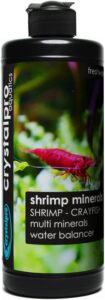
Crystalpro Shrimp Minerals 16.9 Oz – Liquid Aquarium Salt & Trace Elements for Freshwater Shrimp Tanks – Supports Caridina & Neocaridina – Molting & Breeding Additive – Invertebrate Tank Conditioner
Nutrafin Fluval shrimp mineral is a powerful support product for ornamental shrimp species, imported from Canada and distributed at Sen Aquatic. This product is among the Top Best Sellers in the Sen Store system, trusted and highly rated by users for its quality and price. Benefits of Nutrafin Fluval shrimp mineral: Provides essential minerals and stabilizes pH for the shrimp breeding ecosystem. Eliminates issues of thin shells and pale coloration. Helps ornamental shrimp grow strong, with a shiny and vibrant protective layer. Reduces the occurrence of shrimp having difficulty molting and dying sporadically.
Budget 50 shrimp setup — Sponge filter, mineral prep, and moss-first shrimp nano list
FAQ
How many cherry shrimp should I start with?
Ten is a good minimum for genetic diversity and faster colony growth. Five works in a dedicated nano but breeds slower.
Do cherry shrimp need a heater?
Not always — they tolerate 20–26 °C. Room-temperature stable rooms often work; breeding is steady around 22–24 °C.
Why is copper dangerous for cherry shrimp?
Copper accumulates in invertebrate tissue and kills at low doses. Check fish medications, algicides, and some plant fertilizers before dosing.
How often do cherry shrimp molt?
Every few weeks for adults; more often for growing juveniles. Leave empty shells — shrimp may eat them for minerals.
Will cherry shrimp breed in a community tank?
Yes if water is stable and fish are peaceful. Survival of shrimplets improves with dense moss and no predatory fish.
What GH do cherry shrimp need?
GH 6–10 dGH is a practical target for successful molts. Ultra-soft RO water needs remineralization.
Aqua Plants Hub Editorial