Learn guide
Fishless vs Fish-in Cycling: Which Path for a New Tank?
Learn guide
Cycling grows the bacteria that turn ammonia into nitrite, then nitrate. Fishless cycling does that without stressing animals. Fish-in cycling is slower, crueler, and only a fallback if livestock is already in the tank.
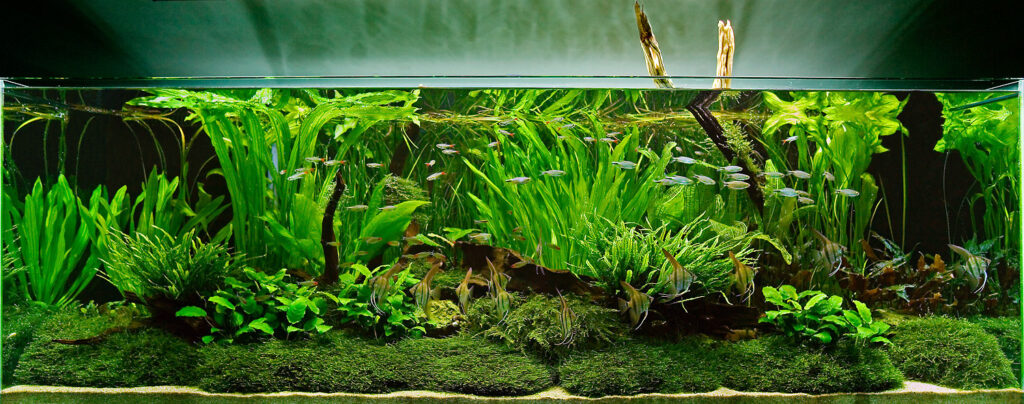
- 4–8 weeks
- Test kit required
- Fishless preferred
- Then stock slowly
Quick facts
| Goal readings | Ammonia 0 · Nitrite 0 · Nitrate rising (5–40 ppm typical) |
|---|---|
| Fishless time | Usually 4–8 weeks (faster with seeded filter media) |
| Fish-in time | Often 6–10+ weeks with daily water changes |
| Temperature | 25–28 °C speeds bacteria (still safe for later livestock) |
| Plants | Help but do not replace the cycle |
| Add fish when | 0/0 readings for several days after a small ammonia dose |
Overview
Fishless cycling adds an ammonia source (pure ammonium chloride or decaying food — never mystery household cleaners) while the filter runs. You test until ammonia and nitrite crash to zero and nitrate appears. Then you do a large water change and add fish slowly.
Fish-in cycling uses living fish as the ammonia source. Ammonia burns gills; nitrite binds oxygen. You must water-change almost daily. If you already have fish in an uncycled tank, follow new tank syndrome and ammonia spike — that is damage control, not a recommended method.
Bottled bacteria (Seachem Stability, API Quick Start) can shorten fishless cycling when the bottle is fresh and the filter is running. It is not a same-day excuse to dump in a full school. After the cycle, use the stocking calculator and a Budget 50 nano or first community BOM.
Fishless cycling steps
-
Step 1
Set up filter, heater, and dechlorinated water
Run the filter 24/7. Add hardscape and hardy plants (Anubias, Java fern, moss) if you want — they do not finish the cycle alone.
-
Step 2
Dose a known ammonia source
Target ~2–4 ppm ammonia. Record the dose. Skip random tap-ammonia guessing. Optional: bottled bacteria on day 1 per label.
-
Step 3
Test ammonia, nitrite, nitrate every 1–2 days
Chart the curve: ammonia up → nitrite up → both crash → nitrate up. Cloudy water in week 1–2 is common — see cloudy water guide if it lasts past week three.
-
Step 4
Re-dose ammonia when it hits zero
When ammonia reads 0, add another small dose. The cycle is not done until a dose is processed to 0 ammonia and 0 nitrite within 24 hours.
-
Step 5
Big water change, then stock in small groups
Change 50–80% to drop nitrate. Add a few shrimp or a small school, wait a week, test, then add more. Jumping to a full bioload restarts spikes.
Common problems
Cycle stalled (ammonia or nitrite stuck high)
Why: pH crash, cold water, or no seed bacteria.
Fix: Check temp 25–28 °C; 20–30% water change; add bottled bacteria; do not bleach the filter.
Fish gasping during fish-in cycle
Why: Ammonia or nitrite toxicity.
Fix: Immediate 50% water change; stop feeding; add bacteria; consider a temp hospital sponge filter. Read NTS troubleshoot.
Nitrate never appears
Why: Plants consuming it, or test kit expired, or cycle not actually complete.
Fix: Check kit expiry; test tap water as control; look at nitrite trend, not nitrate alone.
Ammonia returns after adding fish
Why: Stocked too fast vs filter capacity.
Fix: Reduce feeding; extra water changes; delay more livestock. Ammonia spike guide.
What to add after the cycle
- Week 1 after 0/0: plants + optional cherry shrimp in a shrimp tank.
- Week 2–3: small neon or otto school only if biofilm/filter is strong — otos still prefer older tanks.
- Avoid day one: full community, goldfish, or “cycle with a feeder fish.”
- Continue with first planted tank learning path and beginner mistakes.
Gear for this species
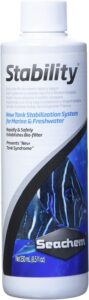
Seachem Stability – For Freshwater and Marine Aquariums 250ml
Cycle new tank — beneficial bacteria.
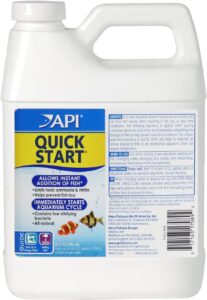
API QUICK START Freshwater and Saltwater Aquarium Nitrifying Bacteria 32-Ounce Bottle
Instant cycle aid — fish-in friendly.
Budget 50 nano setup — Filter + heater BOM to start a fishless cycle without overspending
FAQ
How long does it take to cycle a new aquarium?
Fishless is often 4–8 weeks. Seeded media from a healthy tank can be faster. Fish-in is slower and harder on animals.
Is fishless cycling better than fish-in?
Yes for almost every beginner. You control ammonia without burning gills.
Can plants cycle a tank alone?
They help absorb ammonia but do not replace nitrifying bacteria in the filter. Still test.
Do I need bottled bacteria?
Optional. Fresh bottles can shorten fishless cycling. Expired or heat-damaged bottles do little.
When can I add fish after cycling?
After ammonia and nitrite stay at 0 for several days, including after a small test dose of ammonia, then a big water change.
What is new tank syndrome?
Ammonia/nitrite poisoning in an uncycled tank. Treat as an emergency — see our NTS guide — do not “ride it out.”
Aqua Plants Hub Editorial