The mini aquascape has become one of the favorite interior trends in recent years. With its compact size, the mini aquascape can easily be placed on a desk or a student’s study table. Additionally, the mini aquascape brings a lively, green, and relaxing space for users.
Reasons for Choosing the Topic
Nowadays, the hobby of aquascaping is no longer unfamiliar to aquarium enthusiasts. Moreover, when someone new explores aquascaping, they always encounter basic issues such as:
- What size should the aquascape be?
- How to create a layout for the aquascape?
- How to choose fish and plants for the aquascape?
- Issues regarding CO2, planting, and caring for plants.
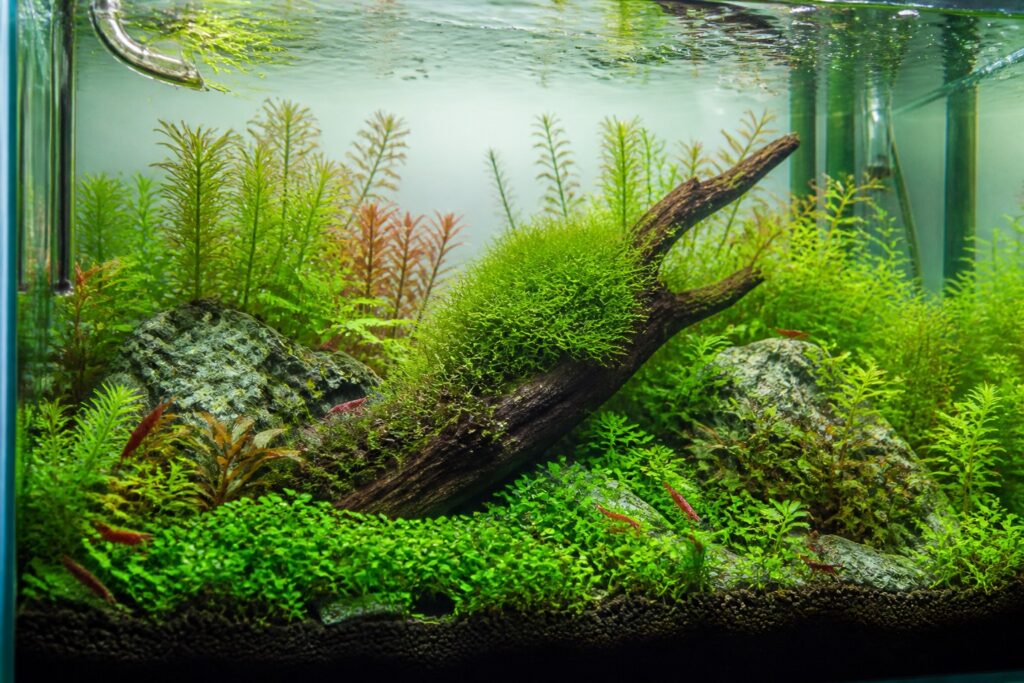
This topic will help newcomers to aquascaping understand and create a mini aquascape. The mini aquascape with a forest layout is the easiest illustration for beginners in aquascaping.

Objectives of the Topic
- Help readers grasp the concept of mini aquascapes and forest layouts.
- Guide readers on how to create a mini aquascape for the desk with a forest layout.
Definition of Mini Aquascape
A mini aquascape is a small aquarium designed for aquatic plants, often decorated in homes or offices to create a green, relaxing space and enhance the living environment. Mini aquascapes typically range from 30-50cm in size and are usually beautifully designed with various aquatic plants, rocks, sand, soil, and aquatic fish. Caring for a mini aquascape may require some basic knowledge of aquascaping and regular water changes, fertilizing, and caring for aquatic fish.

Types of Mini Aquascapes
There are many different types of mini aquascapes that can create a green space in homes or offices. Here are some popular types of mini aquascapes:
- Decorative aquascape: This type of aquascape is created with various ornamental plants and aquatic flowers to create a unique and beautiful space.
- Mini nano aquascape: This type of aquascape is smaller than traditional aquariums and is often placed on desks or bookshelves.

- Mini landscape aquascape: This type of aquascape is designed with rocks, plants, and other elements to create a natural landscape like a mountain pond or waterfall.

- Mini aquascape in a glass bottle: This type of aquascape is created in a glass bottle or small jar and is often placed on desks or shelves.
Benefits of Owning a Mini Aquascape
Owning a mini aquascape has many benefits, including:
- Creating a green space: A mini aquascape helps create a green space in homes or offices, reducing stress and creating a comfortable, pleasant atmosphere.
- Providing a good living environment for fish: A mini aquascape provides a good living environment for aquatic fish, helping them grow healthily.
- Decorating the space: A mini aquascape is beautifully designed, helping to decorate the interior space, create highlights, and make the space more interesting.
- Reducing stress and anxiety: Studies show that exposure to nature, even indoors, can help reduce stress and anxiety.
- Easy to care for: A mini aquascape can be easily maintained if you know how, so you don’t need to spend too much time and effort to keep it.
- Improving air quality: A mini aquascape can help improve air quality by releasing oxygen and removing harmful substances from the environment.
Setting Up a Mini Aquascape for the Desk with a Forest Layout
Step 1: Prepare Materials
- Mini aquascape
- Aquatic sand or soil gravel
- Base fertilizer
- Aquatic moss
- Plants suitable for the forest layout
- Driftwood
Step 2: Choose Plants Suitable for the Forest Layout
- Forest plants such as Anubias, Bucephalandra, Java Fern, etc.
Step 3: Choose Rocks, Sand, Gravel, and Other Supporting Materials
- Natural stones like Ohko Stone, Dragon Stone, or Seiryu Stone can be used to create a rocky forest space.
- Wood like Driftwood or Spider Wood can be used to create a forest space along with aquatic plants.
Step 4: Select and Arrange Plants, Rocks, Sand, and Grass in the Aquascape
When selecting and arranging plants, rocks, sand, and grass in the aquascape, ensure they are arranged harmoniously to create a natural and beautiful space. Here are some suggestions for you to consider:
1. Select Plants:
- Choose plants with appropriate height and size for the aquascape.
- Select plants with different colors to create a diverse and attractive space.
- Choose easy-to-grow and easy-to-care-for plants like Anubias, Java Fern, or Bucephalandra.
2. Select Rocks:
- Choose rock pieces of different sizes and shapes to create a diverse and natural space.
- Arrange the rock pieces so they can create a unique pattern, adding depth to the aquascape.
- Use small stones to create smaller details in the aquascape.
3. Select Sand and Grass:
- Use sand and grass to create a natural bottom layer for the aquascape.
- Choose sand with smaller grain sizes so that plant roots can easily penetrate.
- Select aquatic grass with sizes suitable for the aquascape and create a natural pattern.
After selecting the types of plants, rocks, sand, and grass, arrange them in the aquascape harmoniously and beautifully. You can use the rule of thirds or five points to create a natural and attractive pattern. Additionally, ensure that the materials are arranged securely and safely to avoid tipping or moving during the operation of the aquascape.
[email protected]