The new tank syndrome is one of the issues that the aquascaping and aquarium community faces. This condition occurs when the organisms in the aquarium die abnormally shortly after the tank is set up. It is a common and frequently encountered problem in the aquascaping and aquarium community.
Why does the “new tank syndrome” occur, and why has it become a topic of discussion and a concept in the aquascaping and aquarium hobby? Today, let’s join aquaplantshub.com to learn more about the new tank syndrome and what can be done to mitigate it.
What is new tank syndrome?
The name itself tells us that this is one of the early stages when setting up an aquascape or aquarium. It is a relatively common incident and often occurs among aquarium hobbyists. Beginners in the aquarium hobby often do not know about this issue and frequently fail when building an aquascape.
New tank syndrome is a condition that organisms in the aquarium or fish tank experience when moved to a new environment. New tank syndrome means that nitrite levels in the water rise rapidly to very high levels. After that, nitrite concentrations begin to decrease. Nitrite is toxic to fish and can be fatal.
Aquascapers and aquarium hobbyists must check and manage water quality to maintain the following parameters: 0.5 mg/l nitrite, as a maximum of 1.0 mg/l nitrite is considered safe for your aquascape.

Causes of new tank syndrome
One of the main causes of new tank syndrome is the presence of harmful substances such as ammonia, nitrite, and nitrate in the tank. These are waste products produced by fish and plants. However, when the preparation cycle of the aquascape is not complete, the filtration systems are not strong enough to remove these toxins, leading to tank contamination.
Sudden water changes and pH adjustments can also affect the survival of organisms in the tank. When adding new water to the aquascape, nutrient concentrations can change abruptly, leading to disruptions in biological processes within the tank. Additionally, rapid pH adjustments can weaken the immune systems of the organisms in the tank, making them more susceptible to pathogens.

Bacteria and algae can thrive in a newly established tank, causing competition for other species. The use of fish waste and excess food can increase bacterial levels and cause other organisms to compete with bacteria and algae in the tank.
Preventing new tank syndrome
To prevent new tank syndrome, aquascapers and aquarium hobbyists need to complete the tank preparation cycle before adding fish and plants to the aquascape. Here are some measures to consider:
Prepare the tank before adding fish and plants: Before adding fish and plants to the tank, hobbyists should prepare the tank by using filtration equipment, changing water, checking pH and water hardness, and ensuring the water quality in the tank is stable. This will help minimize sudden impacts on the organisms in the tank when transitioning to a new environment. If you do not need to add fish immediately, waiting for the microbial system to fully establish is very beneficial. Typically, it takes about 28 days for the nitrogen cycle to complete; however, if using specific probiotics for aquascaping, this time can be shortened to about 1 to 2 weeks.
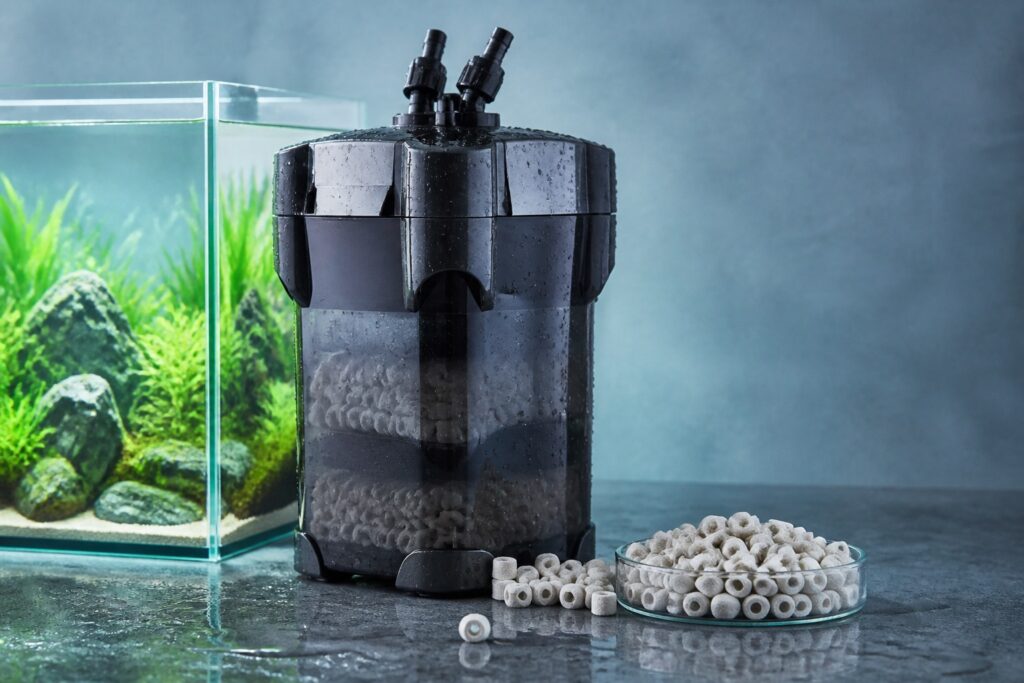
Use high-quality filtration equipment: Filtration equipment plays a crucial role in maintaining stable water quality in the tank. Hobbyists should use filtration equipment capable of filtering sufficient water and removing harmful substances such as ammonia and nitrite. Additionally, filtration equipment should be cleaned regularly to ensure effective operation.
 Water filter
Add fish and plants to the aquascape step by step: To ensure that organisms in the tank do not experience shock when moving to a new environment, hobbyists should add fish and plants to the tank step by step. First, it is advisable to add plants to the tank, then wait for a while for the plants to grow. After that, a few fish can be added to the tank, allowing them to acclimate to the new environment before adding more fish. Hobbyists should pay attention to the number of fish and plants added to the tank, avoiding overloading the tank.
Regularly check water quality: To ensure that water quality in the tank remains stable, hobbyists need to regularly check the water quality using water testing kits. This will help hobbyists detect any abnormal water conditions early and take timely corrective measures.
 Water Quality Testing Kit
Avoid using unverified chemicals: When treating diseases in fish, hobbyists should use verified chemicals with clear origins. Using unverified chemicals can lead to new tank syndrome and also affect the health of the hobbyist.
Conclusion
The above are important pieces of information that aquascapers and aquarium hobbyists should know to prevent new tank syndrome. Investing in and caring for an aquascape and aquarium is not simple, but it is crucial to grasp the basic knowledge and follow the correct steps to ensure the health of the organisms in the tank.
New tank syndrome is one of the main issues that aquascapers and aquarium hobbyists face. If not cared for and managed properly, this syndrome can have serious impacts on the health of the organisms in the tank and even on the health of the hobbyist. Implementing preventive measures against new tank syndrome is very important, and hobbyists should follow the steps outlined above to ensure the health of their aquascape and aquarium.
Thus, these are important pieces of information on how to prevent new tank syndrome in aquascaping and aquarium keeping. If you are an aquascaping and aquarium hobbyist, please apply the above measures to protect the health of the organisms in your tank.
nguyentlthuy10214@gmail.com