Bird troubleshoot
Bird Biting & Aggression — Hormones, Fear & Step-Up Training
Ornamental bird
Bird bites are usually fear, hormones, or territorial cage defense — not spite. Punishment makes biting worse. Fix sleep and nest triggers, train step-up on a perch, and see an avian vet if biting appears suddenly with illness signs.
- Not spite
- Hormones
- Step-up train
- Vet rule-outs
Quick facts
| Common causes | Fear, hormones, territorial cage, pain |
|---|---|
| Do not | Hit, shake, spray, yell — increases fear bites |
| Do | End session calmly; train step-up on stick |
| Hormonal season | Spring — remove huts, shorten daylight slightly |
| Sleep | 10–12 hours dark — undertired birds bite more |
| Enrichment | Foraging toys reduce frustration bites |
| Vet red flags | Sudden bite + fluffing, not eating, lameness |
| Training link | See bird taming basics for full protocol |
Overview
A bite is the fastest language a scared parrot has. Punishment teaches the bird that hands are dangerous, which produces harder bites next time. Most biting in companion birds traces to hormonal spring aggression, territorial defense of the cage, or fear from rough grabbing — not ‘dominance.’
Start with husbandry: 10–12 hours sleep, remove nest boxes and fuzzy huts, load foraging toys before handling sessions. Train step-up on a wooden perch, not a grab to the wrist. Full tame protocol: bird taming basics. Rule out pain with an avian vet if biting is new plus respiratory signs or not eating.
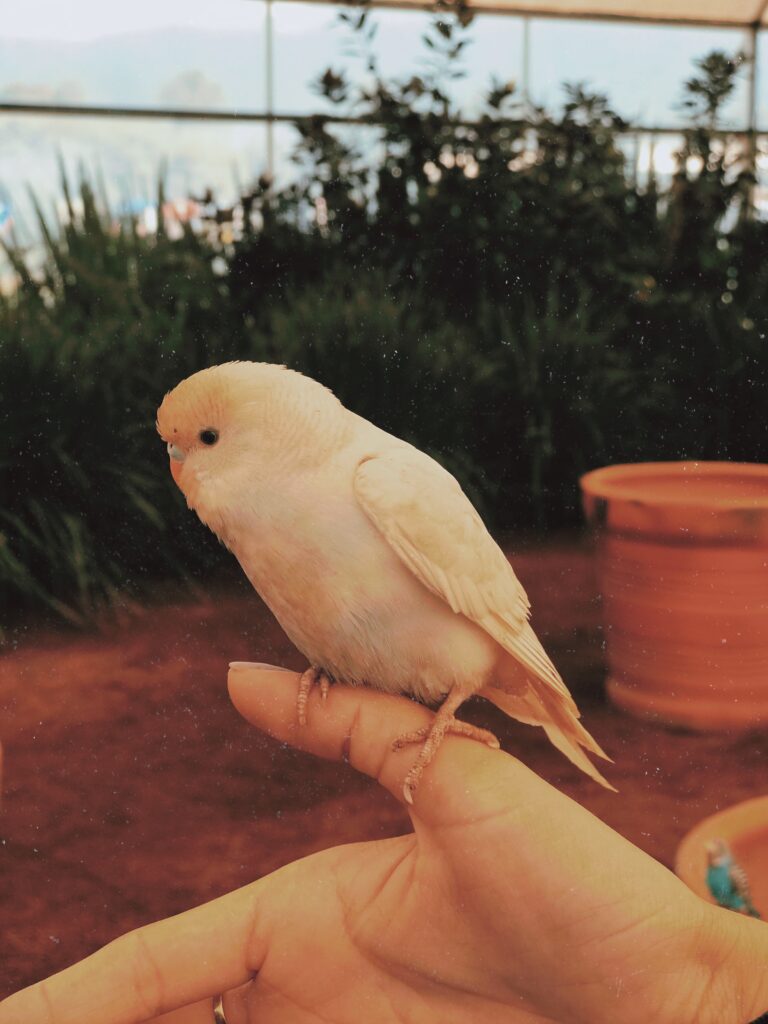
Species temperament varies: lovebirds and parrotlets bite hard for their size; cockatiels often hiss first. Compare commitment in what bird to get first and diet support via pellet food.
Fix order
-
Step 1
Rule out illness and pain first
Sudden aggression with fluffed posture, not eating, or favoring a foot needs an avian vet — not more training. Pain bites feel different from playful nips.
-
Step 2
Fix sleep and remove nest triggers
Cover for 10–12 hours. Remove happy huts, nest boxes, and long photoperiod. Hormonal birds defend the cage like a nest cavity.
-
Step 3
Stop punishing — end sessions calmly
Do not shake, flick, or yell. Put the bird down on a perch when bitten hard. Return later with a treat for calm proximity.
-
Step 4
Train step-up on a stick, then hand
Offer a perch at chest level, say step-up, reward with millet. See taming basics. Shoulder time only after trust is built.
-
Step 5
Increase foraging to reduce frustration bites
Load foraging toys so the beak has work. Bored, undertired birds nip for stimulation. Pair with varied perches.
Common problems
Hard bites every spring
Why: Hormonal season + nest-like toys.
Fix: Remove huts, slightly shorten daylight, train outside cage, do not reward bites with drama.
Lunges when you open the cage
Why: Territorial cage defense.
Fix: Train step-up from outside with perch through door. Do not grab over the bowl.
Biting got worse after you yelled
Why: Fear conditioning.
Fix: Rebuild trust with sit-near-cage sessions. No forced handling for a week.
Child bitten — bird labeled mean
Why: Child grabbed bird; bird learned hands hurt.
Fix: Supervised interactions only. Teach target training before petting.
Related guides
- Training: bird taming basics.
- Health: bird sneezing · feather plucking.
- Products: best bird toys · best perches.
- Species: green cheek · sun conure · diamond dove (rarely bite).
Gear for this species
Bird taming basics — Trust is built in short sessions — not one forced cuddle
FAQ
Why does my bird bite me?
Usually fear, hormones, territorial defense, or pain — not spite.
Should I punish my bird for biting?
No. Punishment increases fear and harder bites.
How do I train step-up without getting bitten?
Use a perch stick, reward with millet, end session if bitten hard, try again later.
Is spring biting normal?
Hormonal biting is common in spring. Manage environment; it is not an excuse to hit the bird.
When is biting a vet emergency?
Sudden biting with fluffed feathers, not eating, lameness, or breathing changes.
Will getting a second bird stop biting?
Not reliably. Can add jealousy bites. Fix husbandry and training first.
Aqua Plants Hub Editorial