Bird species guide
Lovebird Care Guide — Pair Bond, Cage & Bite Training
Ornamental bird
Lovebirds (Agapornis, commonly peach-faced) are compact parrots with big opinions. They can be wonderful one-person birds or a bonded pair — but they are louder, chompier, and more territorial than budgies.
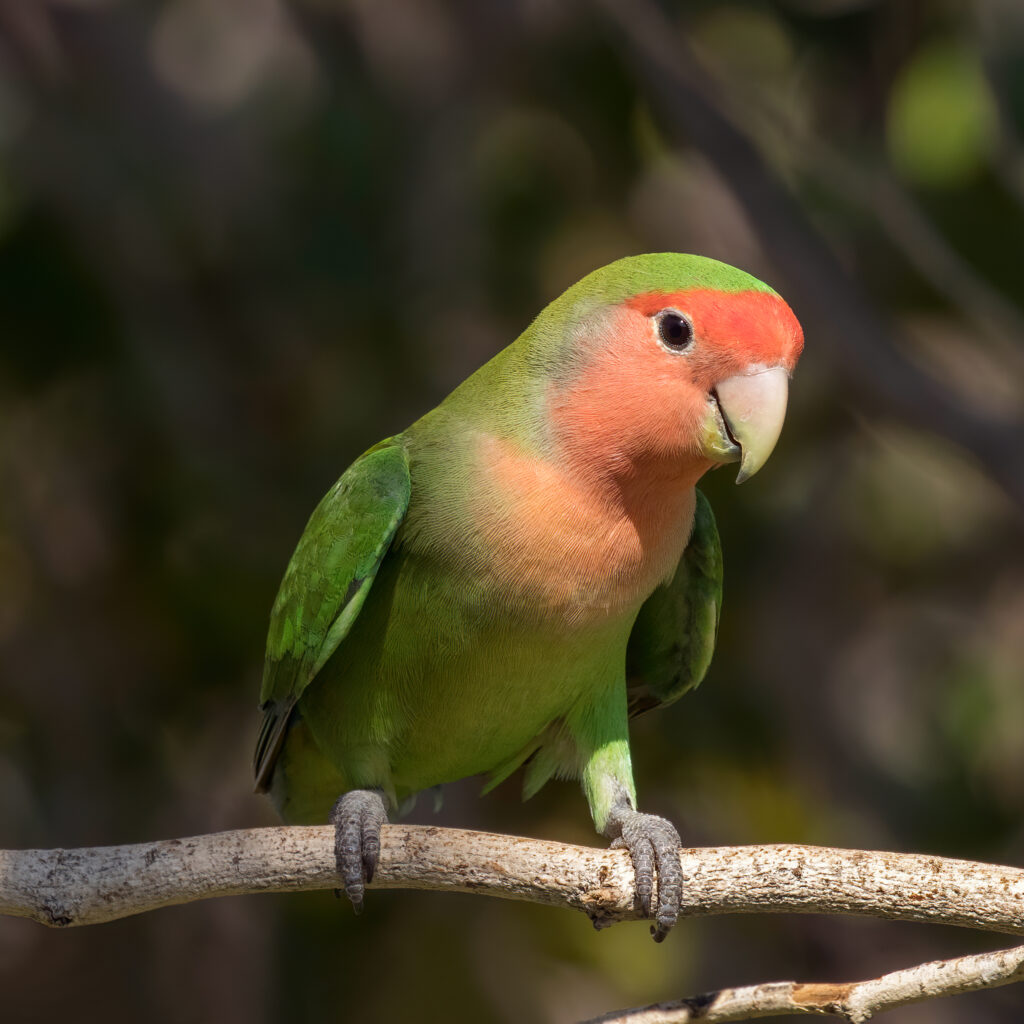
- Bold parrot
- Pair or single
- Loud chatter
- Not a silent pet
Quick facts
| Common species | Agapornis roseicollis (peach-faced) |
|---|---|
| Adult size | ~15 cm (6 in); 40–60 g |
| Lifespan | 10–15+ years |
| Cage minimum | Sturdy, ≥18–20 in width; 1/2" bars |
| Diet | Pellets + veg + limited seed |
| Temperament | Feisty, territorial, very social |
| Noise | High — piercing contact calls |
| Difficulty | Intermediate beginner (handling + noise) |
Overview
The name “lovebird” sells a cuddly pair. Reality: a single lovebird often bonds intensely to one human; a pair may ignore you and still scream. Neither is “set and forget.”
If you want a quieter watch-only bird, consider zebra finches. If you want a first handle-tame bird with milder bite, a budgie or cockatiel is usually easier. First-bird matrix: what bird to get first.
Bar spacing still 1/2 inch. Chew-proof toys (wood, palm, paper) are mandatory — lovebirds destroy flimsy plastic fast.
Care steps
-
Step 1
Choose single vs pair before you buy
Single + daily handling = companion bird. Pair + large cage = more natural but less tame. Do not dump a third bird into an established pair. Decide before the purchase, not after the first bite.
-
Step 2
Use a sturdy rectangular cage
Lovebirds chew locks and thin bars. A metal flight-style cage with secure latches, 1/2 inch spacing, and room to climb is safer than a decorative dome. Place away from kitchens and other pets.
-
Step 3
Pellet diet + heavy foraging
Pellets as staple, fresh veg daily, seed as reward. Hide food in foraging toys so the beak works. Idle lovebirds scream and bite more.
-
Step 4
Train bite inhibition without punishment
A hard bite is communication (fear, hormones, “put me down”). Put the bird down and end the session; never hit or shake. Step-up on a stick if fingers are not trusted yet. Hormonal seasons (spring) need shorter handling and no nest boxes.
-
Step 5
Sleep 10–12 hours; watch for plucking
Cover the cage; keep a consistent night. Sudden feather damage: vet first, then enrichment. See feather plucking. Toxic foods: bird-safe list.
Common problems
Territorial cage aggression
Why: Hand in the “nest” during hormonal season; pair defending the box.
Fix: Remove nest-like huts, shorten daylight slightly, train step-up outside the cage, use a perch not a grab.
Piercing screaming when left alone
Why: Flock call + boredom + too-small cage.
Fix: Foraging before you leave, radio/TV as background flock noise, consider a same-species companion only if you can house them properly.
Feather chewing on chest/wings
Why: Boredom, dry air, poor diet, or medical (mites, infection).
Fix: Avian vet first. Then humidity, baths, toys, diet upgrade. Do not use collars as the only “fix.”
Fighting in a pair
Why: Incompatible individuals, too-small cage, breeding frustration.
Fix: Separate immediately if blood is drawn. Rehome or house side-by-side. Never assume two lovebirds will automatically “love” each other.
Companions & housing
- Same-species pair: only in a large cage with two food stations; watch spring aggression.
- Budgies/cockatiels: not recommended as cage-mates — lovebirds can injure smaller or softer-beaked birds. Keep species separate. Budgie · Cockatiel.
- Avoid: nest boxes unless you intend to breed (and know the risks), unsupervised children with fingers in the cage.
Gear for this species
What bird should I get first? — Lovebirds are a step up from budgies in noise and bite — compare species before you buy
FAQ
Do lovebirds need to be kept in pairs?
No. A single lovebird with daily handling can be a great companion. A pair may be happier with each other and less interested in you.
Are lovebirds good for beginners?
Only if you accept noise, chewing, and possible biting. A budgie is usually a gentler first bird.
How big should a lovebird cage be?
At least 18–20 inches wide, sturdy metal, 1/2 inch bars. Bigger is better for a pair.
Why does my lovebird bite suddenly?
Hormones, fear, or “step down” communication. End the session calmly; check for nest boxes and long daylight hours.
Can lovebirds talk?
Some mimic short sounds. They are not known as talkers. Expect chatter and contact calls.
What is the lifespan of a peach-faced lovebird?
Often 10–15 years, sometimes longer with excellent diet and vet care.
Aqua Plants Hub Editorial