For those new to keeping and caring for aquarium fish, self-education can be quite challenging. To ensure your fish thrive, paying attention to their diet is important. Additionally, monitoring the water quality in the aquarium plays a significant role, as it is their direct living and development environment. Below, aquaplantshub.com will share with you the experiences of testing water quality to meet standards!
Water Filter in the Tank

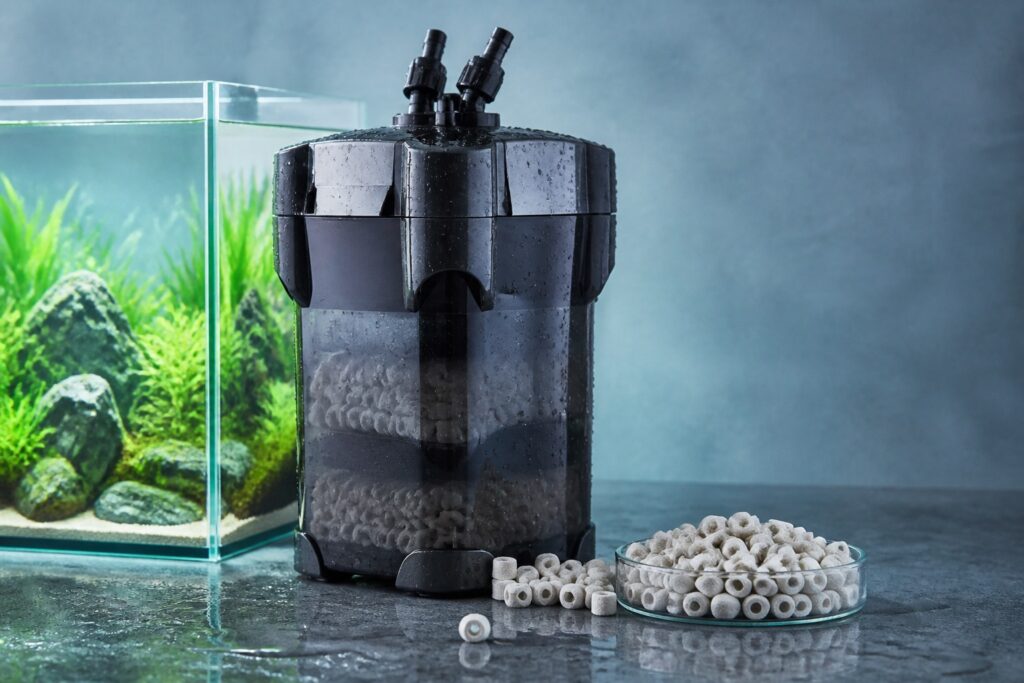
You might be quite surprised that this is the first criterion we mention. The water filter acts like “a lung,” regulating and filtering out debris in the tank. While the water filter does not provide an exact measurement for testing water quality, it can quickly inform you about the water’s condition. This is one of the simplest ways to do it. If you find yourself changing the water filter every week instead of once a month, the water quality is currently poor. Therefore, you should pay more attention to using the water filter to check water quality.
pH Level in Water

Specifically regarding the importance of pH concentration in testing water quality. The accurate pH level is the concentration of H+ that indicates alkalinity or acidity in the solution. The pH scale ranges from 0 to 14. To easily and quickly measure pH, you can use litmus paper. If the litmus paper turns red, the water source is highly acidic; if it turns blue, it is alkaline.
Additionally, there is a pH test kit that includes a test tube, litmus solution, and a color chart to help you get the most accurate results. Once you have the pH results, you need to adjust it immediately to suit the species in the tank. Remember to adjust gradually while the fish are still in the tank to help them adapt easily. Some ways to adjust pH include: using limestone placed in the tank, using baking soda to increase pH, etc.
Phosphate Levels
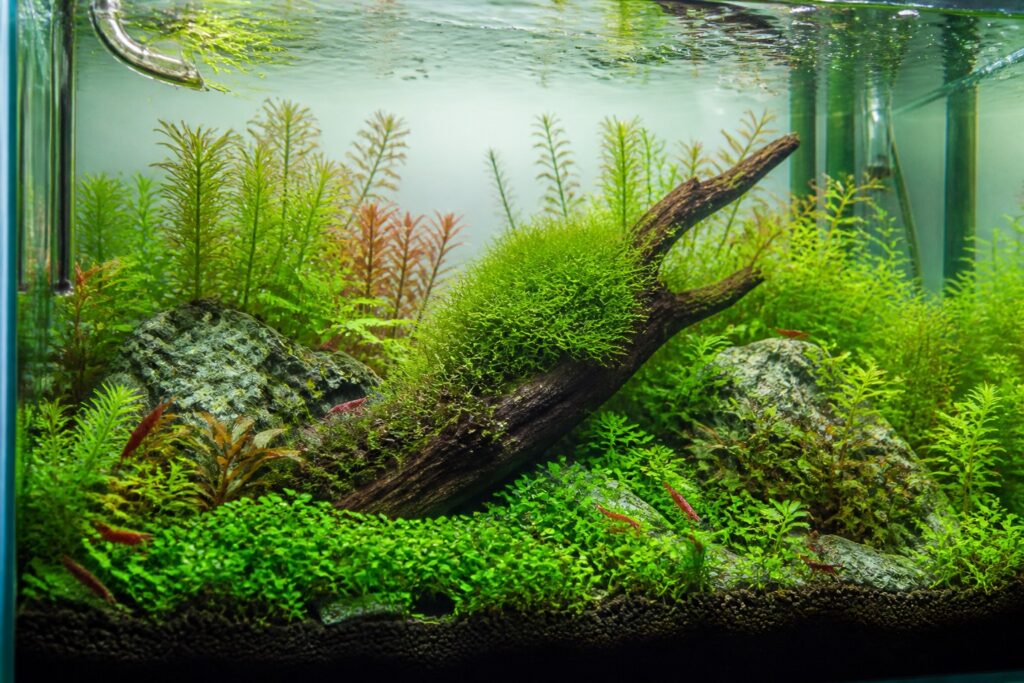
If your aquarium is large and decorated with corals, moss, and algae, you need to pay attention to phosphate levels. When phosphate concentration exceeds the limit, it hinders the accumulation of CaCO3 (calcium carbonate). When phosphate levels exceed the permissible threshold of 0.03 ppm, it promotes the growth of algae. Therefore, you need to maintain levels below the permissible threshold to limit this and avoid affecting the water quality in the tank. You should manage large algae and moss after planting and choose species with short life cycles. This helps keep phosphate levels within acceptable limits.
Testing Ammonia
Ammonia consists of NH3+ and NH4+. These substances are formed from fish growth and decomposed leftover food. If ammonia levels exceed permissible levels, it poses a danger to the fish’s living environment. Therefore, regularly checking ammonia levels is essential for assessing quality in the aquarium. When this level is high, you should have timely solutions. Changing the water in the tank or using ammonia-removing solutions are effective and quick solutions. To accurately test ammonia levels, we encourage you to use an ammonia concentration test kit.
Water Salinity – Testing Water Quality

When mentioning salinity in water, it refers to the amount of salt dissolved in it. The dissolved salt content clearly distinguishes freshwater from saltwater. Depending on the type of fish, this salt content will affect their growth to varying degrees. For natural freshwater, the salinity is low. In contrast, for saltwater, the ideal salinity, like that of seawater, is 35 ppt. You can easily use a salinity meter to get the most accurate results. If testing the water quality in the tank shows high salt levels, you need to add more freshwater and vice versa to maintain the most suitable environment for your fish.
Temperature
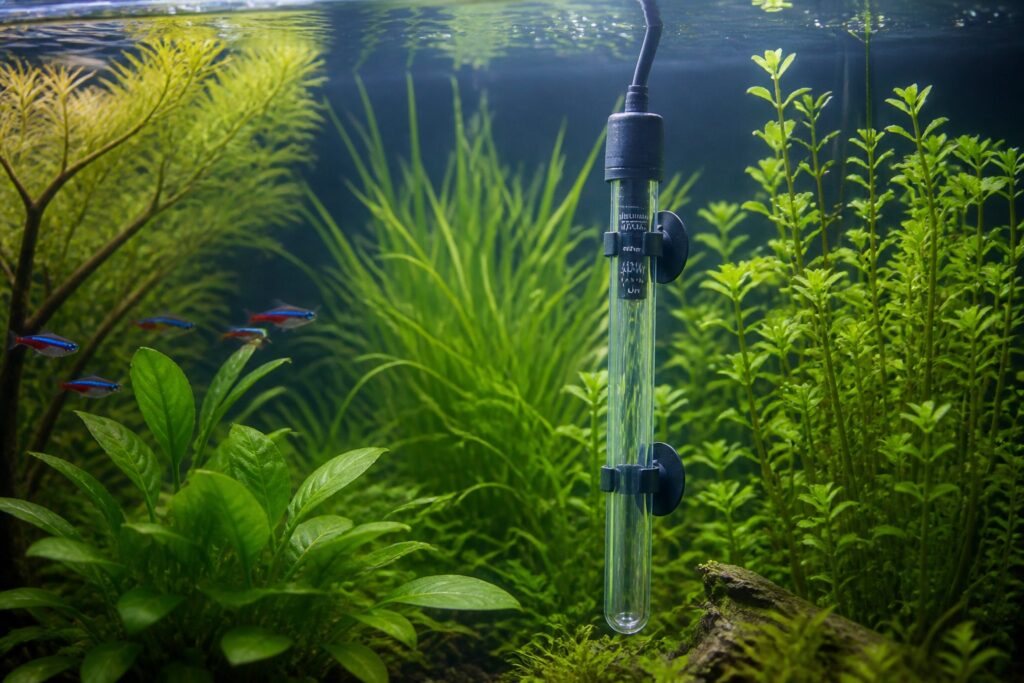
And the final factor in the experience of testing water quality is water temperature. Depending on the species of fish in the tank, you can adjust the appropriate temperature. The best temperature for maintaining fish growth is between 24 – 28 degrees Celsius. Because temperature not only affects the living environment of the fish but also impacts oxygen levels. You should ensure that the temperature does not change too abruptly, causing the fish to be unable to adapt in time.
Above are the shared experiences on testing water quality that we bring to you. We hope it will assist you in fish keeping and supplement useful knowledge for you. See you in the next articles.
Hương Trần