Ficus elastica is one of the most popular office ornamental plants. With its beauty and air filtering properties, this plant is popular and widely planted in workspaces, homes and stores. Let’s understand some more detailed information about the Red Banyan tree!
RED BANANA TREE
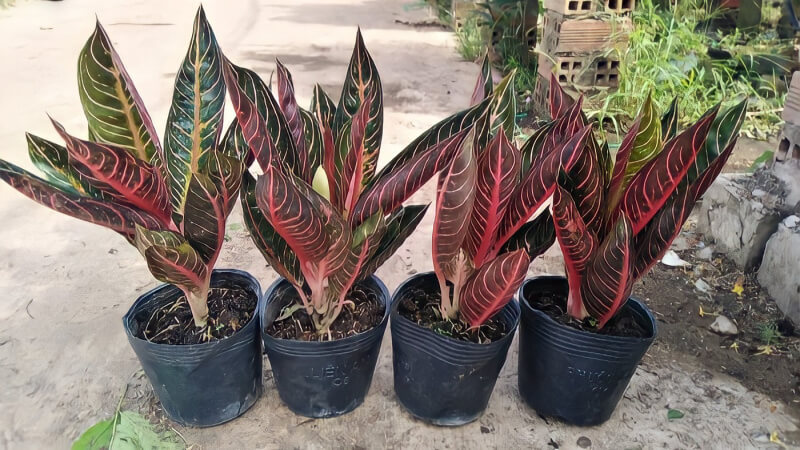
Ficus elastica originates from Southeast Asia, especially India, and is widely grown around the world. The Banyan Tree is a type of tree with a large trunk about 30 – 40m long and a trunk diameter of about 2m. They have oval-shaped leaves, the upper surface of the leaves is glossy, about 10 – 35cm long and 5 – 15cm wide. However, this size can fluctuate depending on the growth process of the plant. Young leaves can be 45cm long while old leaves can be shorter due to shrinkage. Another characteristic about the Red Polybud leaves is that the leaves develop inside sheaths at the apical meristem, also known as the polybud. Because the image of the Red Banyan tree is often associated with an attractive and outstanding red color, people give it the name Red Banyan tree.
In addition, it also has the ability to absorb toxic gases and reduce noise. Therefore, it is considered one of the best ornamental plants for office spaces. The Red Banyan Tree is also used to decorate spaces such as living rooms, bedrooms and offices, not only for its aesthetics but also for its ability to reduce stress and increase relaxation for people living in the room. It can also help balance the humidity in the room and create fresher air.
HOW TO GROW AND CARE FOR RED PANIC TREES
- Choose a suitable pot: Choose a pot large enough to meet the growth needs of the Da Bup Do plant. The pot should have drainage holes to prevent the plant from being flooded.
- Soil and fertilizer: Using specialized flower growing soil with good ventilation can help the Da Bup Do plant grow better. Mix the soil with organic fertilizer or special fertilizer for Da Bup Do plants to provide nutrients for the plant.
 Light and temperature: The Red Banyan Tree needs to be planted in a location with enough light, but the tree should not be exposed to direct sunlight. If you plant a plant in a place that doesn’t have enough light, it may not grow well and its leaves may fall off. The Red Banyan Tree can defy all temperatures, the tree likes high temperature environments, so the tree should be maintained at a temperature range of 20 – 30˚C, and should not be kept at temperatures below 5˚C.
- Watering: Red Banyan Tree needs to be watered regularly to keep the soil moist, but do not water too much to avoid wetting the base of the plant. Make sure the soil dries out a little between waterings to avoid overwatering.
- Plant care: The Red Banyan Tree can be pruned to keep it balanced and prevent it from growing too quickly. If the tree is infected or attacked by pests, treat it promptly to avoid the condition from spreading.
- Clean leaves: Leaves can be dirty or dusty, so wipe them regularly with a wet cloth to keep them clean and healthy.
- Repot: If the Da Bup Do plant grows too large for its current pot, you should move it to a larger pot to give it enough space to grow.
 Light and temperature: The Red Banyan Tree needs to be planted in a location with enough light, but the tree should not be exposed to direct sunlight. If you plant a plant in a place that doesn’t have enough light, it may not grow well and its leaves may fall off. The Red Banyan Tree can defy all temperatures, the tree likes high temperature environments, so the tree should be maintained at a temperature range of 20 – 30˚C, and should not be kept at temperatures below 5˚C.
[email protected]