In all aquascaping layouts, the mountain forest layout is always a rich source of inspiration for any aquarist. Due to its aesthetics and complexity, creating a forest layout is quite a challenging process that requires meticulousness and patience to produce that artistic masterpiece.
The rules of the mountain forest layout
Rule of distance
The aquascape depicts a magnificent landscape above ground, allowing us to perceive the proximity or distance of the organisms within it. It creates an attractive aquatic landscape that captivates everyone’s eyes. What’s even more interesting is the creativity in arranging the plants and the vibrant greens of the ecosystem, which gives us a sense of comfort, relaxation, and immersion into that miniature nature.

Rule of height
A typical mountain forest aquascape rarely has uniformity among the plants. This reflects the naturalness of nature. In an aquascape, we can easily set up an imbalance in the height of the plants to create a harmonious layout.

Rule of diversity
When referring to the forest layout, we talk about the diversity of ecosystems within it, including species of flora and fauna from low to high, from dense to sparse, from tall trees to low shrubs… this is the richness and subtle arrangement of nature.
Incorporating this diversity into a miniature environment requires adjusting the nutritional regime, lighting, and different care to ensure the ecosystem within develops stably.
If you want to start building a simple forest layout, you should choose easy-to-grow and adaptable plants like moss and ferns. Additionally, you can add anubias and cryptocoryne, which are all plant species that thrive in modest living conditions without needing much nutrition and care.
Investing in small details

Tree roots
To create a majestic and wild appeal for this layout, it is essential to have large, long roots exposed from the soil. We should adjust and trim the roots to fit the environment and the ecosystem inside.
Moss on tree trunks
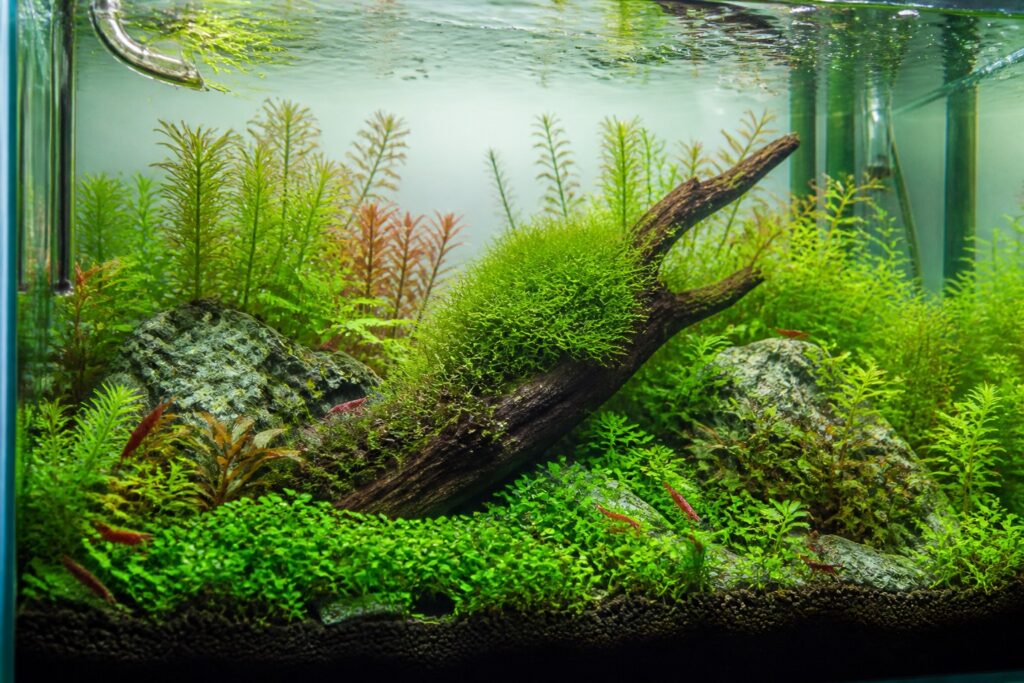
The aquascape will be truly captivating if we can cover tree trunks and rocks with small mosses like minifiss. This will create an ancient beauty and a historical touch for the aquarium over time.
Low shrubs
Under the large tree trunks, small bushes or climbing plants should be arranged, which will also reduce the amount of bare ground in the aquarium. Diversifying plant species without needing a large quantity will create a wild and natural beauty for the aquarium.
Wildness and decay
The chaos in the planting positions is gradually creating a wildness that reflects the essence of a pristine forest. The beautiful forest has large, silent, and tranquil trunks alongside thinner, withered ones, and even branches that have fallen in the foreground. This creates a vivid picture of nature.
A typical example is the lush, green carpet of dwarf hairgrass or moss planted under the large canopies. Sometimes, with many plants, we shouldn’t be too meticulous in trimming; a bit of decay, wildness, and yellowing leaves will help the piece become truly special and closer to nature.
Đào Thị Thảo Dung