42 - 12/11/2023, 3:13

Flooded Bank of an Unnamed Blackwater Stream in the Sungai Kotawaringin Watershed on Bangka Island, Indonesia

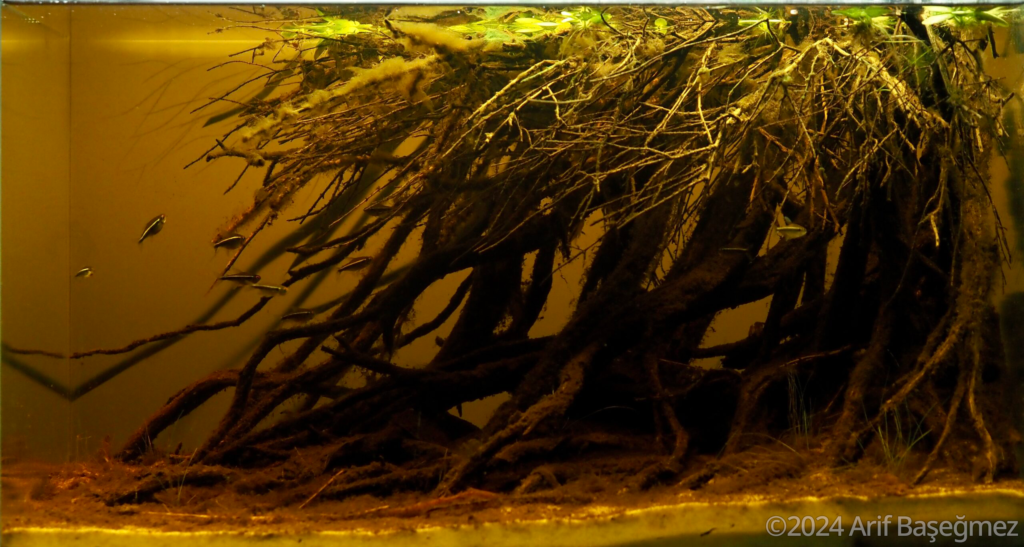
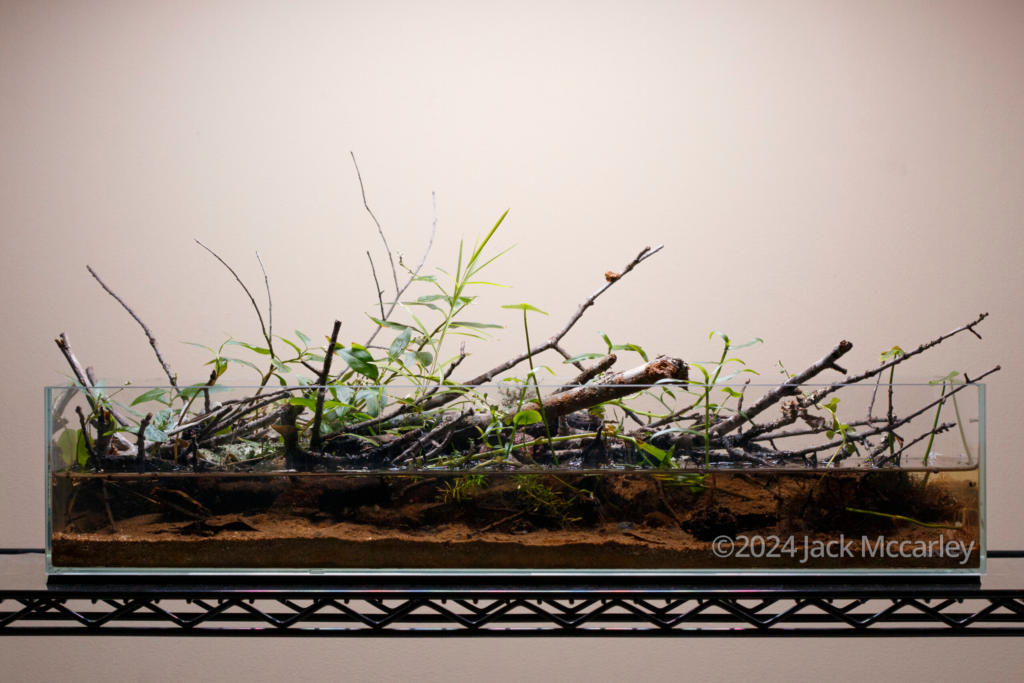
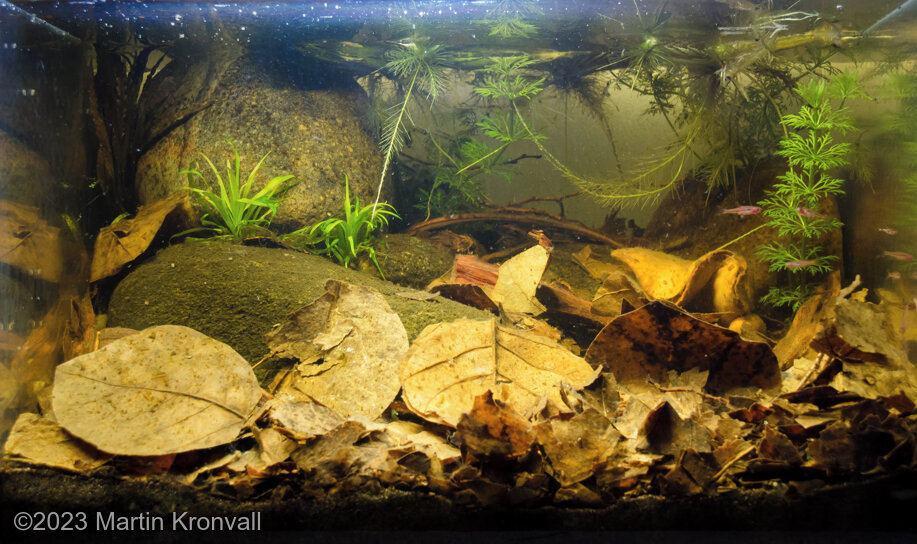
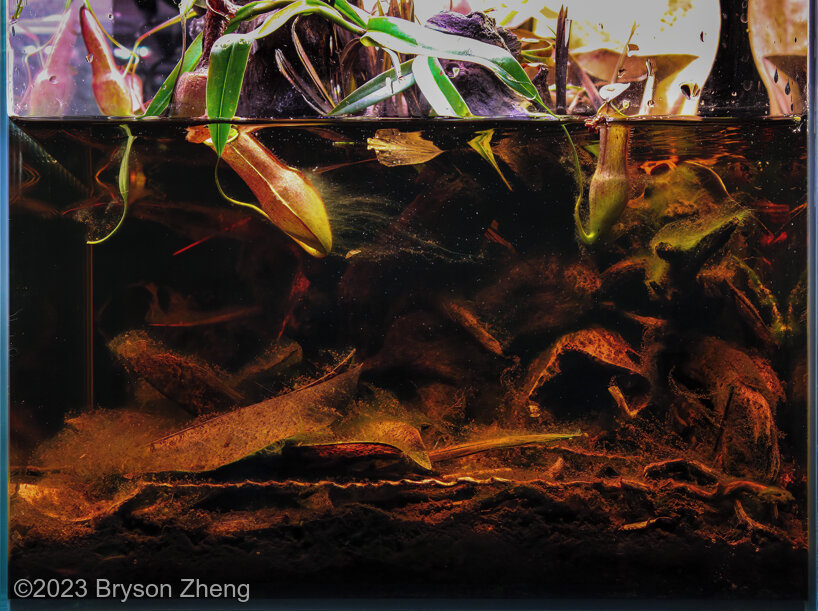
A nano tank layout featuring Flooded Bank of an Unnamed Blackwater Stream in the Sungai Kotawaringin Watershed on Bangka Island, Indonesia, 19L, by Bryson Zheng. dead hardwood and sand set the depth lines of the frame.

Hardscape (dead hardwood, sand, peat) forms the skeleton — negative space between wood and stone guides the eye from foreground to depth. On the plant side, the layout leans toward a mixed planting with species such as Nepenthes gracilis — trim in layers so hardscape still breathes. black vinyl window film substrate helps stabilize root-zone nutrition in the early weeks.

3000k lightbulb – on for 12 hours a day lighting sits at a approachable technical level for this nano tank. Hydor Professional 250 Canister Filter filtration needs enough turnovers without blasting the hardscape; browse matching filters. Low-tech tip: favor slow growers and avoid dense planting if filtration is modest.

With 4x Parosphromenus bintan (1:3 – M:F), watch bioload: a nano tank drifts quickly if stocking is heavy.

Setup notes: This biotope is a replication of a flooded section of a stream bank during the wet season. Parosphromenus bintan are found in blackwater streams on Bangka Island, including ones in the watersheds of the Kotawaringin and Menduk (Shi et al. 2021). With heavy rain, small streams swell in size and flood their banks, allowing fish to explore and utilize new habitats and resources. A decayed wooden stump created from multiple pieces of wood provides an ideal location for a group of Parosphromenus bintan to stay. Various nooks and crannies in the stump, along with a dense covering of leaf litter offer many areas for fish to retreat into (which they sure like to do). While catching a glimpse of the fish is difficult, they are content in this space, having bred multiple times. Distilled water is used for this aquarium in order to realize the low levels of dissolved solids in the habitat. The organic material ensures that the water is constantly stained with tannins.

Use the specs table as a shopping checklist for equivalent gear — then explore Biotope.

Setup specifications

Dimensions30 × 30 × 30 cm
Layout nameFlooded Bank of an Unnamed Blackwater Stream in the Sungai Kotawaringin Watershed on Bangka Island, Indonesia
Volume19L
Backgroundblack vinyl window film
Lighting3000k lightbulb - on for 12 hours a day
FiltrationHydor Professional 250 Canister Filter
PlantsNepenthes gracilis
Fish / shrimp4x Parosphromenus bintan (1:3 - M:F)
Hardscapedead hardwood, sand, peat, leaf litter, botanicals, and sticks from various species of hardwood (magnolia, oak, catappa, etc)
NotesThis biotope is a replication of a flooded section of a stream bank during the wet season. Parosphromenus bintan are found in blackwater streams on Bangka Island, including ones in the watersheds of the Kotawaringin and Menduk (Shi et al. 2021). With heavy rain, small streams swell in size and flood their banks, allowing fish to explore and utilize new habitats and resources. A decayed wooden stump created from multiple pieces of wood provides an ideal location for a group of Parosphromenus bintan to stay. Various nooks and crannies in the stump, along with a dense covering of leaf litter offer many areas for fish to retreat into (which they sure like to do). While catching a glimpse of the fish is difficult, they are content in this space, having bred multiple times. Distilled water is used for this aquarium in order to realize the low levels of dissolved solids in the habitat. The organic material ensures that the water is constantly stained with tannins.
I chose to utilize Nepenthes gracilis as the sole plant as it tolerates submersion and will thrive despite having its roots inundated. It is a widespread species in the lowlands of Southeast Asia, it being a sympatric species with many Parosphromenus is highly likely. In addition, invertebrates would be attracted to the undersides of the pitcher lids to seek the exuded nectar and for cover during the wet season, a fatal mistake as this species of utilizes raindrops to flick insects downwards into the pitcher (Bauer et al. 2012). With the Nepenthes attracting insects, the Parosphromenus eagerly await for any that might find their way onto the water's surface.References
https://www.fierceflora.com/nepenthes-gracilis/https://www.natureinstock.com/search/preview/pitcher-plant-nepenthes-gracilis-in-thesabangau-peat-swamp-forest/0_12530196.html
https://journals.plos.org/plosone/article?id=10.1371/journal.pone.0038951https://www.biotaxa.org › zootaxa.5060.1.3
Category SponsorPrevious
AquascapeBiotope Aquascape

Related posts