Species guide
Bucephalandra Care Guide (Low Light Epiphyte)
Aquatic plant
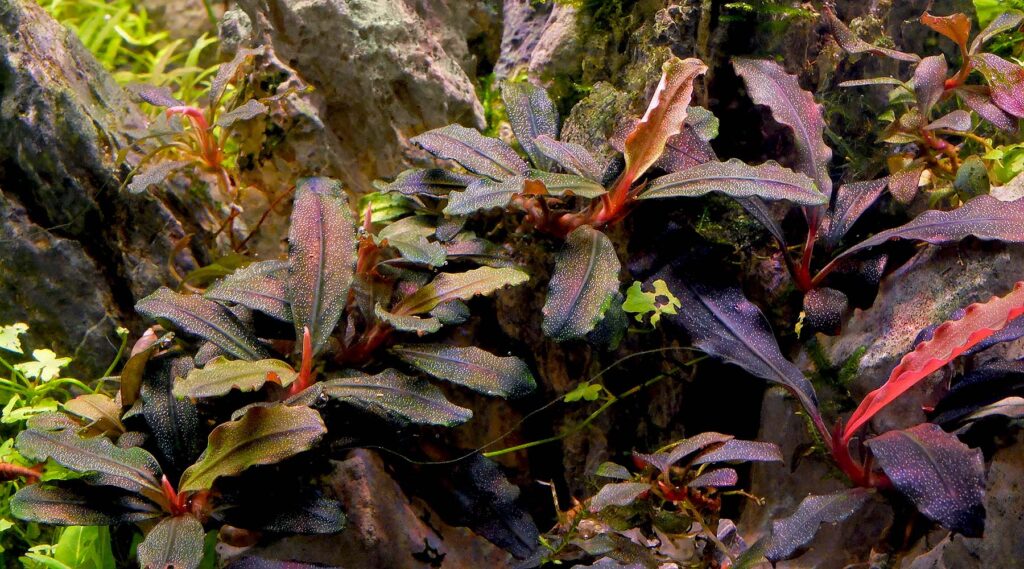
Bucephalandra ('Buce') is a slow rhizome plant from Borneo with metallic leaves and many cultivar names. Treat it like Anubias—attach, never bury—and it rewards patience in low-tech tanks.
- Easy–intermediate
- Low–medium light
- Slow grower
- Rhizome epiphyte
Quick facts
| Light | Low–medium; color pops under moderate PAR |
|---|---|
| CO₂ | Optional — speeds color and leaf count |
| Temp | 22–28 °C (72–82 °F) |
| pH | 6.0–7.5 |
| Growth | Very slow — new leaf every 2–4 weeks |
| Difficulty | Easy (care) / patience (growth) |
| Placement | Rhizome glued/tied to rock or wood |
Overview
Bucephalandra species and hybrids share the same care logic as Anubias and Java fern: epiphytic rhizome, gentle flow, stable water. Cultivar names (e.g. ‘Kedagang’, ‘Brownie Ghost’) describe leaf shape and color—not different biology.
Buce fits Budget 150 low-tech hardscape scapes where slow plants outcompete algae when light is restrained. Use the LED calculator—Buce burns under blistering PAR without CO₂ balance.
Shipping melt is common; trim soft leaves and re-glue the rhizome. Persistent holes on old leaves may signal potassium issues—see our pinholes guide. BBA on slow edges links to BBA fix order.
Care steps
-
Step 1
Glue or tie the rhizome
Use gel super glue on dry rock for 30 seconds, or cotton thread on wood. Never bury the rhizome in substrate.
-
Step 2
Moderate light and flow
6–7 hours low–medium LED. Gentle current over leaves prevents debris buildup without tearing tissue.
-
Step 3
Light fertilization
Weekly liquid micros in low-tech tanks. Heavy macro dosing rarely needed unless fast stems dominate.
-
Step 4
Propagate by rhizome cut
When 4+ leaves exist, split rhizome with sharp scissors. Attach new sections separately for wider coverage over months.
Common problems
Melting after shipping or replanting
Why: Stress, buried rhizome, or ammonia in uncycled tank.
Fix: Trim mush; ensure rhizome exposed; wait—Buce often rebounds from rhizome if attachment is correct.
Algae on leaf edges (BBA/GSA)
Why: Light too long vs very slow growth; dead leaf tips.
Fix: Shorten photoperiod; remove affected leaves; follow BBA troubleshoot order.
No new leaves for months
Why: Normal for Buce in low light, or rhizome glued under another plant.
Fix: Confirm rhizome gets light; slight CO₂ or micros boost; avoid moving weekly.
Good tank mates & companions
- Shrimp & snails — ideal; slow leaves hold biofilm.
- Betta, nano fish — safe with gentle flow.
- Companion plants: Anubias, moss, Java fern on shared hardscape.
- Avoid: plecos and goldfish that rasp leaves.
Gear for this species
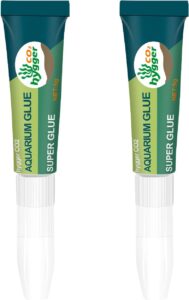
Aquarium Glue, Clear Coral Glue for Plants, Rocks, Moss, Coral, Stone, Wood – Quick Drying, Fish Safe, Freshwater & Saltwater Aquascaping – 5g (2PCS)
Uses: - Used to attach moss/epiphytes to rocks, driftwood... - Can be applied when the plant or substrate is wet - Gel form, does not dry out like 502 glue over time

Budget 150 low-tech setup — Hardscape + epiphyte path with glue and liquid fert
FAQ
Does Bucephalandra need CO₂?
No for survival; yes if you want faster leaf production and stronger color.
Can I plant Buce in soil?
Only roots—not rhizome. Burying the rhizome causes rot like Anubias.
Why are Buce names so confusing?
Hobby labels describe clones and color forms. Care is the same across most Buce sold in aquatics.
How do I attach Buce to wood?
Dry the spot, apply gel glue to rhizome base, press 30–60 seconds, then flood tank.
Is Buce good for beginners?
Yes for care difficulty—if you accept slow growth and proper rhizome attachment.
Aqua Plants Hub Editorial