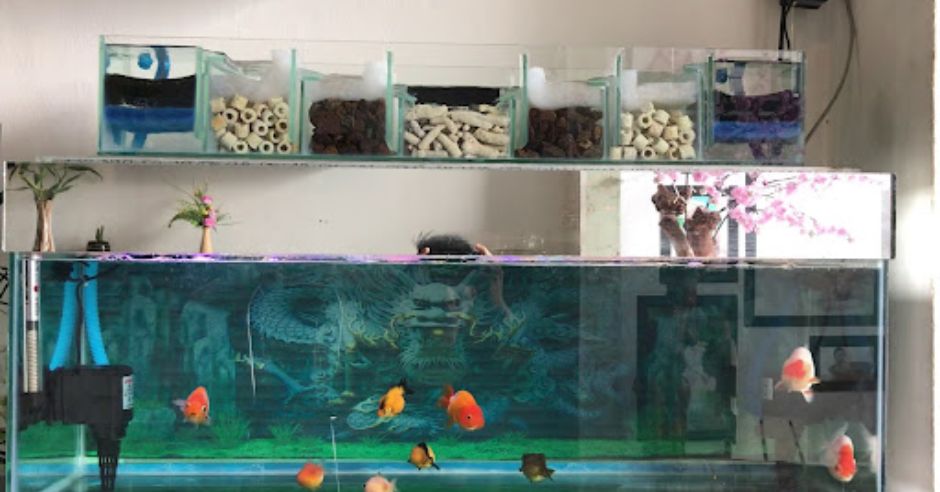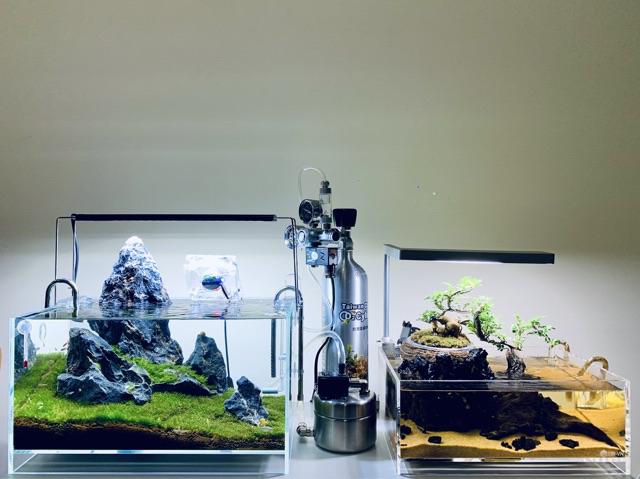
Best Aquarium Filters for Planted Tanks (2026): HOB, Canister, Sponge & DIY
Pick a filter that matches tank size, livestock, and how much maintenance you will actually do—then size media and flow for plants, not just “clear water.” This merges older type lists and DIY vs branded posts into one field-tested shopping playbook.
Which tank are you filtering?
Pick the closest path. Shrimp and high-tech stems punish both under-filtration and blasting flow.
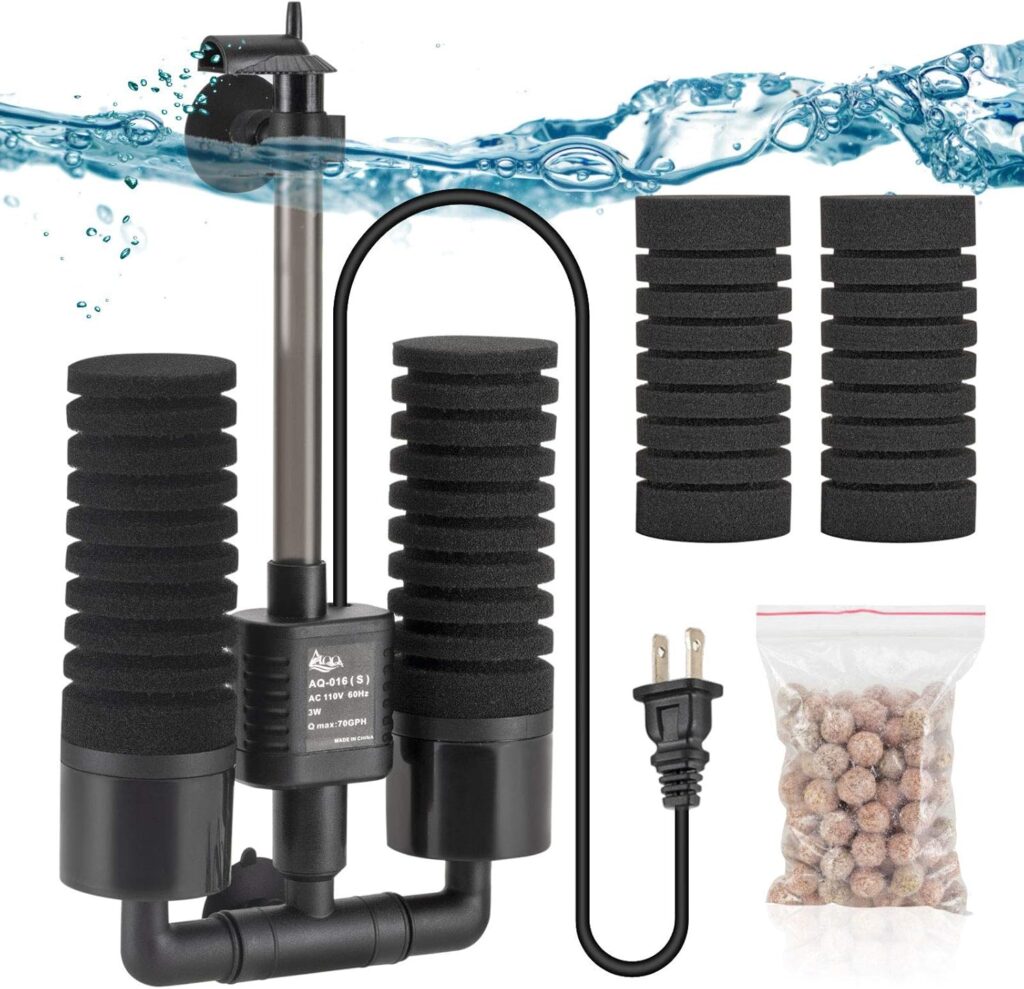
Nano / desk tank (≤ 10 gal / ~40 L)
Sponge or small HOB first. Avoid huge canisters that empty the water column.
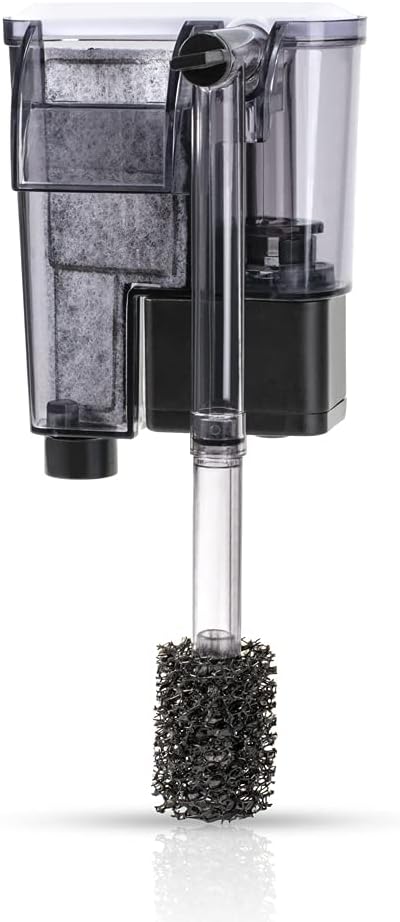
Community planted (10–40 gal)
HOB or compact canister. Match media volume to bioload, not Instagram flow.
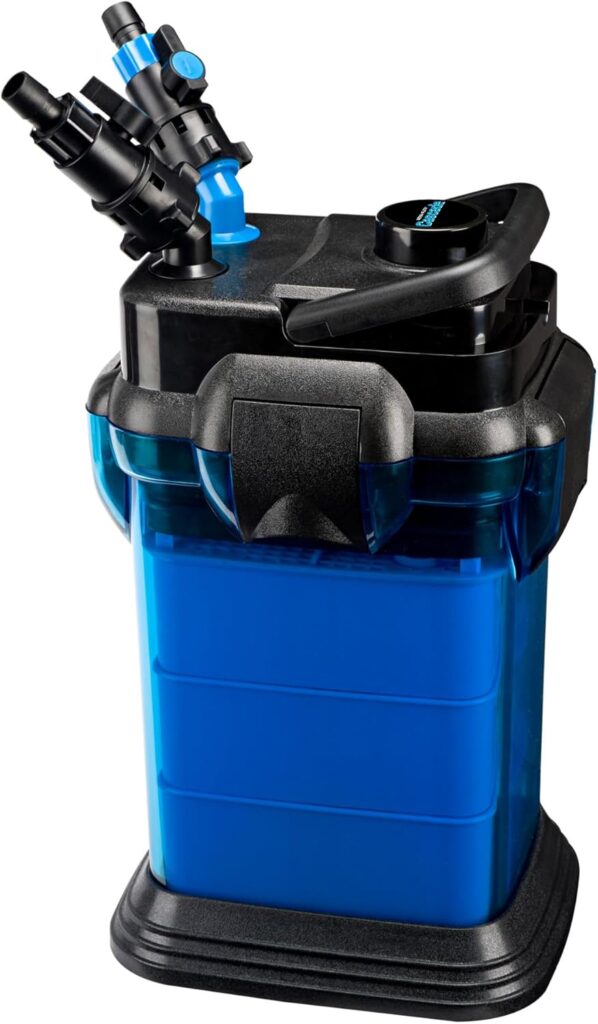
High-tech / heavy bioload
Canister (or sump) with room for mechanical + biological media. Plan hose maintenance.

Budget / DIY curious
DIY can work—only after you accept leak risk and spare-parts hunting. See DIY section.
What “good filtration” looks like on a planted tank
Clear water is not enough—plants need gentle circulation without uprooting stems or stressing shrimp.
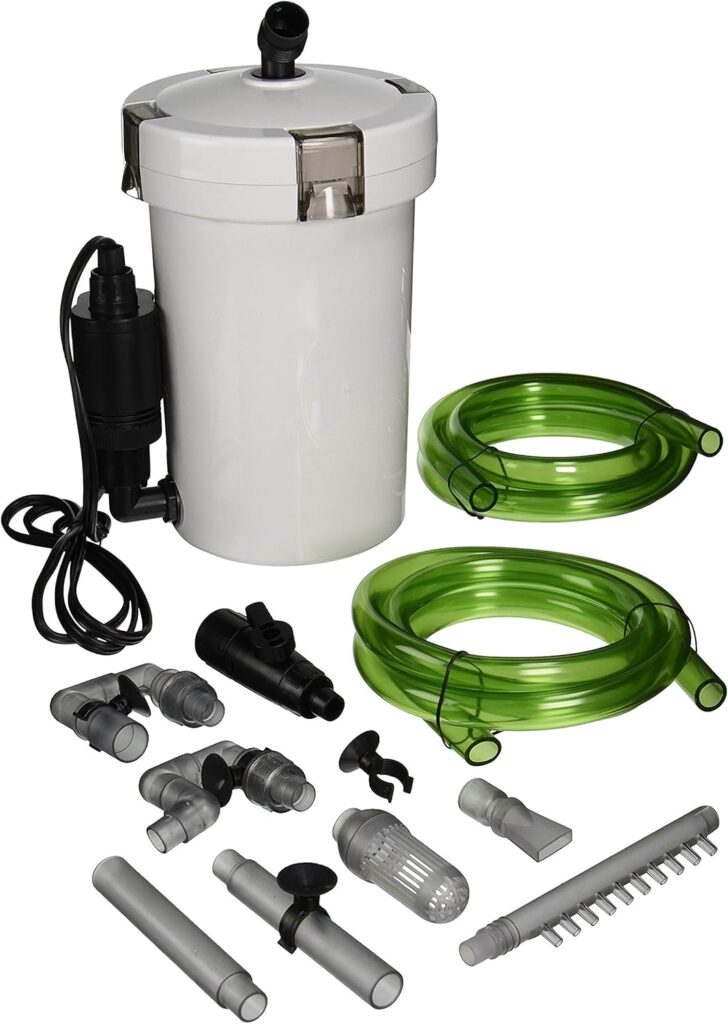
Core types (extra depth)
Most planted-tank searches land on sponge, HOB, or canister. These three get fuller ladders. Sump / internal / DIY sit in shorter cards below.
Sponge / foam filters
Air-driven or small power sponges · shrimp & nano friendly
Best when bioload is modest and you want biological surface area without strong current. Weak as a sole filter on messy goldfish / heavy feeding high-tech tanks.
- Size foam to tank—dual sponge on breeding / shrimp setups.
- Squeeze in tank water only during water changes (never tap).
- Add a second stage (HOB/canister prefilter) if debris overwhelms foam weekly.
- Promote away from sponge-only if nitrate climbs fast with your stocking.
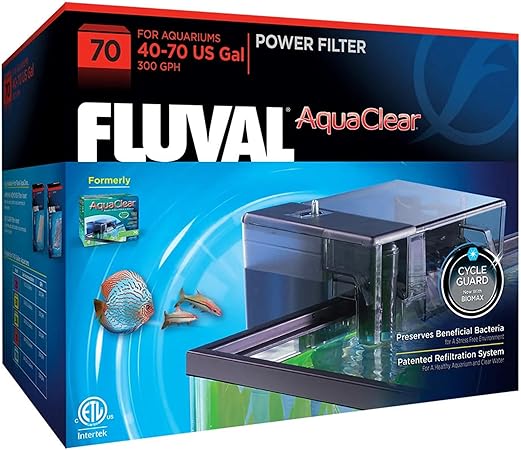
Hang-on-back (HOB) / hang-on filters
Waterfall return · easy media swaps
Strong convenience for mid-size planted tanks. Watch evaporative loss at the waterfall and cartridge “carbon every week” marketing—plants often need less carbon, more consistent bio media.
- Match manufacturer tank-size band; prefer models with reusable sponge/bio trays.
- Aim return along the long glass so stems get gentle sway, not a tornado corner.
- Replace floss when brown; keep bio media (ceramic/sponge) for months.
- Promote to canister when HOB rattles, overflows, or you need more sealed media volume.
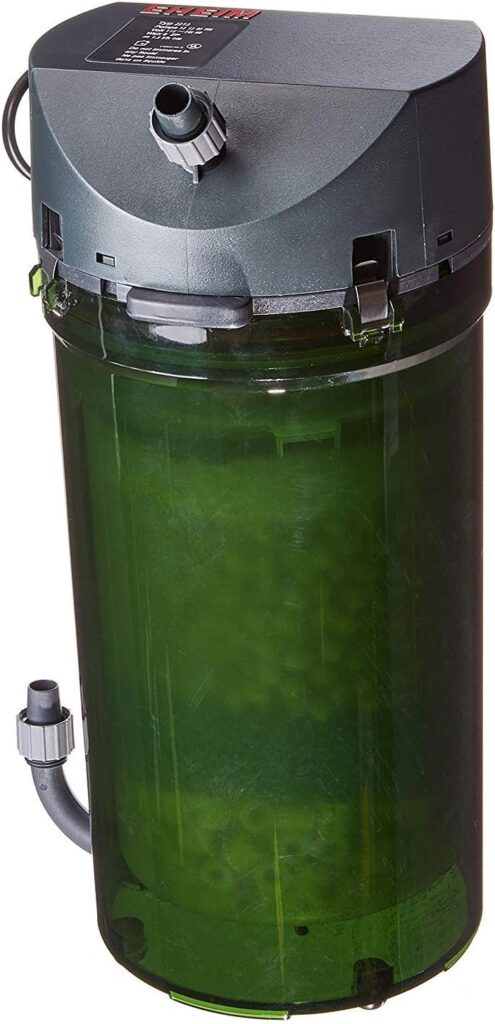
External canister filters
Pressurized media chambers · high-tech workhorse
Best media volume per footprint for planted tanks that generate mulm and need stable biological filtration. Cost is hose maintenance and priming discipline—not just the sticker price.
- Buy for media volume first; treat GPH as a ceiling you will often throttle.
- Order trays: coarse mechanical → fine → biological. Carbon optional/short-term.
- Schedule hose/impeller cleans before flow collapses (don’t wait for a crash).
- Escalate to dual canisters / sump only after one well-maintained canister still leaves dead spots.
Other options (shorter cards)
Still useful—less often the first buy for a standard planted display tank.
Internal power filters
In-tank motors · budget kits
OK for starter kits; hard to hide in scapes and often weak on media volume.
- Use as backup / quarantine.
- Prefer sponge or HOB for display tanks when budget allows.
- Promote away if the unit is visible and noisy in the hardscape.
Sumps / overflow systems
Cabinets · refugia · advanced
Maximum flexibility when you already accept plumbing complexity. Overkill for most nano/mid planted tanks.
- Only after canister limits are real, not theoretical.
- Budget for quiet return pump + fail-safes.
- Keep a sponge/HOB emergency plan for pump failure.
Mini external DIY (overview)
Homemade hang-on / bottle builds
Merged from older DIY guides: possible on a budget, but leaks and spare parts are on you. See full DIY vs branded section.
- Prototype over a towel; pressure-test before trusting carpet.
- Keep branded sponge as backup during experiments.
- Promote to branded if you value time over parts cost.
What a planted-tank filter must actually do
Clear water is a side effect. Prioritize mechanical capture, biological surface area, and circulation that serves plants—not maximum GPH on the box.
Mechanical
Catch mulm before it smothers leaves and substrate. Floss/foam first.
Biological
Stable ammonia/nitrite processing. Don’t bleach your bio media.
Flow shape
Long-wall circulation > random blast. Protect shrimp and fine plants.
Maintenance fit
The best filter is the one you will clean on schedule.
Livestock risk
Intake guards for shrimp/fry; avoid dehydrating waterfall noise if it stresses you into skipping checks.
Sources & positioning
- Tier 4 — field framework: paths, promotion thresholds, and DIY vs branded rules below are editorial synthesis for planted-tank keepers—not manufacturer lab tests.
- Related hub: Aquarium algae control field guide (filtration supports balance; it does not replace light/CO₂ discipline).
- Tier 3 — definitions only: Aquarium filter (mechanical / biological / chemical stages), Biofilter — vocabulary only, not shopping verdicts.
Beginner trap
Buying the loudest GPH number—or a huge canister for a nano—then never cleaning hoses. Match maintenance appetite first.
Decision matrix (with promotion thresholds)
Work left → right. “Improve” means clearer corners + stable livestock without weekly emergency rinses—not a vanity flow rate.
| Algae | 1. Manual / livestock | 2. Balance | Promote to 3. Gear when… | Promote to 4. Escalate when… |
|---|---|---|---|---|
| Nano ≤10 gal | Sponge rinse in tank water | Light feeding · plant mass | Dual sponge or small HOB if debris builds weekly | Skip big canisters unless bioload is unusual |
| Community 10–40 gal | HOB floss on schedule | Aim return · keep bio media | HOB with reusable media; upgrade impeller if weak | Still dirty corners after 2 clean cycles → compact canister |
| High-tech / heavy load | Prefilter / coarse foam often | Tray order M→F→bio | Canister sized to media volume | One maintained canister fails → dual or sump (advanced) |
| Shrimp / fry focus | Intake guard · gentle sponge | Avoid blasting HOB returns | Sponge primary; HOB only if baffled | Never “promote” to raw high-GPH without guards |
| DIY path | Leak checks weekly | Keep branded backup online | Only after towel pressure-test | Second leak or parts hunt → buy branded |
Universal stop rule
If a new filter causes gasping, shrimp deaths, or repeated floods—stop, restore the previous working filter, and fix intake/flow before buying the next upgrade.
7-day install & settle plan
One timed plan beats swapping three filters in a weekend.
Diagnose
- Measure tank gallons / liters
- Note livestock (shrimp?)
- Write current filter + last clean date
Choose path
- Match Path A–D
- Buy media-first, not GPH-first
- Prep towel + bucket for install
Install
- Seed bio media from old filter if possible
- Aim flow along long wall
- Guard intakes for shrimp/fry
Settle
- Watch ammonia if you nuked old media
- Tune return baffles
- Only then shop upgrades
DIY vs branded filters — when each wins
Merged from older “genuine vs DIY” posts. Same question every beginner asks—answered with promotion rules, not brand loyalty.
What “DIY filter” means here
Homemade hang-on boxes, bottle canisters, PVC builds · mini external DIY guides
DIY filtration is building (or heavily modifying) a filter so you pay for parts and time instead of a sealed retail unit—accepting leak and spare-part risk.
You enjoy building, can pressure-test safely, and keep a working branded sponge/HOB as backup. Mini external DIY guides belong here as an appendix—not a separate thin URL.
You value quiet seals, replaceable impellers, and warranty over weekend fabrication. Most display planted tanks should start branded, then DIY only with eyes open.
Promotion rule (DIY ↔ branded)
- Start branded if this is your first planted tank or you keep expensive shrimp.
- Try DIY only after a towel-tested prototype and a backup filter ready.
- Return to branded after a second leak, chronic noise you won’t fix, or parts you cannot source in a week.
DIY fits
Learning builds, quarantine racks, budget experiments with backup filtration online.
DIY wastes time
Show tanks over carpet, rentals with flood risk, zero interest in plumbing.
Livestock notes
Never leave an untested DIY pressurized unit unattended overnight.
Promotion
Second failure → buy branded HOB/canister and archive the DIY as a hobby project.
Where this sits in the merged hub
Older standalone DIY vs authentic articles and the mini external DIY guide are folded here so Google (and readers) get one answer: choose path first, then DIY only with a promotion threshold.
Buying two canisters before cleaning one?
Almost never. Maintain the filter you have for a full clean cycle before escalating spend. Underservice looks like “I need more GPH.”
Products — criteria first, then comparisons
Selection criteria: (1) matches a path above, (2) enough mechanical + biological media for planted bioload, (3) maintainable by a busy keeper, (4) widely available on Amazon for US/UK-style shoppers. Search links include our associate tag.
Group A — Nano / shrimp-safe starters
| Option | Best when… | Skip when… | Why it wins here |
|---|---|---|---|
| Dual sponge / foam kit | Path A shrimp or breeding; gentle flow | Heavy goldfish / messy cichlid bioload | Highest biological area per dollar; lowest current stress |
| Small hang-on with sponge media | Nano planted that still needs surface skimming | Bare-root shrimp without intake guard | More polish than sponge-only if you baffle the return |
Pick dual sponge first for shrimp. Add a small HOB only if you can guard the intake and soften the waterfall.
Group B — Mid-size planted workhorses
| Option | Best when… | Skip when… | Why it wins here |
|---|---|---|---|
| HOB with reusable trays | Path B community planted; easy weekly floss | You refuse waterfall noise / evaporation | Fast maintenance; watch cartridge upsells |
| Compact canister | Path B/C needing quiet sealed media | Nano tanks; owners who won’t clean hoses | More media volume; higher maintenance skill floor |
Pick HOB if you will actually rinse floss weekly. Pick canister if you want cabinet aesthetics and will schedule hose service.
Group C — High capacity & media
| Option | Best when… | Skip when… | Why it wins here |
|---|---|---|---|
| Full-size canister (media-first) | Path C high-tech / heavy feeding | First tank ever; no cabinet space | Room for coarse→fine→bio stacking |
| Extra foam / bio media pack | Any canister/HOB with empty tray space | As a substitute for cleaning sludge | Cheap upgrade vs buying a second filter |
Fill empty trays with foam/bio before buying a second head unit. Link filter-media deep-dive when that hub is upgraded (W2).
Affiliate disclosure: We may earn a commission from qualifying Amazon purchases at no extra cost to you. Recommendations follow the criteria above—verify livestock safety, flow, and return policies for your region. Product photos are catalog references.
FAQ
How much GPH do I need for a planted tank?
Start from manufacturer tank-size bands, then tune by eye: gentle stem sway, no sandstorms, no shrimp stuck to intakes. Box GPH is often optimistic—media load matters more.
Is a canister always better than a HOB?
No. Canisters win on sealed media volume and aesthetics; HOBs win on quick mechanical maintenance. Promote only when the matrix says your HOB is maxed.
Can filtration alone stop algae?
No. Filters remove mulm and stabilize biology; algae still needs light/CO₂/nutrient balance. Use the algae control hub alongside this guide.
Should beginners DIY a filter?
Only with a backup branded filter and a leak-safe test. Most beginners should buy sponge/HOB first—see the DIY vs branded section.
How often should I clean filter media?
Rinse mechanical media when flow drops or floss browns; keep biological media stable for months. Never wash bio media in chlorinated tap water.
Do shrimp need a special filter?
They need gentle flow and guarded intakes. Sponges excel; HOBs need guards/baffles. High open intakes are a common shrimp-loss cause.
Phạm Thị Quyên