Equipment Review · 2026
Best LED Lights for Planted Aquariums (2026)
Buying a planted-tank LED is not about the brightest Amazon thumbnail. The fixture has to match tank length, plant demand, and whether you run CO₂—or you will feed algae instead of carpets. This 2026 roundup compares widely available full-spectrum bars with Amazon associate links, then tells you when to stay low-tech versus when to promote intensity.
Use this page for shopping decisions (models, value tiers, ASIN-ready picks). For photoperiod rules, DIY risks, and promotion thresholds, read the education hub first: Planted Tank Lighting Field Guide. Nano clip-ons have their own shortlist: Best Nano & Clip Aquarium Lights (2026).
How we pick: (1) real dimming or height control so you can ramp, (2) even coverage for the stated length, (3) timer or easy external timer, (4) spectrum aimed at plants—not party RGB as the only daytime mode, (5) stocked often enough that replacements are realistic. Field notes below are keeper patterns, not lab PAR certificates for every SKU.
Quick path: easy plants / no CO₂ → start moderate (Nicrew-class or dimmed Fluval) at 6–7 hours. Stem community → full-length WRGB with a timer. Carpet high-tech → controllable high-output (Chihiros WRGB II / Fluval 3.0) only after CO₂ and nutrients are already stable. If algae surges after a light upgrade, cut hours or intensity before buying a second head—see the algae control field guide.
Field pattern — week one after a new LED: Keep the old photoperiod for three days at 40–60% intensity (or raised height), then add 30–60 minutes only if stems stay compact and glass stays manageable. If green dust appears on the glass within five days, cut intensity before you cut plant mass. Most “this light is bad” returns are ramp failures, not defective diodes.
Who should skip flagship WRGB: shrimp-only nanos that need gentle clip lights; bone-stock kit tanks with zero interest in timers; keepers still fighting ammonia after a new scape. Fix the nitrogen cycle and a basic fert routine first, then shop intensity. Who should skip budget-only bars: red stem forests and carpet high-tech already on CO₂—you will outgrow them and pay twice.
Spectrum honesty: “Full spectrum” on Amazon is marketing language. Prefer fixtures with independent or grouped white/red/green/blue control and a published channel layout when possible. For photography, WRGB usually renders reds more naturally than cold 6500K-only bars. For growth, consistency and photoperiod beat chasing a single PAR number from a forum screenshot of a different tank depth.
Mounting and heat: Rim-mounted extendable bars suit most rimmed tanks; hanging kits help deep aquariums and open-tops. Watch driver heat and splash on open-tops—aquarium-rated housings beat random shop lights (see DIY notes in the lighting hub). If the fixture cannot dim, buy acrylic risers before you buy a second light head.
Warranty and replacements: Prefer brands with clear length variants (30/45/60/90 cm class) so a failed unit is replaceable without rebuilding the hardscape. Keep the original packaging photo of the model number—Amazon listings sometimes swap creative titles while the hardware changes mid-year.
Stocking note: Shrimp and fish care less about WRGB branding than about stable days and gentle current. If livestock is gasping or hiding after a sudden intensity jump, dim immediately—light stress often shows as behavior before it shows as algae. Re-expand only after a calm week.
Quick comparison
All options in this guide
| Product | Power | Type | Tank size | Price ~ | Rating | Buy |
|---|---|---|---|---|---|---|
| Planted tank | ~37W | WRGB II | 60 cm | ~$21.84 | ||
| Planted tank | ~20–30W | Classic Plus | 18–24″ | ~$15.88 | ||
| Planted tank | ~32W | Plant 3.0 | 24″ | ~$149.99 | ||
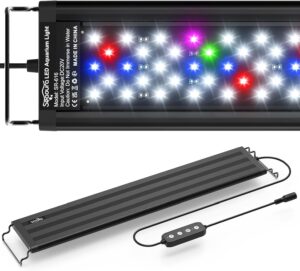
| Planted tank | SEAOURA Led Aquarium Light for Plants-Full Spectrum Fish Tank Light with Timer Auto On/Off, 18-24 Inch, Adjustable Brightness, White Blue Red Green Pink LEDs with Extendable Brackets for Freshwater | SEAOURA | ~$21.84 |
#1 — Best overall
Editor's choiceChihiros WRGB II 60cm LED Light
· 1 reviews
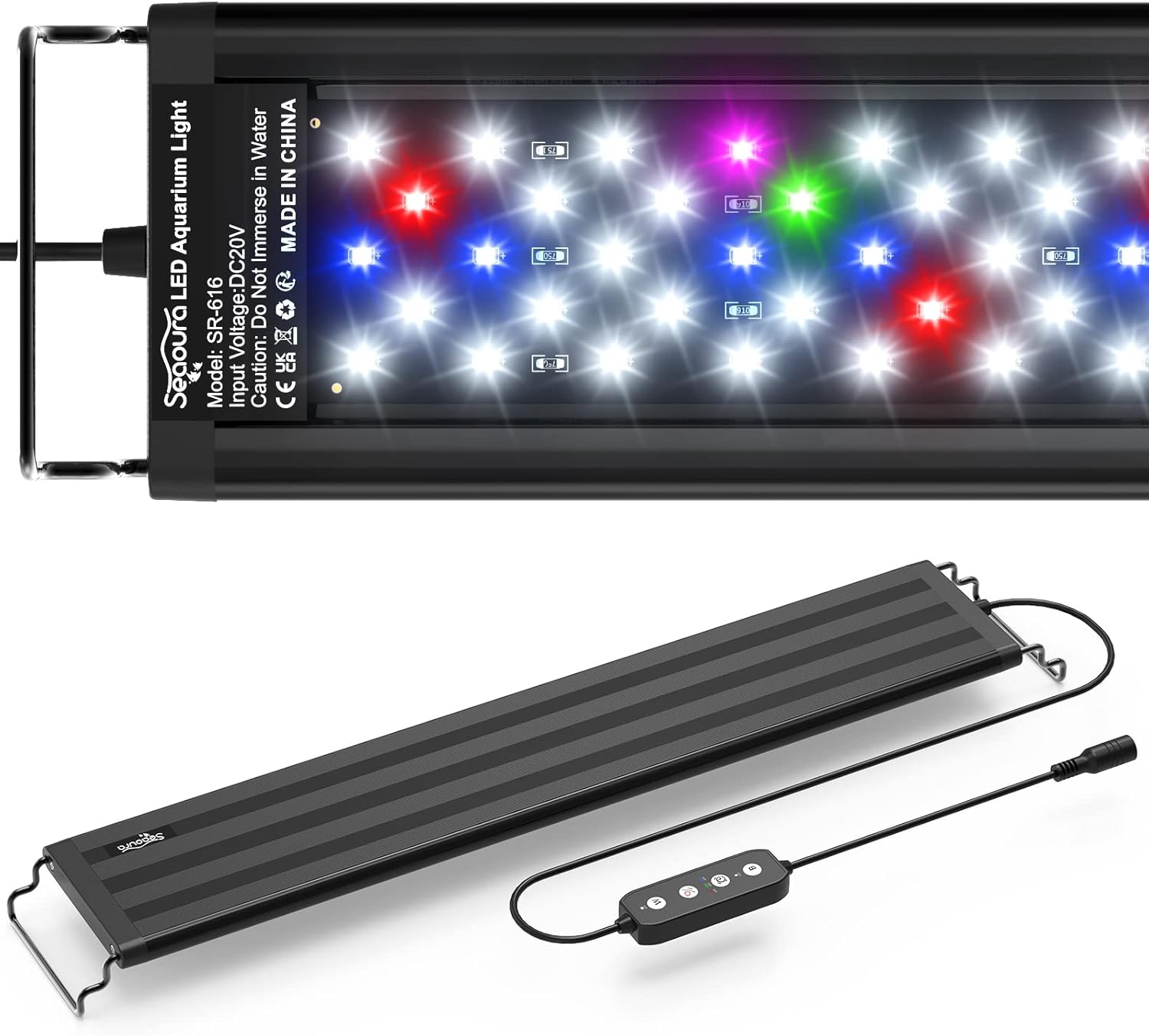
Best overall for planted color and high-tech headroom. Chihiros WRGB II (60 cm class) is the fixture we point most stem/carpet keepers toward when CO₂ is already online: strong WRGB channels, controllable output, and a clear upgrade path from dim kit lights. Ramp intensity over 1–2 weeks; do not start at 100% on a new scape.
Skip if you only keep Anubias/fern low-tech and refuse timers—buy Nicrew-class instead.
Mount centered for even wash. Pair with the lighting field guide ramp plan so flagship output does not become a 12-hour algae weekend.
Pros
- ★[DIY MODE] :Time, Colour and Brightness 3 setting choose. Timing (Timer control key): 3 choices timer running for 6 hours, or 10 hours, or 12 hours; Brightness/On-Off key:…
- ★[Full Spectrum Aquarium Light] :With full spectrum lighting, which is helpful fish and aquatic plants growth, fit for all fresh water tanks. The controller is very simple and…
- ★[High-quality Led& High CRI]: Using high-quality SMD2835 led chips. 6500k white light, red light, pink light, green light and blue light, the light is very soft and beautiful,…
- ★[5 columns of Led Chips, Extendable Metal Bracket]: Compared with other tank lights, up to 5 columns of led chips, they are more compact and beautiful. Good heat…
Cons
- Price varies by seller and region
- Check tank size and specs before buying
- May require extra accessories depending on setup
| Product | SEAOURA Led Aquarium Light for Plants-Full Spectrum Fish Tank Light with Timer Auto On/Off, 18-24 Inch, Adjustable Brightness, White Blue Red Green Pink LEDs with Extendable Brackets for Freshwater |
| Brand | SEAOURA |
| Use case | Planted tank / aquascape |
| Availability | Amazon / international |
| ASIN | B0B4VF8X5N |
#2 — Best value
Best valueNicrew Classic Planted Plus LED
· 1 reviews
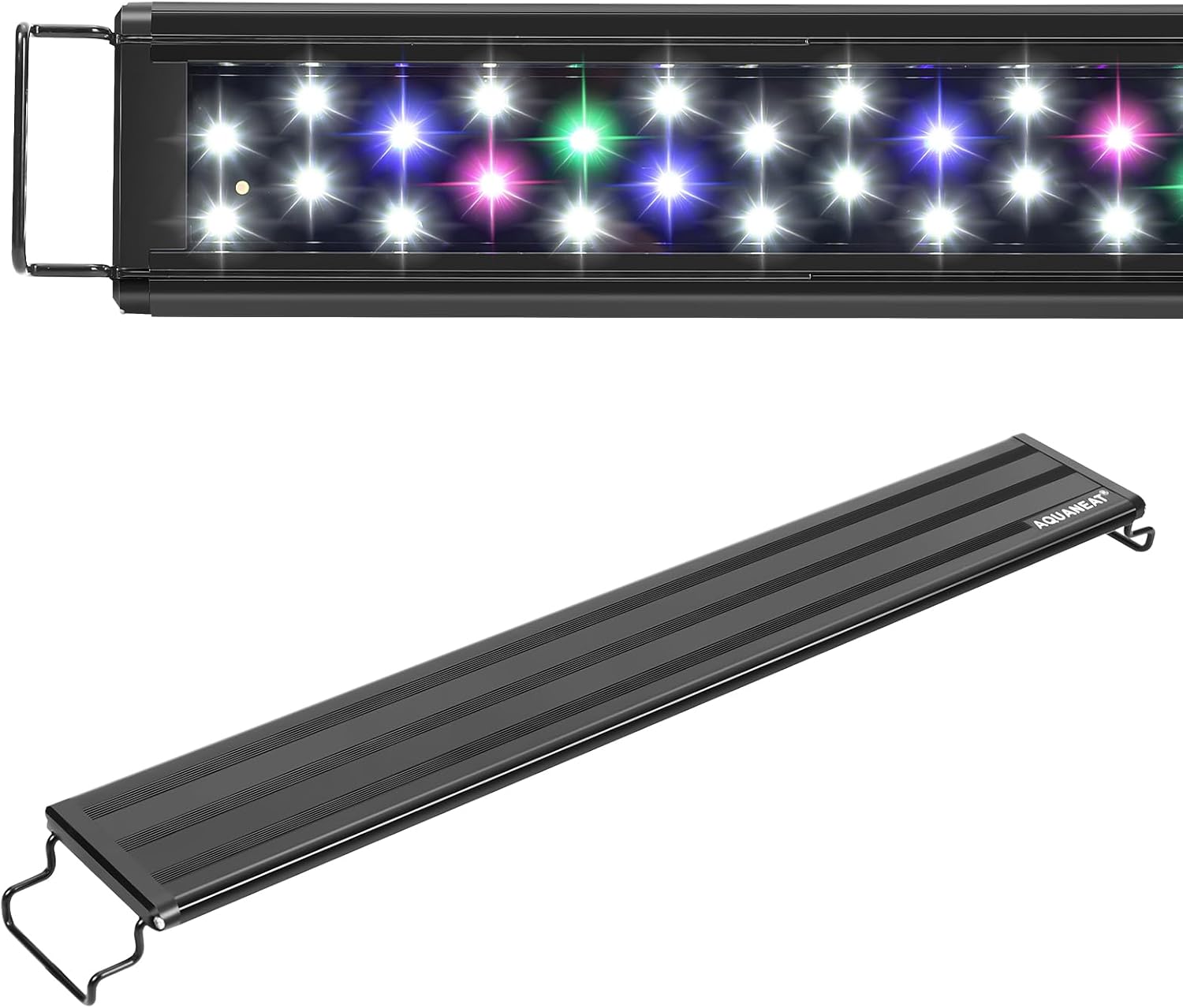
Best value full-spectrum bar. Nicrew Classic Planted Plus covers common 45–60 cm community tanks without a flagship price. Use a timer, aim for even wash, keep photoperiod honest at 6–8 hours for low/mid tech.
It will not replace a dimmable high-PAR unit for Monte Carlo under CO₂—but it is the right first LED for many planted community tanks and a sane backup when you are still learning fertilization.
If stems stretch after two weeks at a stable schedule, raise intensity slightly or promote to Chihiros/Fluval—do not add a second chaotic light.
Pros
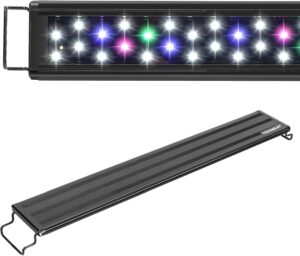
- Work best on 10 gallon tanks with 20 inches long; with two extendable brackets, this light also fits for fish tank from18 inch to 24 inch long
- Min size after assembled with dockig brackets: 18.5” L x 2.7” W, Light body without docking brackets: 17” L x 2.7” W. Tank thickness: No limit to rim…
- Configuration: Total 42 LEDs, 30 pcs 6500K white LED, 6pcs blue LED, 3 pcs pink LED, 3 pcs Green LED
- Mode: all lights on and all lights off; no timer; light brightness is not adjustable
Cons
- Price varies by seller and region
- Check tank size and specs before buying
- May require extra accessories depending on setup
| Product | AQUANEAT LED Aquarium Light Full Spectrum for 18 Inch to 24 Inch Fish Tank Light Fresh Water |
| Brand | AQUANEAT |
| Use case | Planted tank / aquascape |
| Availability | Amazon / international |
| ASIN | B07T9Y7LQ4 |
#3 — Best controllable
Premium pickFluval Plant 3.0 LED (15–24″)
· 1 reviews
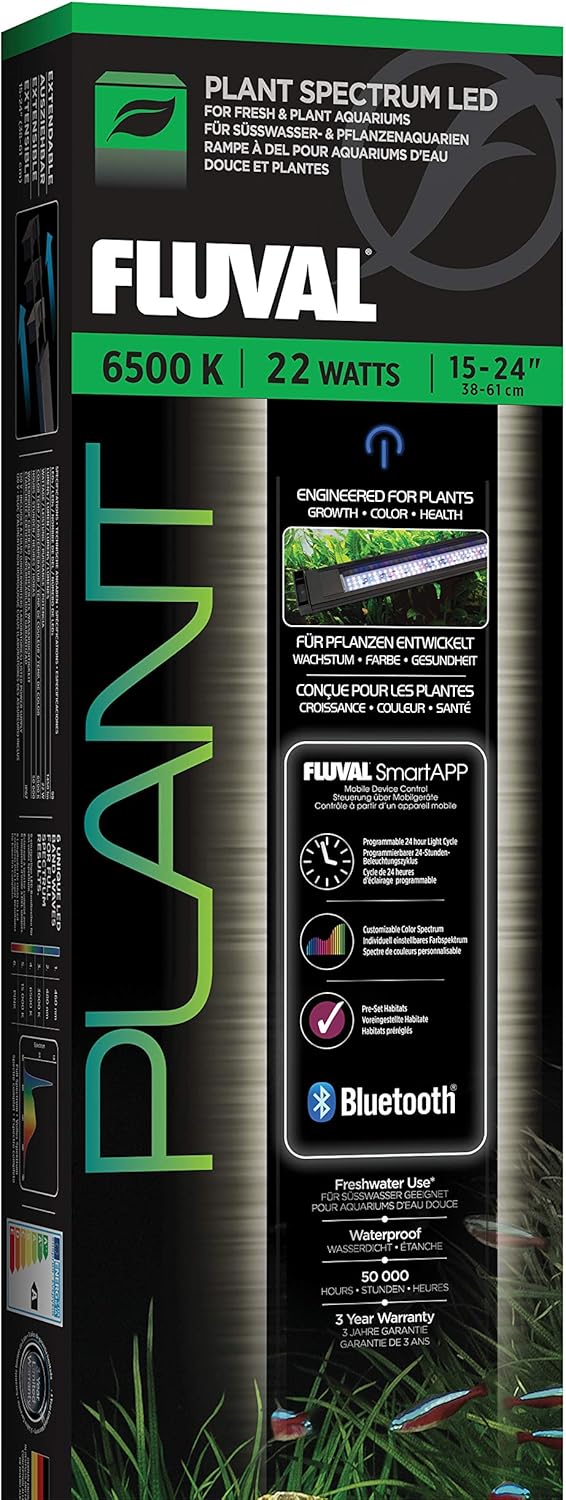
Best controllable app + ramp pick. Fluval Plant 3.0 shines when you want scheduled sunrise/sunset and fine dimming on mid-length tanks. Excellent bridge between budget bars and full WRGB flagships.
Use Bluetooth scenes for gentle ramps, not for extending total growth hours. If algae appears, reduce intensity in the app before deleting the fixture from your cart history.
Choose this when you value schedules and repeatability; choose Chihiros when you want maximum planted color headroom on high-tech.
Pros
- Features programmable, gradual 24-hour light cycle settings (sunrise, midday, sunset and night)
- Includes six unique band waves for full spectrum results
- Includes optional pre-set habitat light configurations like Lake Malawi, Tropical, and Planted
- 120 degree light dispersion for full area coverage and uniform lighting
Cons
- Price varies by seller and region
- Check tank size and specs before buying
- May require extra accessories depending on setup
| Product | Fluval Plant 3.0 LED Planted Aquarium Lighting, 22 Watts, 15-24 Inches |
| Brand | Fluval |
| Use case | Planted tank / aquascape |
| Availability | Amazon / international |
| ASIN | B083QP62MP |
Buying guide
How to choose the right product
Match intensity to the system you will actually maintain. These six checks prevent most “I bought a brighter light and got algae” threads.
Length and even wash
Buy for tank length first. A short bar on a long tank leaves dark corners that stretch stems while the hotspot grows film algae. Leave a small overhang gap; center the fixture; raise height before maxing dimmers if tops bleach.
Intensity vs CO₂ readiness
High PAR without CO₂ and a fert schedule is an algae accelerator. Low-tech Anubias / fern / Crypt tanks want moderate light and a stable 6–8 hour day. Carpet and red stems need controllable output plus CO₂—not a random 12-hour blast on day one.
WRGB, dimming, timers
WRGB channels help reds and stems look honest under camera and in person versus cold white-only bars. Dimming lets you ramp weekly. A built-in or plug-in timer beats weekend chaos photoperiods—the #1 beginner trap called out in the lighting hub.
Photoperiod discipline
Start 6–7 hours. Extend slowly only if plants stay compact and glass stays manageable. On high-tech, turn CO₂ on 1–2 hours before lights. Moon/RGB show modes do not count as growth hours—park them after the plant block.
Test week protocol
Photograph the same corner weekly. Note glass film, pearlwort/carpet height, and stem internode length. Change only one variable (hours, %, or height) per week. If you changed light and fertilizer the same day, you will not know which lever failed.
Algae rollback
New light + algae ≠ automatic failure of the SKU. Roll back 20–30% intensity or −1 hour for a week, keep CO₂/ferts steady, and clean mechanical filter media. Only then judge whether you need a different fixture class.
Frequently asked questions
FAQ
How long should planted tank lights run each day?
Most tanks do well starting at 6–7 hours on a timer. Low-tech often stays in the 6–8 hour band; high-tech with CO₂ may run 8–10 hours after a slow ramp. If green dust or hair algae appears after a light upgrade, shorten the day or dim before shopping a stronger fixture. Details: lighting field guide.
Do low-tech tanks need a WRGB flagship?
No. Easy plants thrive under moderate full-spectrum bars. A controllable Fluval or solid Nicrew at reduced intensity beats an unmanaged high-PAR WRGB. Promote to flagship WRGB when you add CO₂ and demanding carpets—not because a thumbnail looked brighter.
Chihiros WRGB II vs Fluval Plant 3.0 vs Nicrew?
Chihiros WRGB II is our overall pick for high-tech color and headroom on ~60 cm class tanks. Nicrew Classic Planted Plus is the value workhorse for low/mid tech. Fluval Plant 3.0 suits keepers who want app scenes and gentle ramps. Twinstar stays a premium alternative when you prioritize build/spread and accept the price.
What about clip-on LEDs?
Fine for true nanos and Path A easy plants, but hotspots are common. For a dedicated nano shortlist see Best Nano & Clip Lights 2026. Promote to a full-length bar when stems stretch or you add carpets.
Should I replace T5 tubes with LED in 2026?
For most new builds, yes—LEDs win on dimming, heat, and running cost. Inherited T5 canopies still work if bulbs are fresh; migrate when ballast fails or you need true ramps. When you switch, cut hours/intensity on day one—old T5 output is often lower than you remember, and a new LED at 100% recreates the classic algae spike.
How do I compare watts across brands?
Wall watts are a rough ceiling, not a PAR promise at the substrate. Prefer length fit + dimming + spectrum control over chasing the highest watt number. Two 30W bars aimed poorly lose to one well-centered dimmable 25–40W WRGB. Use plant response over two weeks as the real meter.
More reviews in Reviews