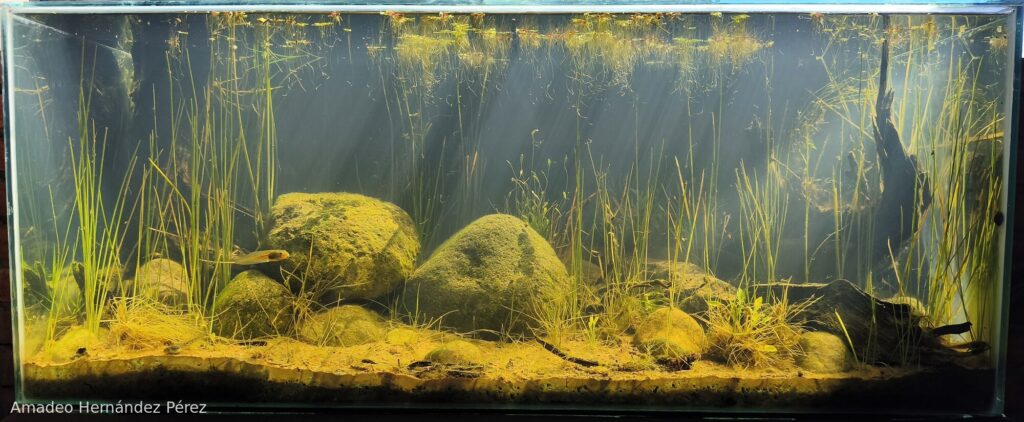
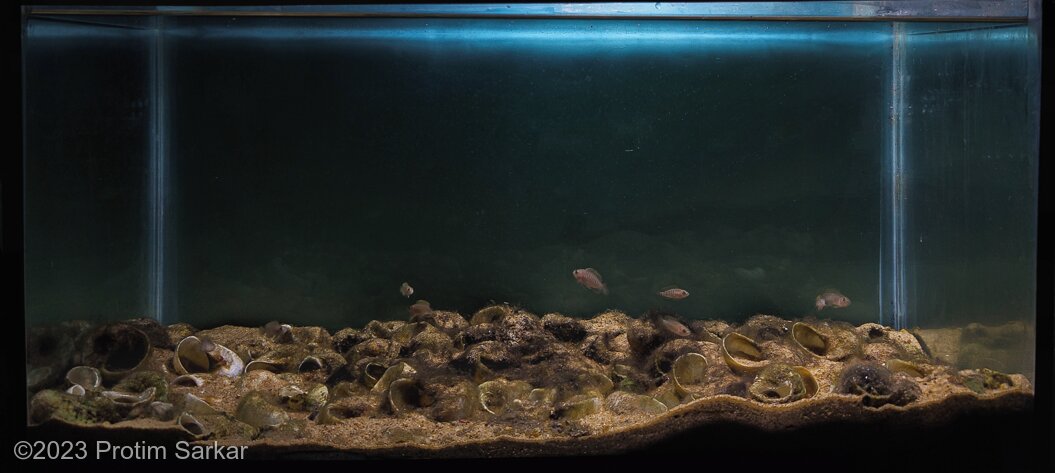
Sandy sedimentary bottom area in Ndole Bay, Lake Tanganyika, Zambia,

Layout bể cỡ trung Sandy sedimentary bottom area in Ndole Bay, Lake Tanganyika, Zambia,, dung tích 125L, thực hiện bởi Protim Sarkar. Bố cục được dựng quanh Here in this 125L aquarium kết hợp I have used extremely fine river basin sand with large amount of coral bone as substrate. I couldn’t find the Neothauma tanganyicense as these shells are now forbidden to collect. So I have used plenty of Turbo Shells.

Phần hardscape với Here in this 125L aquarium quyết định nhịp bố cục; cây chỉ cần phủ đúng tầng để không che mất đường nét chính. Nền For the Background, I have used Blue Vinyl. hỗ trợ ổn định dinh dưỡng vùng rễ trong giai đoạn setup đầu.

Đèn Philips 6000K RGB LED tubes (1 piece) đặt mức kỹ thuật trung bình — cao cho bể cỡ trung. Lọc Sunsun HW-304B External Canister 525gph with 500 grams of media for Chemical and Biological Filtration. cần đủ lưu lượng nhưng không xô đổ hardscape; tham khảo nhóm máy lọc cùng phân khúc.

Dùng bảng thông số bên dưới như checklist khi mua thiết bị tương đương — thêm cảm hứng tại Biotope.


Thông số setup

Kích thước90 × 45 × 30 cm
Tên tác phẩmSandy sedimentary bottom area in Ndole Bay, Lake Tanganyika, Zambia,
Dung tích125L
Nền bểFor the Background, I have used Blue Vinyl.
Ánh sángPhilips 6000K RGB LED tubes (1 piece)
LọcSunsun HW-304B External Canister 525gph with 500 grams of media for Chemical and Biological Filtration.
CâyN/A
Cá / tômLamprologus multifasciatus 16 pieces (12 female, 4 male)
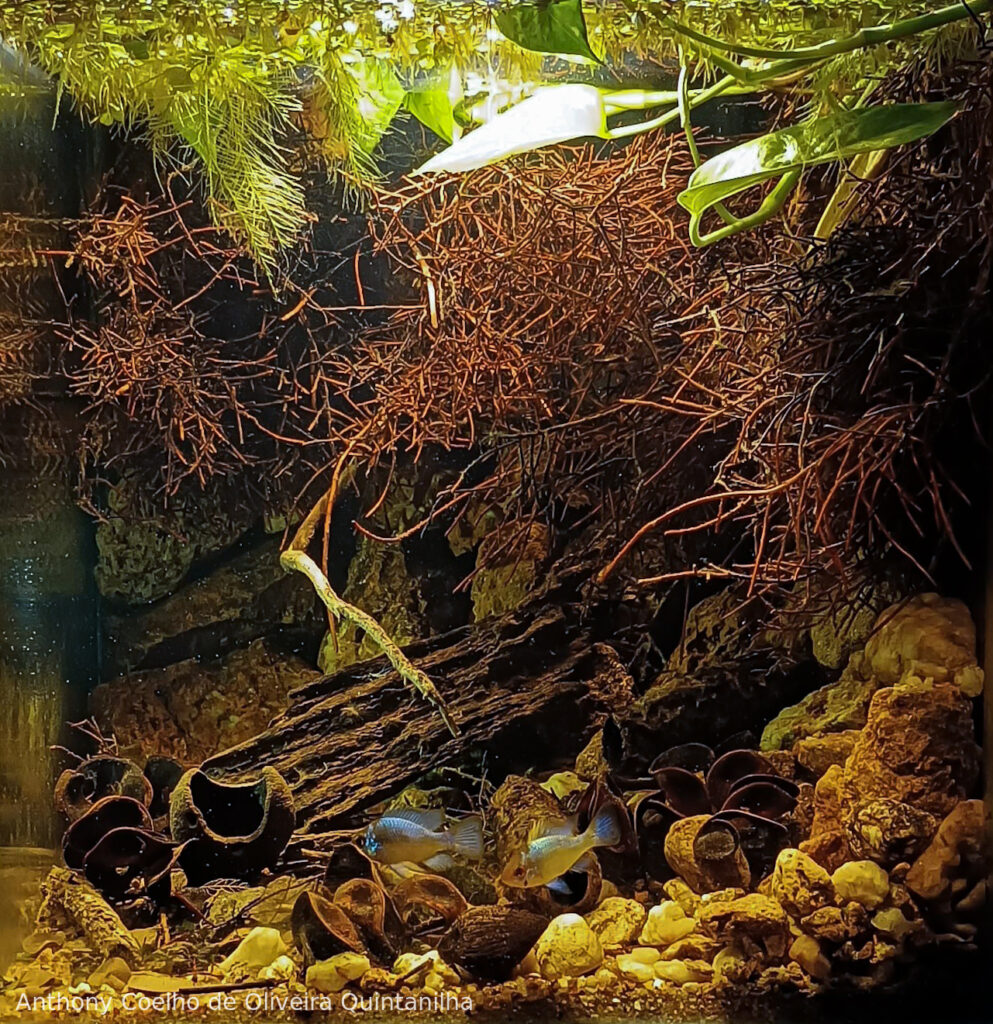
HardscapeHere in this 125L aquarium, I have used extremely fine river basin sand with large amount of coral bone as substrate. I couldn’t find the Neothauma tanganyicense as these shells are now forbidden to collect. So I have used plenty of Turbo Shells, Tomato Shells and Shark Eye Shells to form the Shell Cluster.
Ghi chúThe 125L aquarium comprises of only Lamprologus multifasciatus. Here the colony of fishes swims around the open area of the field, grazes over the algaes upon the cluster of shells. When one fish chases another fish, that fish takes shelter inside the shell. Lamprologus multifasciatus forms colonies around shell formations, where a male lives and reproduces with several females. The parents live together with their young, who care until they become young and then integrate into the colony.
This area also has large clusters of algae in the substrate that act as both a barrier for young fish or fry and a source of microorganisms for them to feed on. This area is depicted in my aquarium in an effort to visually and practically replicate the environment for the cichlid species that call it home.I can experience its behavior as much as the interaction with the environment, its feeding and reproduction, as if they were in their natural hábitat.
Category SponsorPrevious
AquascapeBiotope Aquascape

Thiết bị tham khảo từ thông số bể

Sản phẩmLoại lọcLưu lượngGiá ~Mua
Sponge HOB ~500 L/h ~1.750.000đ
Thức Ăn Viên Dán Sunsun ~30.000đ
Seachem Ammonia Alert — cảnh báo NH3 Seachem ~200.000đ
API Root Tabs 10 viên API ~250.000đ
1 món Inox 27 cm ~300.000đ
Đèn Chihiros WRGB II 60 SEAOURA ~550.000đ
1 món Thép ADA ~1.000.000đ

Bài viết liên quan